What 23 Years as an Interior Designer Teaches You
Today's my birthday. Twenty-three years ago I graduated from Texas Tech, walked into my first design job in Dallas, and had my car engine implode before I'd received my first paycheck. That felt about right for what this career had in store.
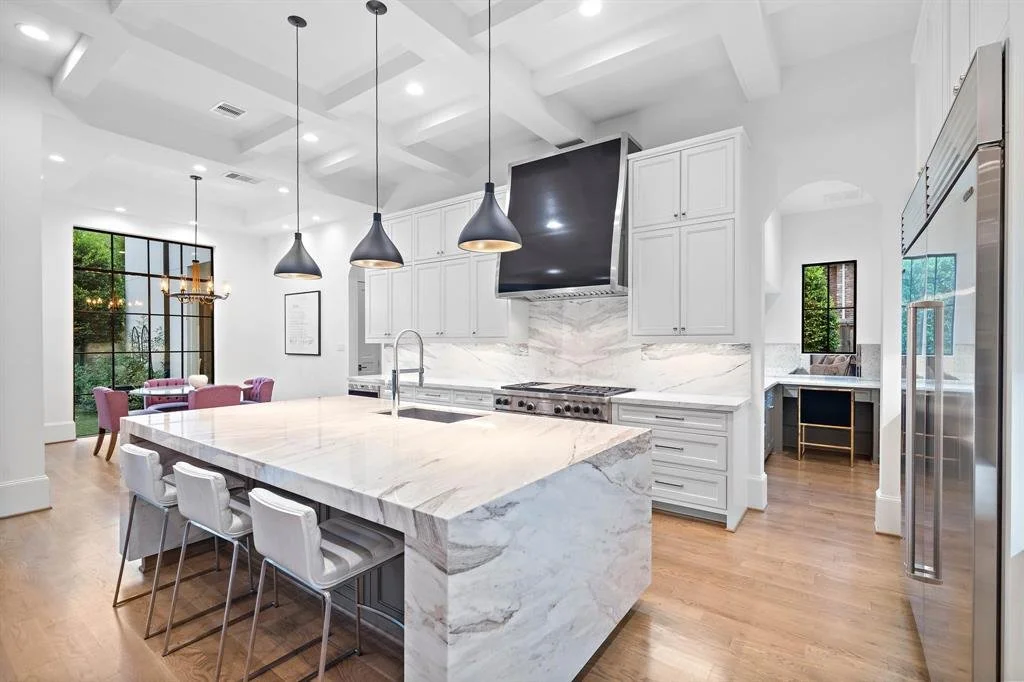
Twenty-three years. Three continents. More cities than I can count. And somehow I ended up back in Colorado, living and designing in Centennial, working on 1970s ranch kitchens and an Illinois farmhouse (I KNOW I talk about working locally, and I truly live that, but if you’re a repeat client that’s renovating your out-of-state family compound then I’m in).
If you'd told 23-year-old me, the one terrified on her first day at a prestigious Dallas design firm, that this is where the path led, I wouldn't have believed you.
The Beginnings
My first real job out of school was at Lee Jofa in Dallas. If you know textiles, you know Lee Jofa; luxury fabrics, to-the-trade only, the kind of place where designers come to source for clients who expect the best.
I was 23, coordinating the sample room, merchandising the showroom, trying desperately to learn the difference between damask and jacquard fast enough that nobody noticed I was still figuring it out.
On my first day, literally my first day, I was driving home to Fort Worth and my car engine basically imploded. Before I'd even gotten my first paycheck. I ended up cashing in the savings bonds my Grandpa had given me every Christmas to buy a new to me car. Nothing like starting your design career by figuring out how to hustle before you've even learned what damask is.
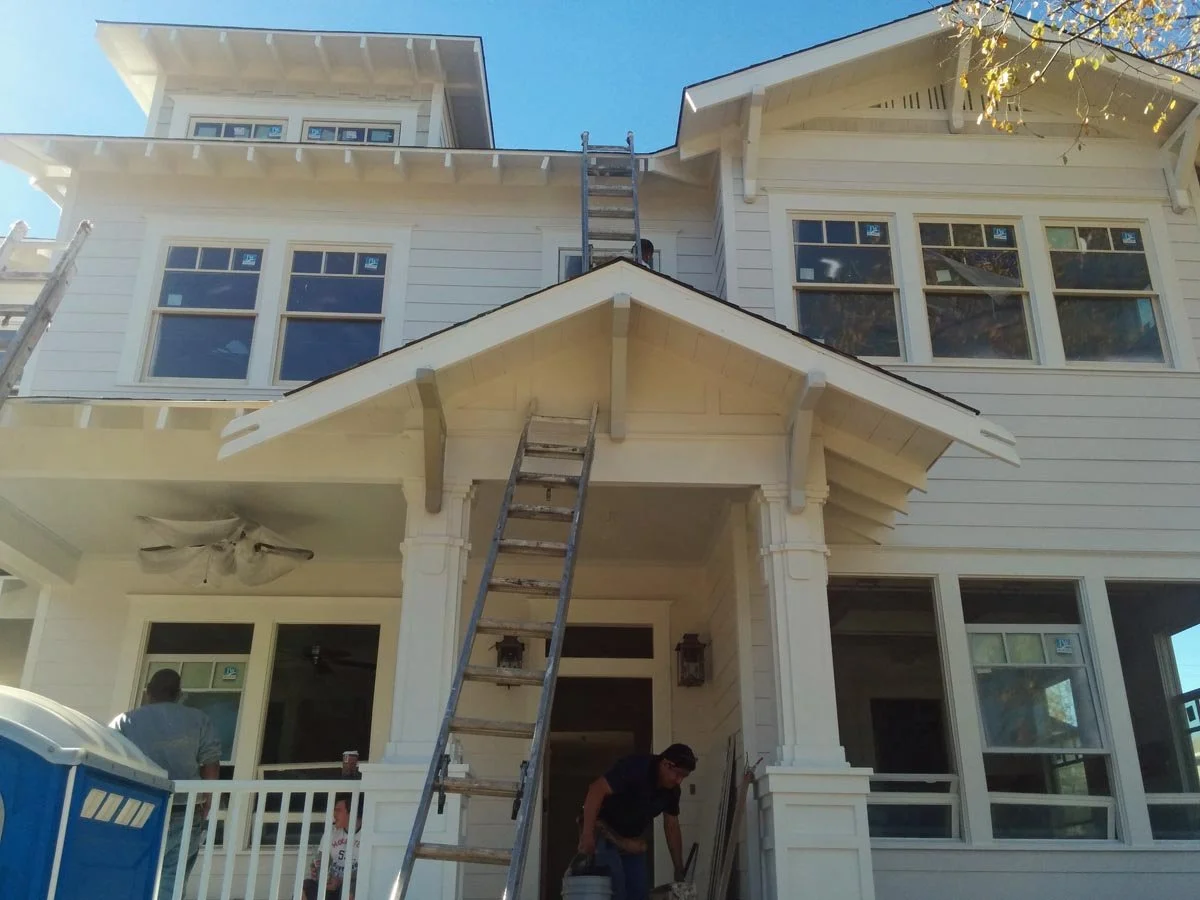
Six months later I got hired at Hayslip Design Associates. This was, and I cannot stress this enough, not a job for someone who wasn't ready. High-profile clients. Huge period accurate homes. The level of custom design and detail is something I didn’t even know existed. The kind of projects where you flew on private planes (no photos, client privacy!) and everything had to be perfect. As high pressure as it gets for a new designer.
I started as a design assistant to the firm's owner. Within a year I was managing projects. Looking back, I have no idea how I didn't completely mess everything up. Probably because I was too scared to make mistakes, so I checked everything three times, still do.
That job taught me that luxury design isn't only about expensive things, it's about getting every single detail right. It's about understanding why crown molding profiles matter and how antiques tell stories and what "discretion" actually means when you're working in people's homes.
Houston
I moved to Houston in 2005 and spent seven years at Sharon Staley Interiors.
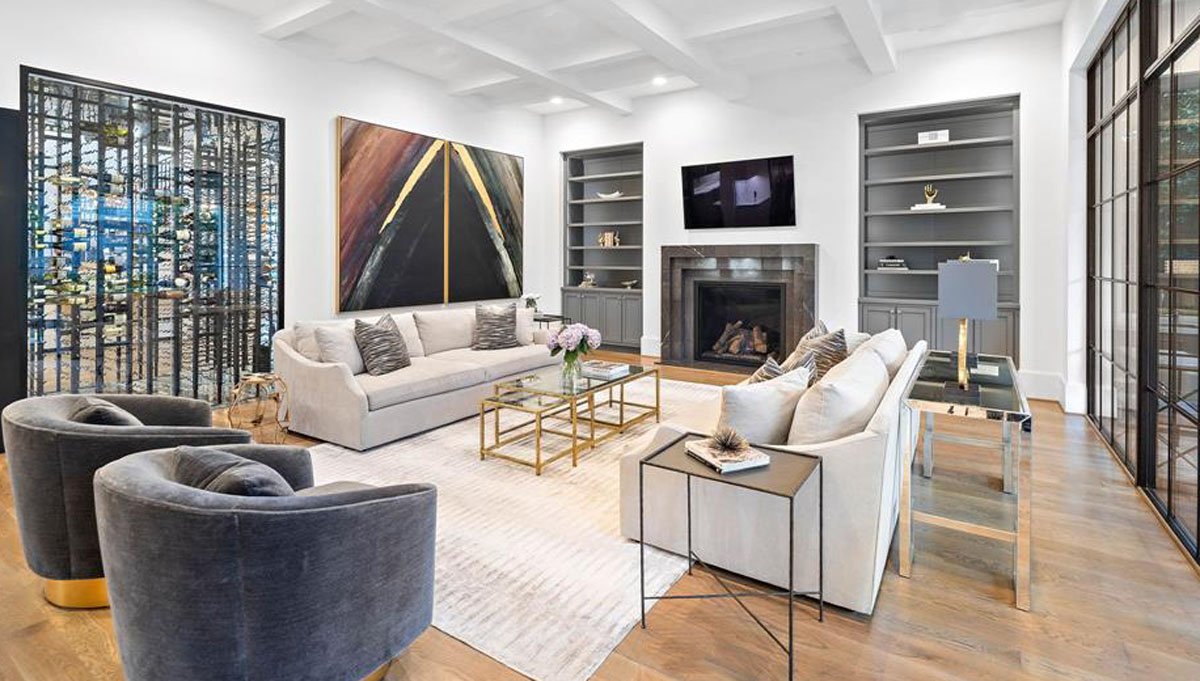
Sharon's firm did serious residential projects, 12,000 square foot new construction, historic renovations, vacation homes, everything. I managed projects from programming through installation. Designed custom millwork. Coordinated contractors. Held clients' hands through the chaos of construction while simultaneously making sure the tile setter understood exactly how that mosaic pattern needed to lay out.
The highlight: a 14,000 square foot new construction project in Houston's Memorial neighborhood where the clients got married at the house during construction. We're talking wedding ceremony with framing still exposed and subfloor underfoot. I've never been so stressed about a timeline in my life, but we made it happen.
I also got to design a project in the Cayman Islands. And a hunting lease on the King Ranch that we took a helicopter to reach. And countless Houston homes where I learned that good design solves problems, it doesn't just look pretty.
Going International
In 2011, before officially launching Jamie House Design, I left Sharons and almost immediately took on the most ambitious project of my career: partnering with a Houston architect on an American style subdivision in China.
Wuxi, specifically. A couple of hours from Shanghai. I flew back and forth multiple times, with shopping trips in Hong Kong for furnishings and materials. Worked remotely on high-rise clubhouses in Shanghai. Navigated language barriers, time zones, cultural differences, and the reality that culture differences means a lot of confusion, something very different in China than Texas. I learned to work in meters instead of feet.
Would I do it again? Probably not. Am I glad I did it? Absolutely. Some experiences you can't get any other way.
After China I continued designing homes in Houston from mid-century modern remodels to new constructions in the burbs to many renovations in my own neighborhood The Heights.
Berlin
In 2015 we moved to Berlin. My husband and I had wanted to live there since visiting in 2011, something about the history, the feel of the city, the different way of approaching design and life.
We stayed almost five years.
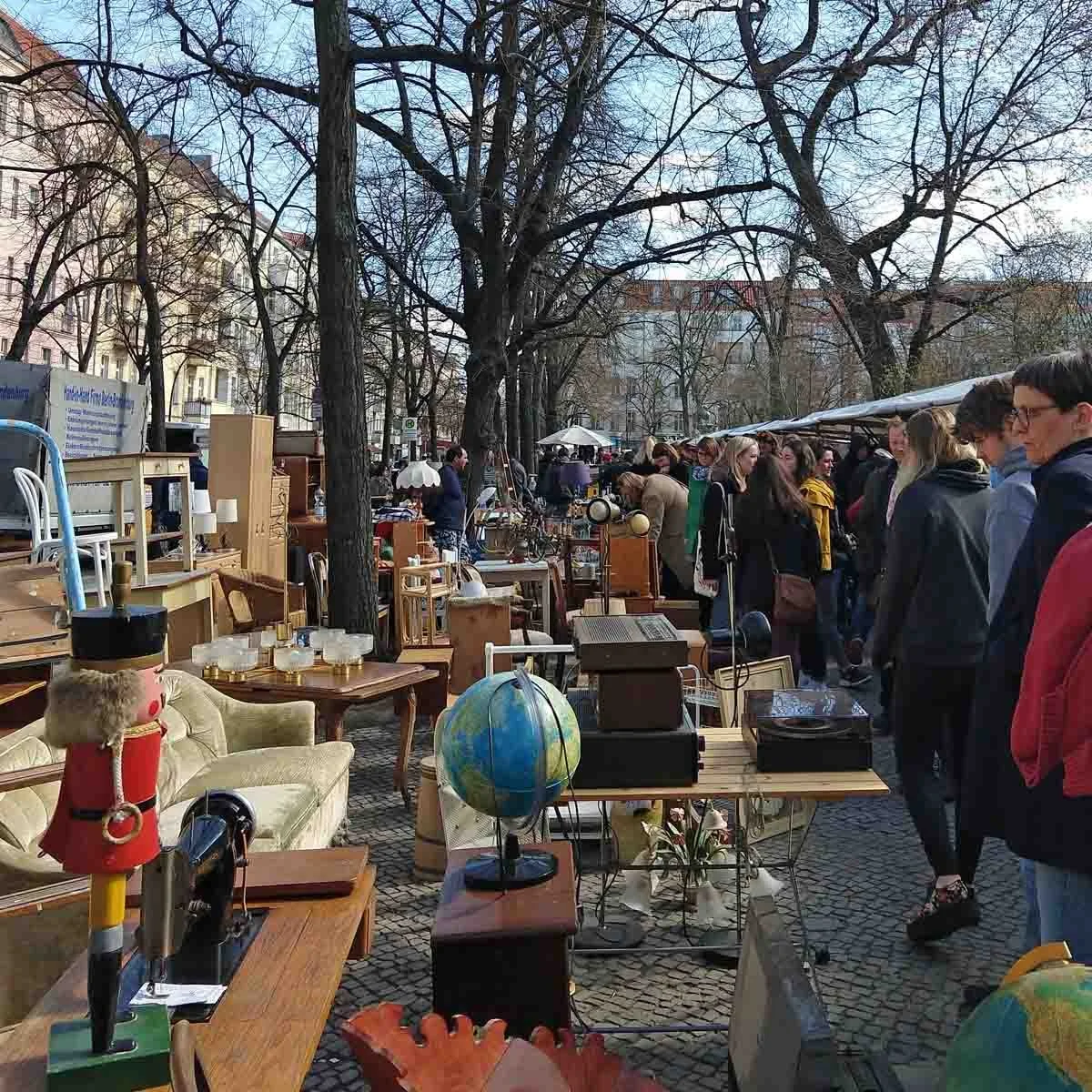
Berlin apartments are nothing like American homes. Small spaces, old buildings, radiator heat, windows that open in ways that still confuse me. But the design sensibility, the mix of historic and modern, the way people layer vintage with contemporary, the acceptance of imperfection and patina, that changed how I think about interiors.
I designed homes Houston homes from there, and our own beloved Altbau. I figured out how to communicate clearly and directly, both with clients and the locals. I absorbed a completely different aesthetic that still influences every project I do now. Berlin still calls sometimes.
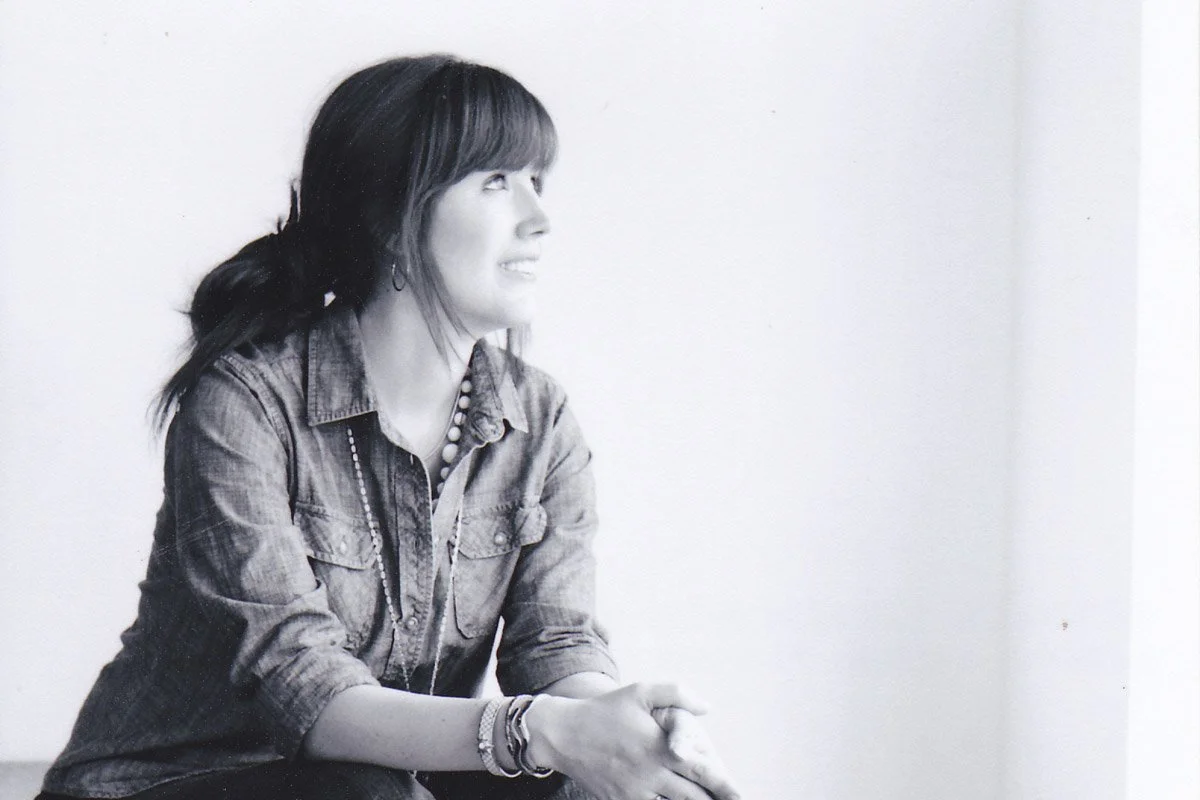
My first headshot, by Brooke Schwab
Coming Home (Or: Why Colorado?)
We moved to Denver in 2020 and settled in Centennial. After Berlin, Shanghai, Houston, the Cayman Islands, why here?
Honest answer: I’m from Colorado Springs, but I’ve always loved the idea of suburban Colorado. And I love Centennial. I want to work on projects near my own home. I wanted to understand local architecture deeply, the 1970s Centennial suburban homes, the Victorian cottages in Old Town Littleton, the new constructions in Castle Pines, not just visit occasionally from somewhere else.
I spent 15 years designing internationally. It was incredible. I learned things I couldn't have learned staying in one place. But at some point you realize: I want to be the designer that’s settled, family first, who has a stake in the place you live, who loves this area too, who's at the same tile shops and hardware stores you'd go to, who can recommend contractors because I've seen their work.
So now I work exclusively in South Denver suburbs. Within 20 minutes of Centennial. That's it. No projects in Boulder, no work in the mountains, no traveling to other states. I wanted to understand local architecture deeply; the 1970s Centennial suburban homes, the Victorian cottages in Old Town Littleton, the new constructions in Castle Pines; not just visit occasionally from somewhere else. After 15 years designing internationally, I wanted to be the designer with a stake in the same place my clients live.
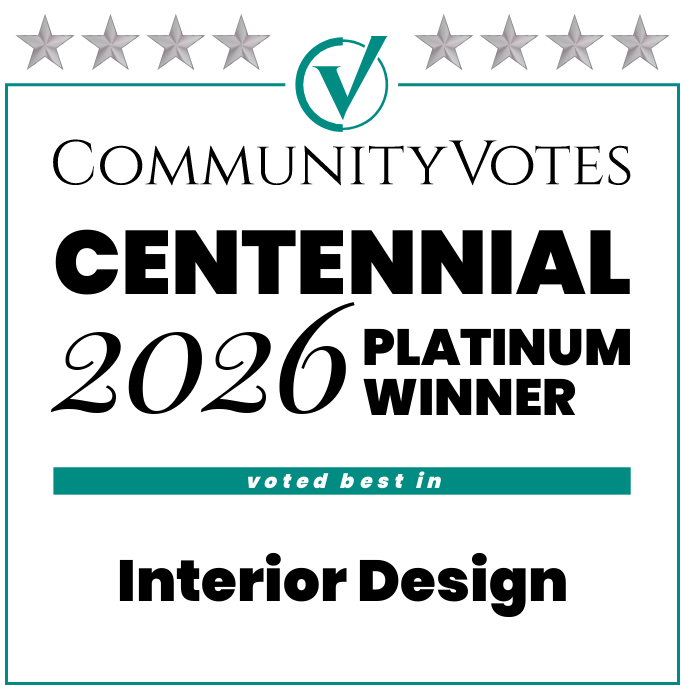
In 2025, Centennial residents voted me their Platinum Interior Designer and Platinum Interior Decorator, two different categories, same neighborhood. That meant something to me. Not because of the award itself, but because it meant people here know my work.
What I've Learned
Twenty-four years in this career, here's what I know:
Good design solves actual problems. It's not about making things look pretty (though they should). It's about making your kitchen function better, your primary suite feel like an actual retreat, your living room work for how you actually use it.
Local knowledge matters more than I thought it would. When I work on a 1985 Centennial split-level, I know that era's floor plan challenges because I've solved them before. When I renovate a Craftsman bungalow in Littleton, I understand what details are worth preserving. You can't get that from flying in occasionally.
The best projects feel like the client, not like me. I have aesthetic preferences. Everyone does. But when someone walks into their finished home and says "this is exactly me," that's success. When they say "this is so you," I've failed.
Mix sources strategically. Commercial tile plus handmade accents. New lighting for basics, vintage for statement pieces. Budget materials where nobody looks, investment materials where it matters. This creates homes with layers and personality. Every time I choose natural materials over synthetic, or suggest leaving a wall in its original plaster rather than drywalling over it, that's Berlin talking.
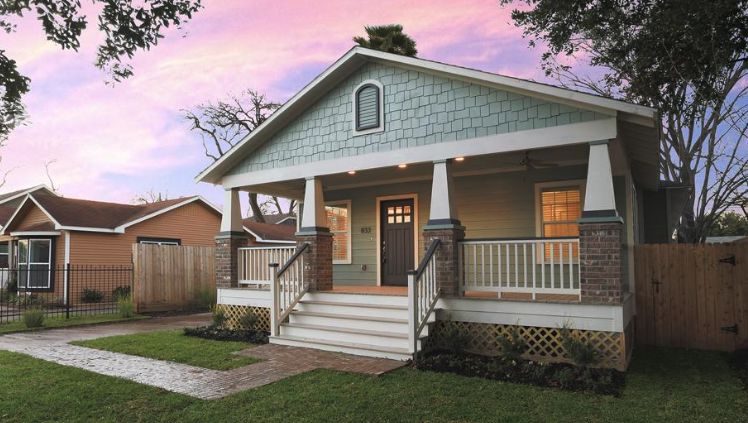
Mid-century modern renovations are my favorite. Something about the clean lines, the connection to landscape, the opportunity to honor what's good about the original architecture while making it function for modern life. Give me a 1965 ranch any day.
What I'm Doing Now
I'm designing homes in Centennial, Castle Pines, Highlands Ranch, and Littleton. Kitchen renovations, primary suite additions, whole-home transformations, historic restorations. Projects where architectural thinking matters as much as aesthetics.
I offer three ways to work together; consultation for people who want expert direction but will manage execution themselves, partial design for specific phases, full-service for complete management. All three can result in homes people love. They just serve different needs.
I source from everywhere, local Colorado craftspeople, vintage dealers, Etsy makers, trade-only showrooms, custom fabricators. Whatever creates the right result for that specific project.
I work with people who value quality over trendy, who want their homes to feel like theirs (not mine), who understand that good design takes time.
Twenty-Three Years Later
That 23-year-old walking into her first design job in Dallas had no idea what she was signing up for. The international projects, the moves, the learning curve, the occasional helicopter ride to a Texas ranch. The beautiful creative people that are forever etched in my heart, clients, colleagues, and tradesmen I’ve had the pleasure of working with.
But here's what that 23 year old got right: she chose a profession where you're always learning. Where every project is different. Where you get to solve problems and make spaces that improve people's daily lives.
Twenty-three years in, I still love it.
If you're in Centennial, Castle Pines, Highlands Ranch, or Littleton and thinking about what your home could become, I'd love to hear about it. Start with a discovery call, no commitment, just a conversation.
Related Articles:
About the Author
Jamie House is an award-winning interior designer serving Centennial, Littleton, Castle Pines, and Denver’s South Metro. With a Bachelor of Interior Design from Texas Tech University and over 20 years of experience in luxury residential design, she specializes in kitchen and bath remodels, whole-home renovations, and historic restorations. Her work has been featured in Country Living, Houston Chronicle, and Design Sponge.
Schedule a Consultation | View Portfolio | Read More Articles
Before + After: A Transitional Kitchen Remodel
The clients who interest me most aren't the ones starting from scratch. They're the ones who have a home with real potential and a clear sense of how they want to live in it, they just need someone to figure out how to get there without blowing the whole budget to do it.
This project was that. A young couple, serious entertainers, mid-century sensibility, a house that had good bones under a dated and compartmentalized layout. They didn't need a teardown. They needed someone to figure out what to keep, what to change, and how to make it feel like them.
The kitchen: one wall changes everything
The original kitchen was closed off from the dining room; functional in isolation, but wrong for how they lived. They cook together. They have people over constantly. The separation between kitchen and dining room meant the person cooking was always missing the conversation.
Opening the wall between the two spaces and creating a pass-through and serving area was the move that changed everything else. Once that was decided, the rest of the kitchen followed logically.
We reimagined the cabinetry layout while keeping as much of the existing material as we could repurpose. The tile floors stayed, they had genuine character and kept the budget where it needed to be. The range stayed too. Most of the cabinetry stayed too, for budget reasons. Not every decision requires replacement, and keeping what's working is part of what makes a thoughtful renovation different from an impulsive one.
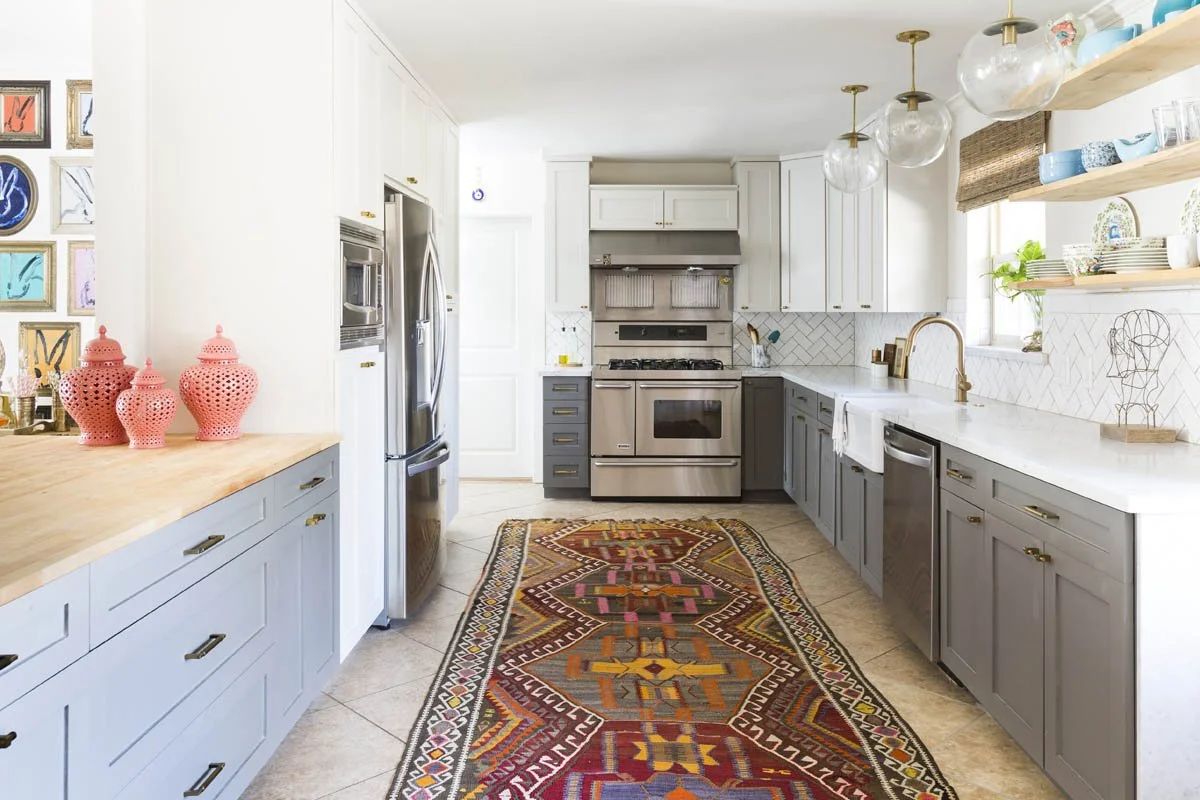
What changed: painted cabinetry in a soft slate blue and crisp white, brass hardware, open shelving that lets their things actually be seen, globe pendant lights that hit the mid-century note they were after, and a vintage Turkish runner underfoot that adds warmth without trying too hard.
The result is a kitchen that functions the way their life does; open, connected, ready for people.
AFTER
BEFORE
Personality in the Details
The woman of the house has a genuine love of bunnies, not as a theme, but as a real thing that matters to her. So rather than relegating it to a tchotchke on a shelf, we leaned into it: Hunt Slonem's Lee Jofa wallpaper in the dining space, which creates an unexpected, joyful contrast to the kitchen's more structured palette.
This is the kind of decision that makes a home feel personal rather than assembled. When something specific to the people who live there gets treated as a real design element instead of an afterthought, the whole room changes register.
AFTER
BEFORE
Beyond the Kitchen
The scope here was larger than just the kitchen. They also wanted a proper primary suite; which the original floor plan didn't really have, with his-and-hers walk-in closets and a connection to the backyard that didn't exist before. We reconfigured the back of the house to make that work: new doors opening to a pool area, wood flooring replacing dated carpet, a bathroom redesigned from a former bedroom.
Each of these decisions was made with the same logic as the kitchen; what can we keep, what needs to change, and how do we make it cohesive rather than piecemeal. The result is a house that reads as a whole rather than a collection of separate renovation decisions made at different times.
AFTER- DOORS TO THE POOL, CLOSETS RECONFIGURED
BEFORE - NO DOOR TO THE BACKYARD
AFTER
BEFORE- bedroom turned into bathroom
Before these rooms were functional but disconnected, from each other and from the people living in them. Now they're not. That's what a renovation should do, and it doesn't require starting over to get there.
AFTER
BEFORE
If you're working with a home that has good bones and a layout that isn't quite working, I'd love to hear about it.
Inside a JHD Home: A Cozy Modern Refresh for an Empty Nester Family
When a couple approached Jamie House Design to transform their longtime family home into a refined, clutter-free sanctuary for their next chapter, I knew the vision required more than cosmetic upgrades—it called for thoughtful reinvention. This cozy modern refresh was designed with intention, warmth, and lasting beauty in mind.
With a blend of modern traditional interiors, streamlined updates, and soulful personalization, this project reflects my signature approach to luxury interior design that balances style with real life.
The Design Vision: Modern Meets Timeless
The homeowners—now empty nesters—wanted to elevate their home’s aesthetic while preserving its familiarity and emotional comfort. Jamie House Design’s goal? To create a space that felt fresh and current, yet timeless—a place where every room flowed effortlessly into the next.
Through the lens of high-end interior design, I focused on:
Clean, cohesive architectural detailing
A gut renovation of the kitchen and bathrooms
Subtle transitions that connect each space with warmth and clarity
The result is a home that feels both grounded and elevated—inviting, practical, and beautifully personal.
AFTER
BEFORE
AFTER
BEFORE
Architectural Harmony: Reworking the Moldings
One of the most impactful changes was refining the existing architectural elements. Rather than removing the original trim and molding, I chose to streamline and unify these details throughout the home. This created a sense of visual continuity and sophistication without losing character.
What was once a series of disjointed rooms now feels like one intentional, connected environment—a hallmark of personalized interiors that support both movement and mood.
Kitchen Remodel: From Dated to Delightfully Functional
The heart of the home—the kitchen—underwent a complete gut renovation. My design replaced bulky cabinetry and outdated finishes with:
Clean-lined millwork in warm, neutral tones
Subtle textures and stone for depth
Clever, space-saving storage solutions
This space now serves as both a gathering hub and a clutter-free culinary oasis, proving that interior design in Centennial CO can honor form and function.
AFTER
BEFORE
Bathrooms Reimagined: Calm, Clean, and Elevated
The primary suite received a full transformation, including a completely redesigned primary bathroom that now feels like a private retreat. I focused on:
Understated luxury through materials and lighting
Smart storage to simplify daily rituals
A spa-like atmosphere with timeless finishes
I also reimagined the powder bath and secondary bathrooms to echo the home's overall aesthetic—clean, elevated, and intuitive.
Each space flows seamlessly into the next while offering its own unique energy—an approach rooted in soulful interior design.
AFTER
AFTER
BEFORE
BEFORE
A Space for Everything, So Everything Has Space
One of the most powerful transformations was invisible to the eye but essential to the experience: creating a space for everything.
This design centered around reducing clutter and making it easy to stay organized. Every drawer, nook, and built-in was designed with intention—allowing the home to function effortlessly while still feeling serene and beautiful.
This is where luxury interior design meets real life. It’s not about perfection—it’s about support.
Final Thoughts: A Home That Grows With You
At Jamie House Design, I believe your home should evolve with you—supporting your needs, reflecting your values, and feeding your soul.
This cozy modern refresh is a testament to what’s possible when design is rooted in listening, clarity, and timeless intention.
Whether you’re transitioning into a new life chapter or simply craving a home that feels more aligned, My approach to interior design in Centennial CO ensures every detail speaks to you.
Ready to design a home that supports your next chapter?
Let’s talk about creating something timeless, modern, and fully yours.
Book a Discovery Call
Houston to Colorado: My Interior Design Philosophy, Evolved
When I founded Jamie House Design in Houston, Texas, the vision was clear: create beautiful, deeply personal interiors that feel like home for the people who live in them. Over the years, that vision has remained steady—rooted in authenticity, beauty, and a love for exploration—but with our move to Centennial, Colorado, something new has taken root: a deeper sense of place, purpose, and soulful connection.
From Shanghai to Houston to Berlin to Centennial: What 20 Years Taught Me About Where I Actually Want to Work
I started Jamie House Design designing homes in Wuxi and Shanghai. Then I built a practice in Houston with a focus on The Heights neighborhood. In 2017, I moved to Berlin and continued working with Houston clients remotely. In 2021, we moved to Centennial, Colorado. In 2022, I joined an architecture firm. By the end of 2024, I'd left to rebuild my independent practice.
After 20 years designing homes across three continents, I'm clear about what I want to build: a hyperlocal practice where I'm genuinely present for every project.
This is the story of how I got here.
Shanghai: Where It Started
Before I ever had Houston projects, I worked in China, designing American style subdivision homes in Wuxi and clubhouse amenity levels in high-rises in Shanghai, learning to navigate international vendors, understanding how design principles translate across cultures.
That experience taught me to source globally, work with fabricators across continents, and recognize that while good design is universal, context is everything. A home in Shanghai requires completely different thinking than a home in Houston, even if both families want beautiful, functional spaces.
It also taught me I wanted to work closer to home.
Houston: Building Something Real
When I started taking Houston projects, I focused deliberately on The Heights, the historic neighborhood where I lived. 1920s bungalows with pier-and-beam foundations. Historic district restrictions that required fighting for many design decisions. But I’ve always been devoted to history and preservation so it was a joy.
I spent two years getting approvals for one renovation. I learned to read the neighborhood intimately; which homes were worth saving, which contractors could execute difficult work, how to navigate preservation requirements while modernizing for contemporary life.
That hyperlocal focus worked. I knew my territory. The business grew because I understood the specific challenges of Heights homes in a way someone driving in from across town never could.
Berlin: When Remote Work Taught Me What I Actually Value
When my husband and I decided to move to Berlin in 2017, I thought I'd build a practice there. German industry regulations made navigating that without German fluency nearly impossible, especially with a small child.
So I kept my Houston clients and worked their projects from 5,000 miles away.
My talented assistant managed installations and contractor meetings on the ground. I flew back several times a year for client presentations and project walkthroughs. We made it work; the projects turned out well, clients were happy, the business stayed afloat.
But I hated working that way.
Video calls can't replace being there when a contractor needs a real-time decision that will affect the entire project. You can't assess how afternoon light hits a newly opened kitchen over Zoom. You lose the crucial conversations that happen standing in someone's living room, understanding how they actually live, not just what they say they want.
Berlin gave me access to incredible European design markets, vendors I'd never encountered in the US, materials and fabricators that expanded my sourcing capabilities considerably. I visited showrooms across Germany and Scandinavia. I learned a tremendous amount.
But I missed being present for my work. The gap between doing good work remotely and doing great work on-site became undeniable.
From Berlin, I became much more selective about which projects I'd take on. If I was going to work this way, it needed to be worth the frustration of not being able to show up when it mattered.
Colorado: The Path to Independence
When we moved to Centennial in 2021, I took a position at an architecture firm. On paper it looked right; high-end mountain homes, sophisticated clients, a legitimate firm with an impressive portfolio.
The reality didn't match. The culture wasn't what I'd hoped. The projects were beautiful houses, but I wasn't solving the design problems that interest me; understanding how families actually live, balancing beauty with function, creating spaces that work for decades, not just for the photoshoot.
I left at the end of 2024 to rebuild my independent practice.
What I'm Building Now
After two decades of designing homes internationally, I'm doing something I've been circling for years: focusing exclusively on South Denver suburbs within 20 minutes of my Centennial home.
Not because I can't work farther, I've proven I can work from another continent if necessary. But because I've learned that being present for projects produces better design than being remotely excellent.
I want to know these neighborhoods the way I knew The Heights in Houston. I want to understand that Smoky Hill ranch homes from the 1980s have specific challenges; closed floor plans from a different era, builder-grade materials showing their age, layouts that don't reflect how people actually use kitchens now.
I'm learning which Centennial contractors consistently deliver quality and which ones need close management. I'm understanding how light works at 5,800 feet versus sea level, how to choose paint colors that won't wash out in Colorado's intense sunshine, which local vendors I can rely on.
I want to work with Castle Pines families whose custom homes have builder-grade interiors that don't reflect their actual taste. I want to help Littleton homeowners modernize Mid-Century Modern and Craftsman homes while respecting architectural character. I want to serve Highlands Ranch families who need spaces that balance beauty with the durability their active households require.
This is the work that interests me, solving real design problems for people who'll live with the results for decades.
What 20 Years Actually Taught Me
Global experience matters. Shanghai taught me to source anywhere, work with craftsmen across continents, understand how design evolves in different cultures. Berlin expanded my vendor network and material knowledge. Those capabilities are assets I bring to every project.
But presence matters more. Remote work taught me that transformative design requires being there for crucial decisions. You can't delegate the conversation that happens when you're standing in someone's kitchen, understanding how they actually cook, where the real bottlenecks are, what drives them crazy every morning.
Architectural training is non-negotiable. My minor in Architecture from Texas Tech matters more now than when I graduated. Being able to read construction drawings, understand structural systems, and coordinate effectively with contractors is what separates surface-level improvements from transformative renovations.
Independent practice serves clients better. I'm not tied to furniture showrooms or specific brands. I source from custom fabricators, trade-only vendors, vintage dealers, Colorado artisans; wherever I can find exactly what your project needs. Recommendations are based solely on what serves you best.
Clear focus beats constant growth. Early in my career, I took every project I could. From Berlin, I became more selective because logistics forced me to be. Now I'm choosing limits deliberately: South Denver suburbs only, 20 minutes from Centennial, 12 homes per year maximum.
I recognize that exceptional design requires presence.
How We Can Work Together
I work with clients at different stages of their design journey. Some need comprehensive project management; others want expert guidance while managing execution themselves.
Design Consultation — Two-hour in-home assessment with design direction, material guidance, and contractor recommendations. $500, credited toward full-service within 60 days. For homeowners who need professional insight but will manage their own project, or who want to understand what's actually involved before committing to larger scope.
Partial Design Services — Kitchen and bathroom design, space planning, material selections, furniture plans, design coaching. Professional design for specific project phases while you handle procurement and installation. For capable DIYers or those with budget constraints who want professional design direction.
Full-Service Design — Comprehensive project management from architectural planning through final installation. Custom millwork, contractor coordination, complete procurement, styling. This is how transformative design actually happens; when someone who understands both architecture and interiors manages every decision from concept through execution.
What Makes My Approach Different
After 20 years, here's what I bring to your project:
Architectural expertise. I read construction drawings, understand how buildings work structurally, and coordinate effectively with contractors. This isn't decorating, it's architectural problem-solving. When renovating older homes especially, you need someone who understands the building, not just the finishes.
International perspective, hyperlocal focus. Years designing homes in Shanghai and Berlin, sourcing from European vendors, attending international design markets, that global perspective matters. But I'm applying it exclusively to South Denver neighborhoods I'm learning intimately.
Independent practice. No sales quotas, no showroom affiliations, no pressure to specify particular brands. I source from custom fabricators, trade-only vendors, vintage dealers, wherever I can find exactly what your project needs.
Flexible service structure. Three service tiers accommodate different budgets and involvement levels. Many consultation clients convert to full-service once they understand what's actually involved. Others successfully manage their own projects with professional design direction.
For Centennial, Littleton, Castle Pines, and Highlands Ranch Homeowners
If you're considering renovation or furnishing your home, here's what you should know about working with me:
I'm building my Colorado portfolio deliberately, with clients who value the design process and understand that transformative results take time. I don't take every project, I work with people who want a designer genuinely present for their work, not just collecting fees from across town.
What I bring is 20 years of experience designing homes across three continents, architectural training that means I understand how buildings actually work, and a deliberate commitment to focusing exclusively on South Denver suburbs.
I've designed everything from Shanghai apartments to Houston historic bungalows to new construction mountain homes. Now I'm applying all of that experience to the neighborhoods within 20 minutes of my Centennial studio.
If that approach resonates with you, let's talk.
About Jamie House Design
With 20+ years of international design experience and a minor in Architecture from Texas Tech, Jamie House brings both creative vision and technical expertise to every project. Based in Centennial, she works exclusively within South Denver suburbs, bringing a global design perspective to the neighborhoods she calls home.
Related Articles:
Interior Designer Centennial CO — Why I focus on established homes in Smoky Hill, Walnut Hills, and Southglenn
How I Approach Ranch Kitchen Renovations — The specific challenges of 1970s-1990s ranch layouts
Littleton Historic Home Design — Preserving character while modernizing Victorian, Craftsman, and mid-century homes
What Interior Design Actually Costs in Denver — Real numbers for consultation, partial, and full-service projects