Primary Bathroom Design: The Decisions That Matter
Primary bathrooms get more budget and more attention than almost any other room in a renovation. They also get more of the wrong decisions.
The problem is that most primary bathroom planning starts with finishes; tile samples, fixture catalogs, vanity styles, before the layout is resolved. And the layout is where everything that matters gets determined. A beautiful tile in a poorly planned room is still a poorly planned room. A freestanding tub in the wrong location is an expensive obstacle you walk around every morning.
Here's how I think about primary bathroom design, starting with the decisions that have the most impact and working toward the ones that come after.
Layout first, always
The primary bathroom layout question that most renovations get wrong: where does the shower go?
In most builder-grade primary bathrooms, the shower is tucked into a corner; often the farthest point from the door, which means you're walking across the entire bathroom in a towel every morning. It's the layout that makes sense for fitting a shower into a square footage constraint, not the layout that makes sense for how people actually use the room.
The shower placement I prefer: accessible from the door without crossing the full room, positioned so that steam doesn't immediately hit the vanity mirror, and oriented so the person showering has some privacy from the doorway if the door opens unexpectedly. None of these are complicated requirements. They just require thinking about the room before the plumber runs the drain.
The toilet placement question matters too and gets even less attention. In a shared primary bathroom, a water closet, an enclosed toilet compartment, is one of the highest-value additions for two people with different morning schedules. It's not a space requirement, it's a privacy requirement, and it changes how two people can use the same bathroom simultaneously without coordinating.
The freestanding tub question
Almost every client asks for a freestanding tub. I ask them one question before specifying it: how often do you take baths?
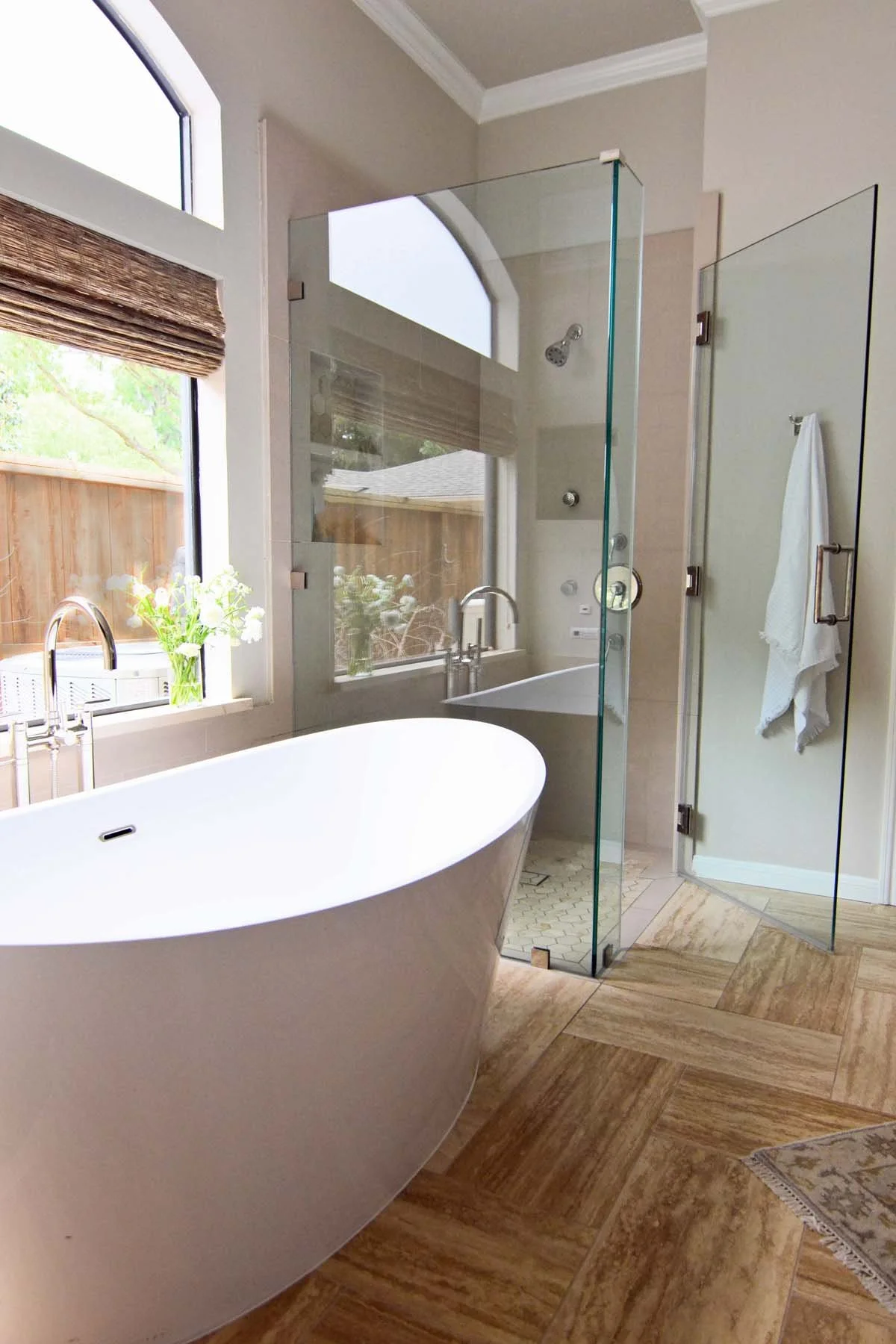
This isn't me trying to talk them out of it. It's a genuinely important design question because a freestanding tub positioned as a room's focal point is a commitment. It occupies significant floor area. It creates a circulation path around it. It requires plumbing rough-in at a specific location. And if the honest answer is "I take baths twice a year," you've allocated expensive square footage and plumbing budget to something that will mostly be photographed.
For clients who genuinely use a tub regularly; for recovery, for stress, for children who still share the primary bath occasionally, a freestanding tub is absolutely worth it. Position it where it has a sightline to a window if possible, where it reads as the visual anchor of the room, and where filling and draining it doesn't require stepping over anything.
For clients who take baths rarely, I usually suggest a built-in soaking tub rather than freestanding, it takes less floor space, integrates into the architecture, and costs less without looking like a compromise. Or I redirect that budget toward a shower that they'll use every day, which has a higher impact on daily quality of life.
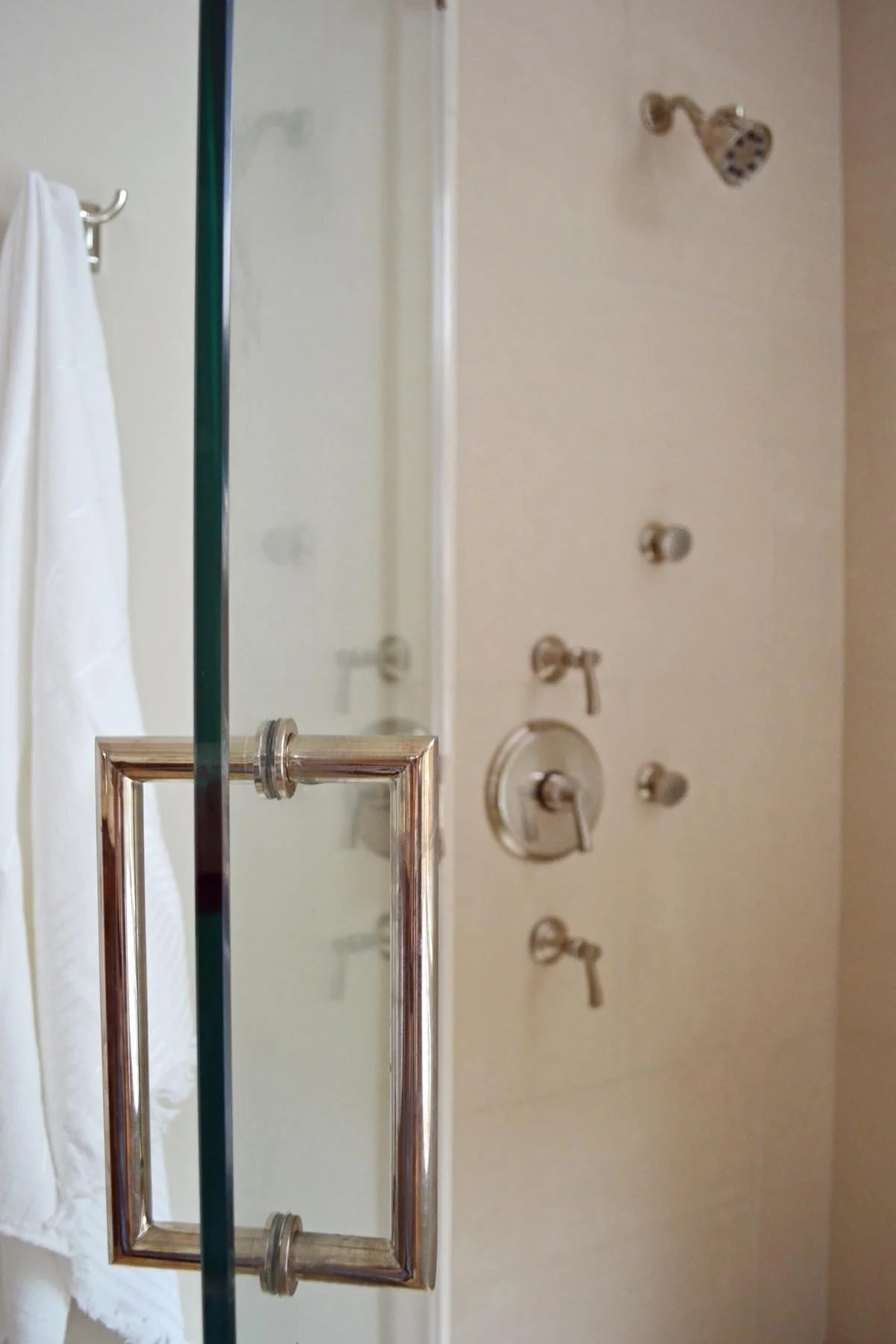
The shower that gets used every day deserves more design attention than it typically gets. This means a proper bench at the right height if anyone sits. Niches at the right heights for how the person is actually built; a niche positioned for a 5'10" person is at the wrong height for a 5'4" person. A rain head if that's the preference, with a handheld on a slide bar as the practical daily-use option. And a door or opening configuration that doesn't trap steam in the room or require awkward entry.
Two people, one bathroom
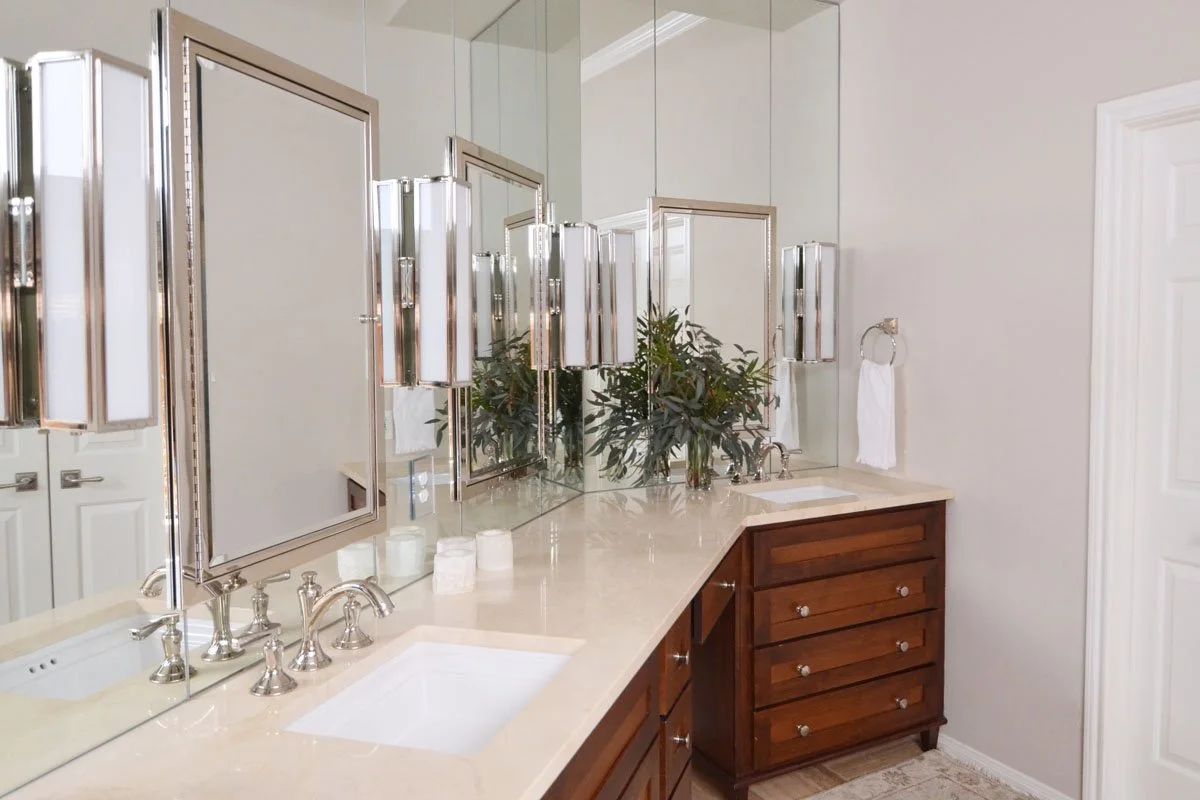
The double vanity is standard in primary bathrooms at this point; two sinks, side by side. What doesn't get designed is how two people actually use that vanity simultaneously without bumping into each other or competing for counter space.
A few specific decisions that change this:
Counter depth matters. Standard vanity depth is 21 inches. Going to 24 inches gives each person meaningfully more space to work without adding much visual bulk. In a bathroom with the square footage to support it, this is worth doing.
Storage has to be designed for two specific people, not for a generic couple. His side and her side are different. The person who has a full makeup routine needs different drawer configurations than the person who doesn't. Designing storage generically — equal drawers on each side — means one person has the right storage and the other is improvising. I ask clients to actually inventory what they keep in the bathroom before any cabinetry is specified.
Mirror placement affects everything. Two separate mirrors above two sinks give each person their own visual territory and their own lighting. One large mirror spanning both sinks looks more unified but can create sightline conflicts when both people are using the space simultaneously. Neither is wrong, they're different solutions to the same problem, and which is right depends on the people and the room.
Lighting at the vanity is almost always wrong. The overhead downlight pointed at the top of your head creates shadows on your face, the opposite of what you need for applying makeup or shaving. Vanity lighting should come from the sides at approximately face height, or from a horizontal fixture above the mirror that wraps light toward the face rather than onto the top of the head. This is a detail most electricians won't raise and most homeowners don't know to ask about.
Materials in a Colorado bathroom
A few Colorado-specific considerations worth knowing before you specify anything.
Grout color in showers. Colorado's mineral-rich water leaves deposits on light-colored grout that are difficult to remove and accumulate quickly. Medium to darker grout reads as more intentional anyway and hides what the water will inevitably leave behind. White grout in a shower is a maintenance commitment most people underestimate.
Stone selection. Not all natural stone handles wet environments equally. Some stones, certain limestones, travertines, softer marbles, are more porous and require more sealing and maintenance in a wet application. Worth discussing with whoever is specifying the stone before it's ordered.
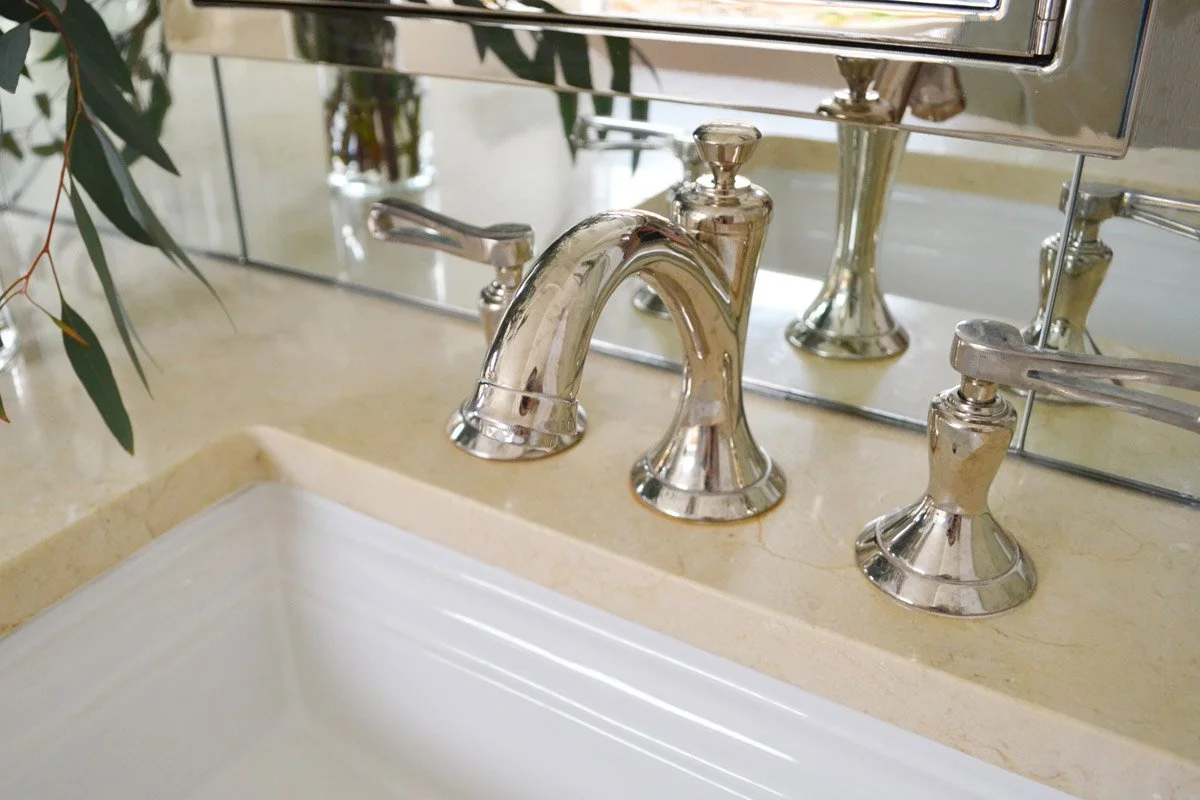
Plumbing finish longevity. As I wrote in the metals post, black plumbing fixtures show Colorado water spots and calcification significantly more than warm metals do. In a primary bathroom that gets used twice daily, this matters. Polished nickel or unlacquered brass are more forgiving finishes and develop character over time rather than showing neglect.
What the room is actually for
The primary bathroom serves a specific function in the daily rhythm of a household: it's where the day begins and where it ends. The morning routine, however compressed, happens in this room. The evening decompression, however brief, happens here too.
A well-designed primary bathroom makes both of those things easier; not by being beautiful (though it should be), but by being organized around how the people who use it actually move through their mornings and evenings. That requires knowing those routines specifically, which is why the best bathroom renovations start with questions rather than tile samples.
If you're planning a primary bathroom renovation in Centennial, Highlands Ranch, or Castle Pines and want to make sure the layout decisions get made correctly before anything is rough-in, that's exactly what a consultation addresses.
Consultation: $500, credited toward full-service if you move forward within 60 days.