Primary Suite Design: What It Takes to Make a Bedroom Feel Like a Retreat
The primary suite is almost always the last room in a house that gets properly designed.
People renovate kitchens because the kitchen is where everyone congregates and the dysfunction is visible. They update bathrooms because the finishes are dated and that's hard to ignore. But the primary bedroom, the room where you start and end every single day, gets the leftover budget, the leftover attention, and the furniture that didn't fit anywhere else.
The result is a room that functions fine and never quite feels right. Not uncomfortable exactly. Just not restorative. Not the thing it should be.
Here's what changes that.
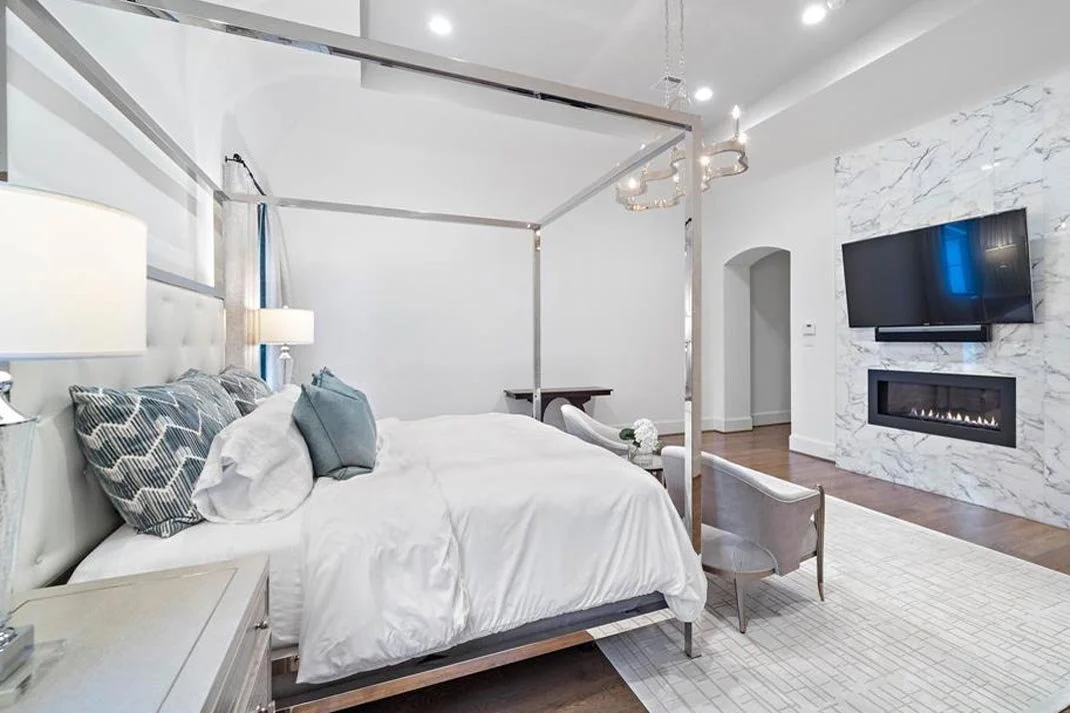
The problem is usually light control
More specifically: the absence of it.
Most bedrooms in Centennial, Highlands Ranch, and Castle Pines have curtains or blinds that do an approximate job. They reduce light. They don't eliminate it. The gap at the edges where morning sun comes through. The streetlight that bleeds in overnight. The 5:30am summer light that Colorado's 300 days of sunshine produces whether or not you're ready to be awake.
The single highest-impact change in a primary bedroom, the one I recommend before any furniture or finish decision, is motorized blackout shades. Not blackout curtains layered over blinds as a workaround. Actual motorized shades that seal properly, operate from bed without getting up, and can be programmed to open gradually in the morning rather than flooding the room all at once.
The objection I hear most often is the cost. Expect $800–$2,500 per window depending on size and fabric, so a three-window primary suite runs $2,400–$7,500 installed. That sounds significant until you consider that you interact with this system twice a day, every day, for the life of the house. It's one of the few things in a renovation where the use frequency genuinely justifies a higher investment than the price suggests.
In Castle Pines homes with mountain views, motorized shades also solve a different problem: they let you have full views during the day and complete privacy at night without choosing one or the other.
Lighting that works at multiple times of day
The second most common problem in primary bedrooms: a single overhead fixture on a single switch. You can be fully illuminated or in the dark, with nothing in between.
A bedroom used well across a full day needs at least three lighting zones. Ambient light for getting dressed and moving through the space. Reading light at the bed, sconces mounted at the right height for actual reading, not pendants hung decoratively that don't put light where you need it. And something lower and warmer for the end of the evening, when the goal is to signal to your body that the day is winding down.
All of it on dimmers. All of it controllable from the bed. The ability to turn off lights without getting up and walking across a dark room is not a luxury, it's a basic design decision that affects your daily experience in a specific and measurable way.
Sconce placement matters more than most people realize. The center of the shade should sit at roughly 24–28 inches above the mattress surface, adjusted for how high you actually read in bed. Too high and the light goes over your shoulder. Too low and it shines in your eyes. Getting this right requires knowing the bed height, the mattress thickness, and how the person actually uses the light; all things that get figured out in a design process and rarely get figured out when someone is buying sconces online.
The room needs to work for two people with different habits
This is the design problem most primary suites quietly fail at. Two people who go to bed at different times, wake at different times, have different temperature preferences, different morning routines, different relationships to light and sound.
The solutions are mostly not expensive. Separate reading lights on separate switches so one person can read while the other sleeps. Blackout shades that address the shared light problem rather than negotiating over curtains. A furniture layout that gives each person clear ownership of their side without the room feeling divided.
The closet question is worth thinking through specifically. His-and-hers walk-in closets are a standard ask in new construction, but what matters more than whether the closets are separate is whether each person's morning routine can happen without disrupting the other. If one person is up at 5:30 and the other sleeps until 7, can that work without the early riser waking the late sleeper? That's a layout and lighting question, and it's worth solving before construction locks in the answers.
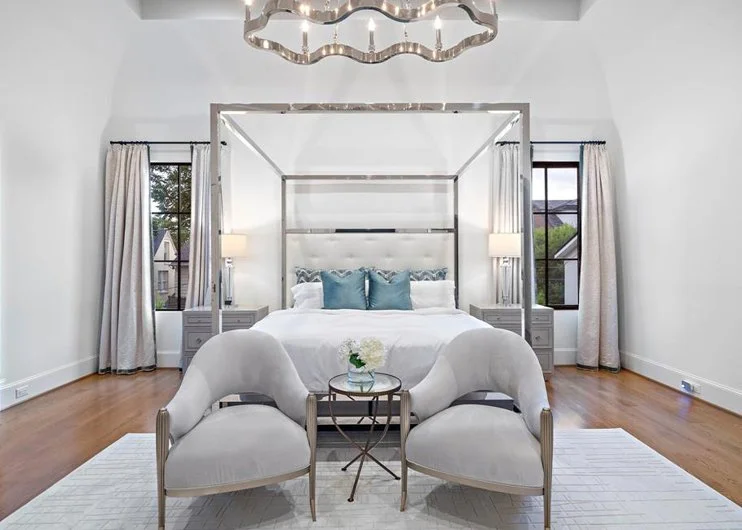
What the room needs to feel like the right room
There's a version of primary bedroom design that is technically correct; right furniture scale, appropriate lighting, functional storage, and still feels generic. The room serves its purpose without feeling like it belongs to the people in it.
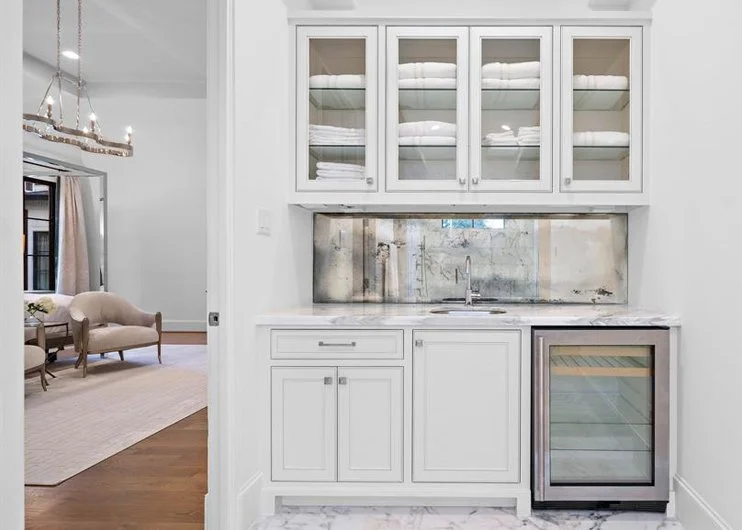
What closes that gap is almost always specific to the household. The coffee setup on a small cabinet that means neither person has to leave the room for the first twenty minutes of the day. The art that's been waiting for the right wall for three years. The window seat that makes the corner with the best light actually usable. The reading chair that's been in two apartments and finally has a room that deserves it.
These aren't afterthoughts. They're the decisions that should be made deliberately, early, and in relation to everything else in the room, which is what a design process does. By the time a primary suite renovation is complete, the room should feel immediately like the people who live in it, not like a hotel room that happens to contain their belongings.
If your primary bedroom has been the last room on the list for a few renovation cycles and you're ready to finally do it properly, I'd love to hear about it.