How an Interior Designer Helps You Find, Buy, and Display Art That Feels Like Home
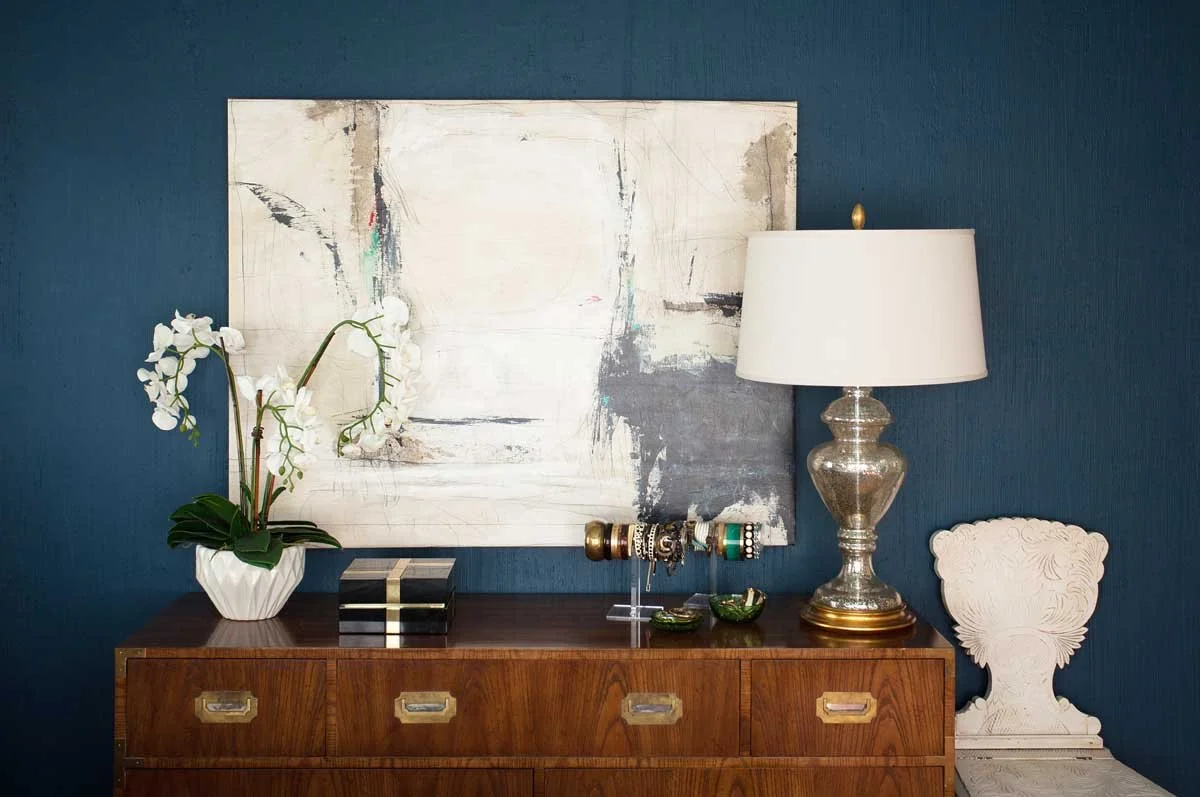
I've spent twenty years designing interiors across five countries; Berlin, Shanghai, cities across the US, and one thing remains constant no matter where I'm working: the homes that feel most alive are filled with art that means something.
Not matching prints from the furniture store. Not mass-produced canvases chosen because they're the right shade of gray. But real art. Handmade pieces with texture and soul. The kind of art you bought on vacation, or found at a local gallery, or commissioned from an artist whose work stopped you in your tracks.
I've learned working exclusively in Centennial, Castle Pines, Highlands Ranch, and Littleton over the past several years: people here have incredible taste. They collect beautiful things. They travel, they appreciate craftsmanship, they want their homes to reflect their actual lives.
But then all that art ends up stacked in the closet or leaning against the wall in the garage because they're not sure how to hang it, where to put it, or whether it all works together.
That's where I come in.
Why Handmade Art Matters (And Why It's a Smart Investment)
Let's start with why I'm so passionate about original art in homes.
When you buy a piece directly from an artist, whether it's an oil painting, a ceramic vase, a handwoven textile, or a turned wood bowl, you're supporting someone's creative practice. You're helping an artist pay their rent, buy supplies, and keep making work. In a world where so much of what we own is mass-produced overseas, there's something deeply satisfying about knowing exactly who made the thing on your wall.
But beyond the feel-good aspect, original art is also one of the smartest purchases you can make for your home.
Unlike that sofa that depreciates the moment you sit on it, or the trendy light fixture that'll look dated in five years, handmade art holds its value. Will every piece you buy increase in value like a museum-quality investment? No. But it also won't lose value the way furniture and decor do. A $500 painting you buy from a local artist today will still be worth $500 in ten years, and potentially much more if that artist's career takes off.
I've had clients sell pieces they purchased years ago for triple what they paid. I've also had clients keep pieces forever because they're meaningful. Either way, you win.
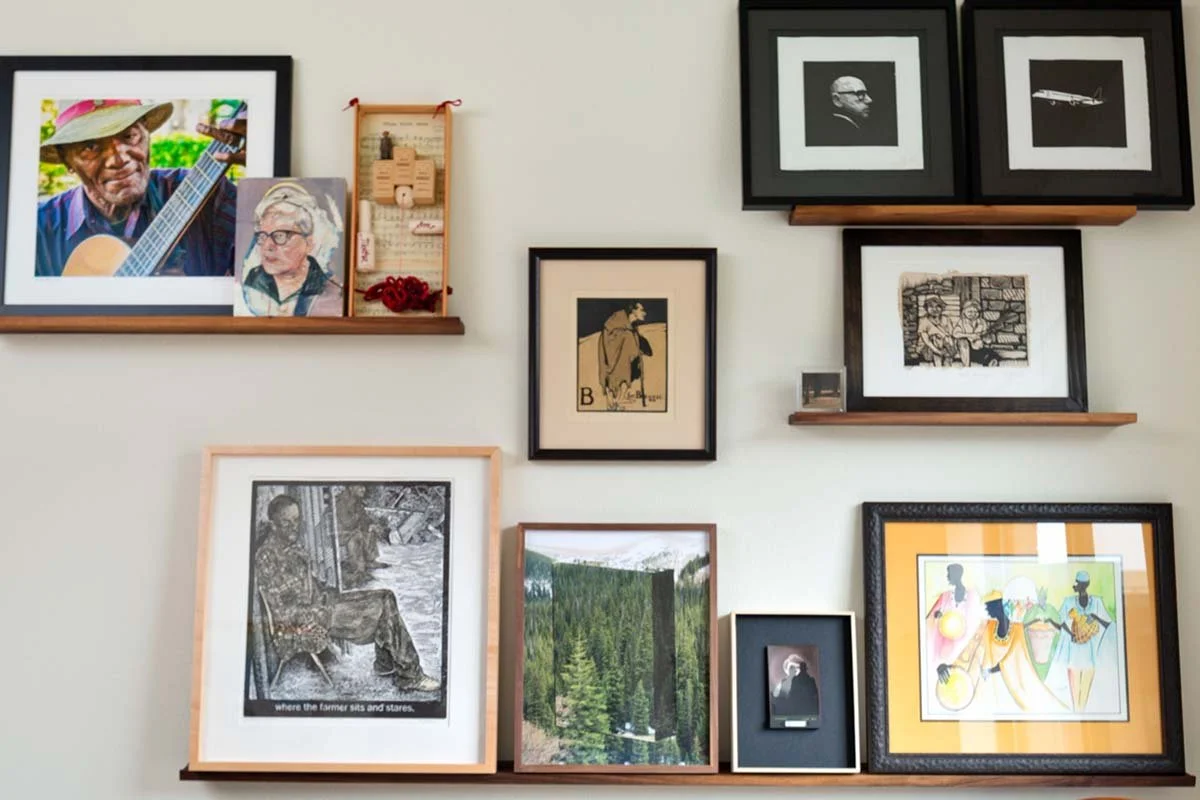
Art doesn't have to hang. Layered shelf styling mixes framed pieces, handmade ceramics, travel finds, and books for a casually collected look.
Where to Find Art in the South Denver Suburbs (No, You Don't Need to Drive to Santa Fe)
One of the questions I hear most often is: "Where do I even find original art?"
The answer: it's everywhere, if you know where to look.
Local Galleries Worth Your Time
The Denver metro area has an incredible art scene, and you don't have to venture downtown to find it. Some of my favorite local sources:
Gallery 1261 in Denver's Art District on Santa Fe has rotating exhibitions of contemporary work—paintings, sculpture, photography. They host First Friday art walks where you can meet the artists.
PlatteForum focuses on socially engaged contemporary art and often features emerging artists and students whose work is both affordable and compelling.
Spark Gallery in LoDo represents a cooperative of Colorado artists working in everything from oil painting to mixed media to ceramics.
But you don't even have to leave the suburbs. The Rox Arts Gallery at Aspen Grove in Littleton features local artists, and many of the boutiques in downtown Littleton and the Village Shops at Castle Pines carry work by regional makers.
Art Festivals and Shows
Colorado has fantastic art shows throughout the year:
Cherry Creek Arts Festival (July, Denver)
Castle Rock ArtFest (September)
Littleton Art Show (September)
Affordable Arts Festival (one of the best in the country, August)
I've helped clients find incredible pieces at these events; often directly from the artist, which means you get to hear the story behind the work and sometimes even commission custom sizes or colors.
Student Art Shows
Here's an insider tip: university and high school art shows are gold mines for affordable original work. Rocky Mountain College of Art + Design, University of Denver, and Arapahoe Community College all host student exhibitions where you can buy work for a fraction of what you'd pay at a gallery, and you're supporting emerging artists at the start of their careers.
I’ve purchased paintings, prints, and pottery that add so much interest to interior spaces at student art shows. This is a great place to get a lot of value for your investment when you’re just starting to look into original art.
Estate Sales, Antique Stores, and Vintage Markets
Some of my favorite art finds come from estate sales and antique stores in the South Denver area. Colorado Antique Gallery, Brass Armadillo in Wheat Ridge, and estate sales, even online estate auctions, throughout Littleton and Centennial often have original paintings, vintage prints, architectural drawings, and unique dimensional pieces at incredible prices. I’ve even picked up cool pieces at thrift stores that look fantastic in new frames.
The key is knowing what to look for; which paintings are worth reframing, which frames are worth saving, and how to spot quality work even when it's covered in dust.
Art From Your Travels
I always encourage clients to buy art when they travel. Not the mass-produced "souvenir" prints, but actual work from local artists and galleries.
That watercolor you bought in the French Quarter. The hand-thrown pottery from that studio in Taos. The textile you found at a market in Guatemala. These pieces carry memory and meaning that no decorator showroom can replicate. I’ve purchased antique scarves on Ebay that I’ve had framed and make incredibly unique statement art pieces.
And when we incorporate them into your home's design, they become conversation pieces that tell your story.
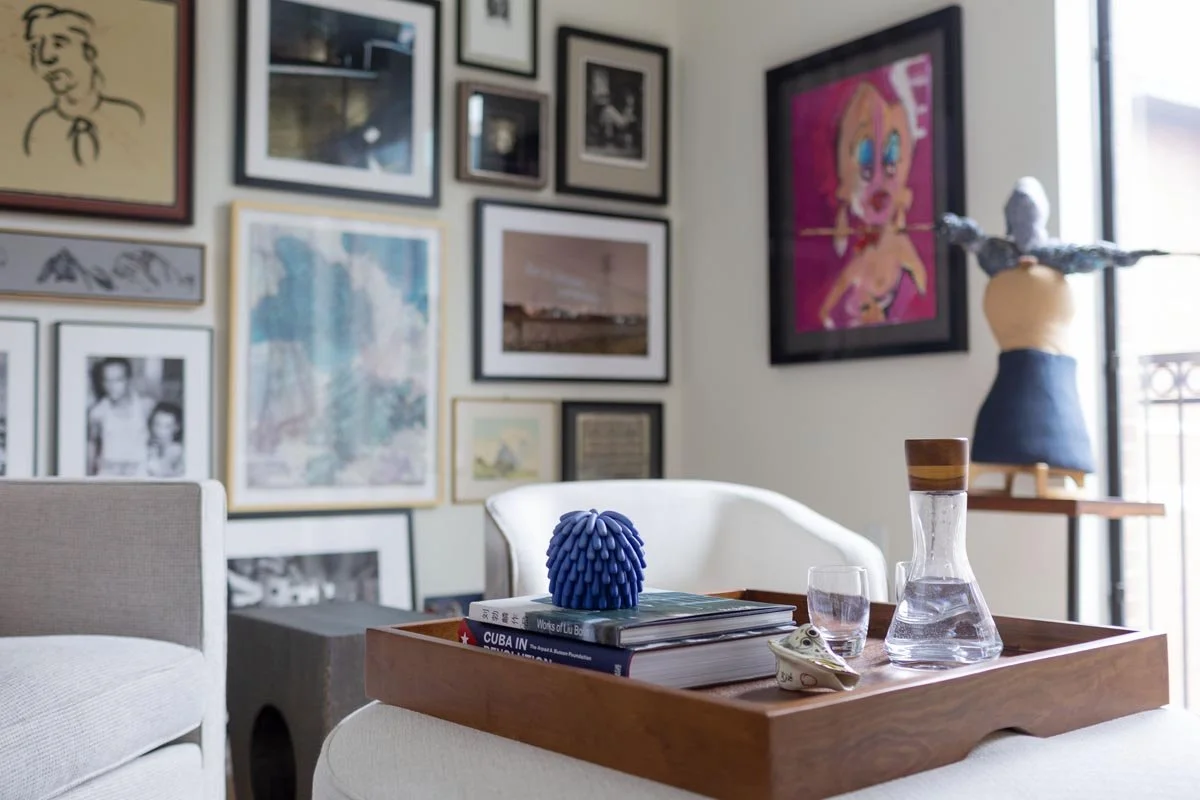
Art Isn't Just What Hangs on the Wall
When people think "art," they usually think paintings and prints. But some of the most interesting collections I've worked with include:
Sculpture: Tabletop pieces, pedestals, wall-mounted dimensional work Ceramics: Handmade vases, bowls, platters that you actually use Textiles: Woven wall hangings, vintage quilts, embroidered pieces Photography: Your own family photos, fine art photography, vintage prints Mixed media: Collage, assemblage, fiber art, encaustic paintings Functional art: Turned wood bowls, art glass, hand-forged metalwork
A truly curated collection mixes mediums and styles. An abstract oil painting next to a vintage botanical print next to a piece of dimensional ceramic wall art. Different frames, different eras, different techniques; all unified by a common thread of color, subject matter, or simply your personal taste.
This is what separates a collected-over-time look from a bought-all-at-once catalog aesthetic.
Phase 1: Understanding Your Collection and Your Gaps
First, we look at what you already have. I want to see everything; the pieces you love, the pieces you inherited, the things in storage, the vacation purchases still in their shipping tubes.
Often, clients have amazing art they've forgotten about. Or pieces they think "don't go together" that actually create an interesting tension when hung thoughtfully.
I also ask about gaps. Is there a large blank wall in your living room that needs a statement piece? Does your dining room feel cold because there's nothing on the walls? Are you drowning in small pieces with nowhere to put them?
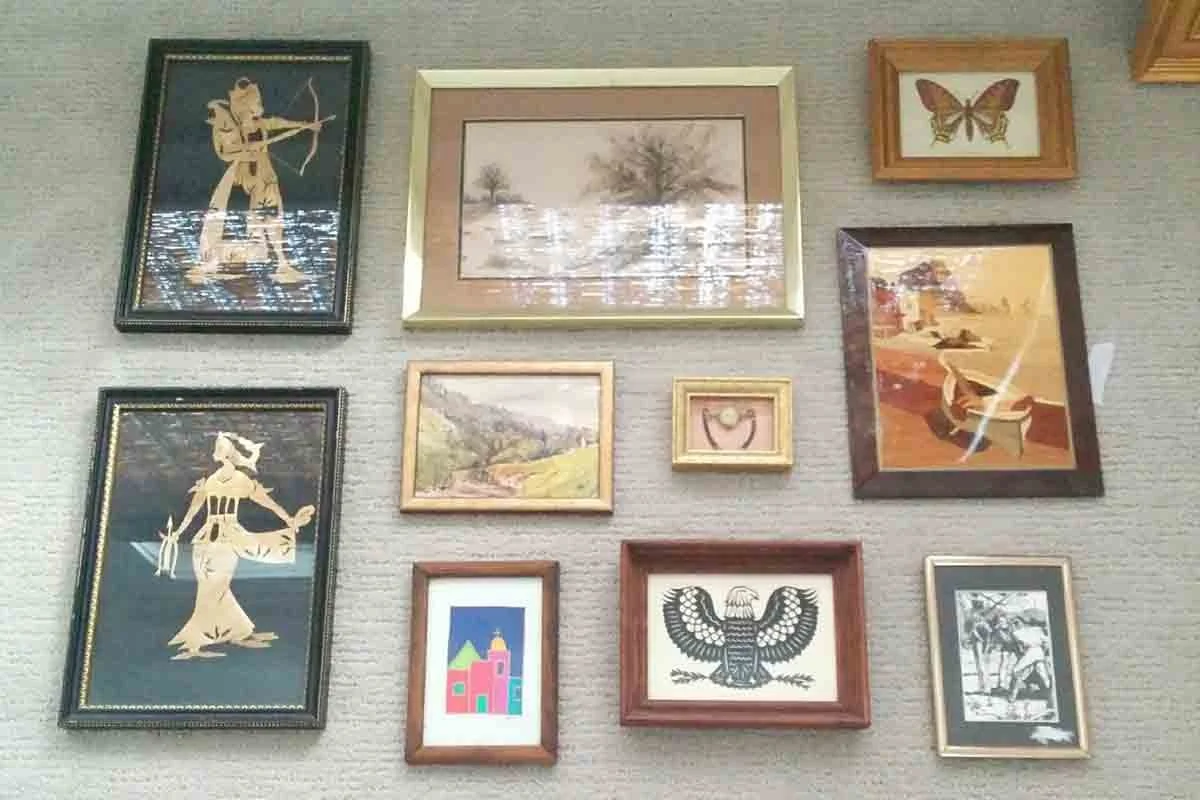
Before anything goes on the wall, we plan. Laying out all your art lets us see what works together, test combinations, and create the perfect arrangement. Here I’m laying out a collection of small scale art pieces, collected and inherited (including a family heirloom watch we had framed), to be hung in a powder bath in Highlands Ranch.
Phase 2: Procurement (Finding New Pieces)
If you need new art, I can help in a few ways:
I can shop with you. We'll visit galleries, art shows, and antique stores together. I'll point out pieces that work with your existing collection, your color palette, and your budget. Having a trained eye along means you're less likely to make expensive mistakes.
I can source pieces for you. If you're too busy or overwhelmed, I can scout for art on your behalf, send you photos, and purchase pieces with your approval.
I can connect you with artists directly. I work with several local artists and can facilitate commissions for custom sizes, colors, or subjects.
I can help you have your personal photographs printed and framed. This is one of my favorite services, taking your family photos, travel shots, or even iPhone pictures and turning them into museum-quality prints worthy of prominent display. For framing I like to use Framebridge and more locally Riveting Frame & Design.
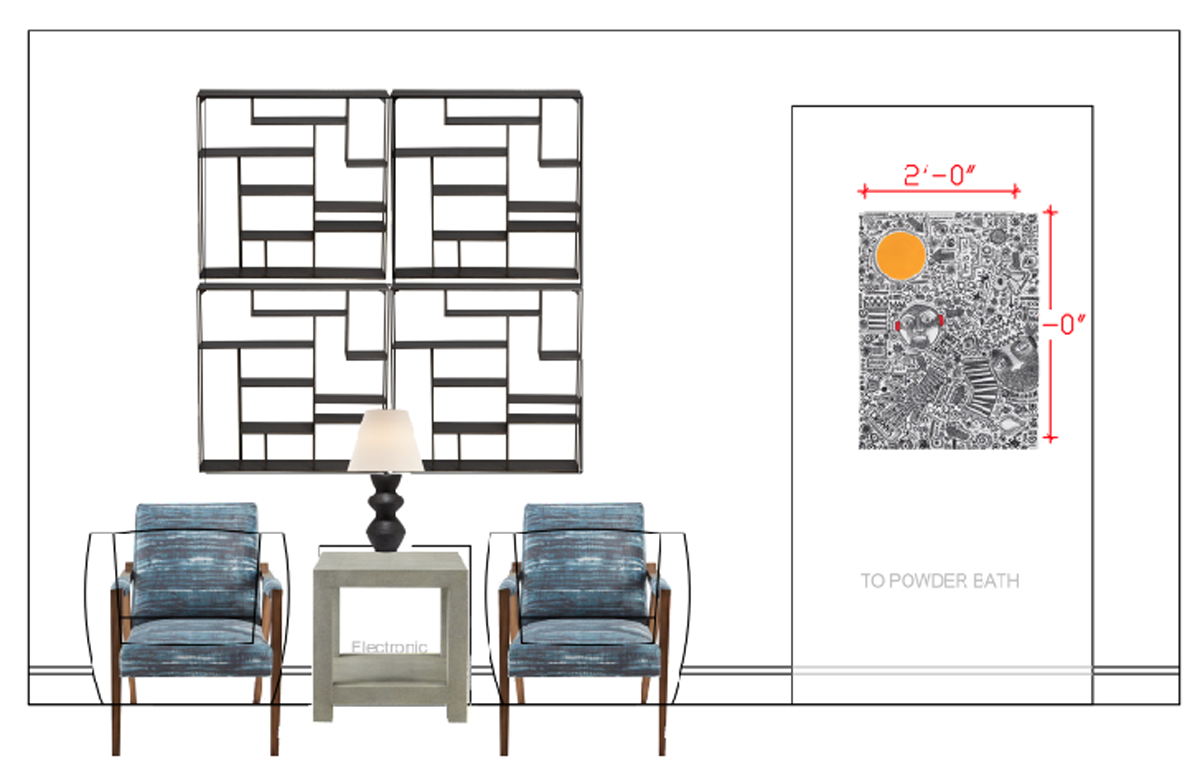
For this client, in Centennial, I’ve created crude but informative scale and placement locations for both shelves (the client has an extensive collection of smalls he’s collected while traveling), and art from an artist that perfectly fits in the space just beyond the family room. In this case we’re also working out styles of chairs the client prefers. At Jamie House Design we do what we can to help you visualize a solution that fits your style while remaining mindful of your budget.
Phase 3: Curation (Making It All Work Together)
This is where the magic happens.
I lay out all your art; everything you own, everything we've purchased, all your framed family photos, and start arranging combinations. What goes together? What creates visual interest? What tells a story?
Maybe your abstract painting pairs beautifully with that vintage botanical print because they share an unexpected color. Maybe your black-and-white family photos look incredible next to a colorful contemporary piece because the contrast is dynamic.
I'm looking at:
Scale: Mixing large anchor pieces with smaller supporting works
Color: Creating harmony or intentional contrast
Subject: Balancing abstract with representational, vintage with contemporary
Frame styles: Mixing metals, woods, and finishes in a way that feels collected, not chaotic
Negative space: Knowing when to leave breathing room
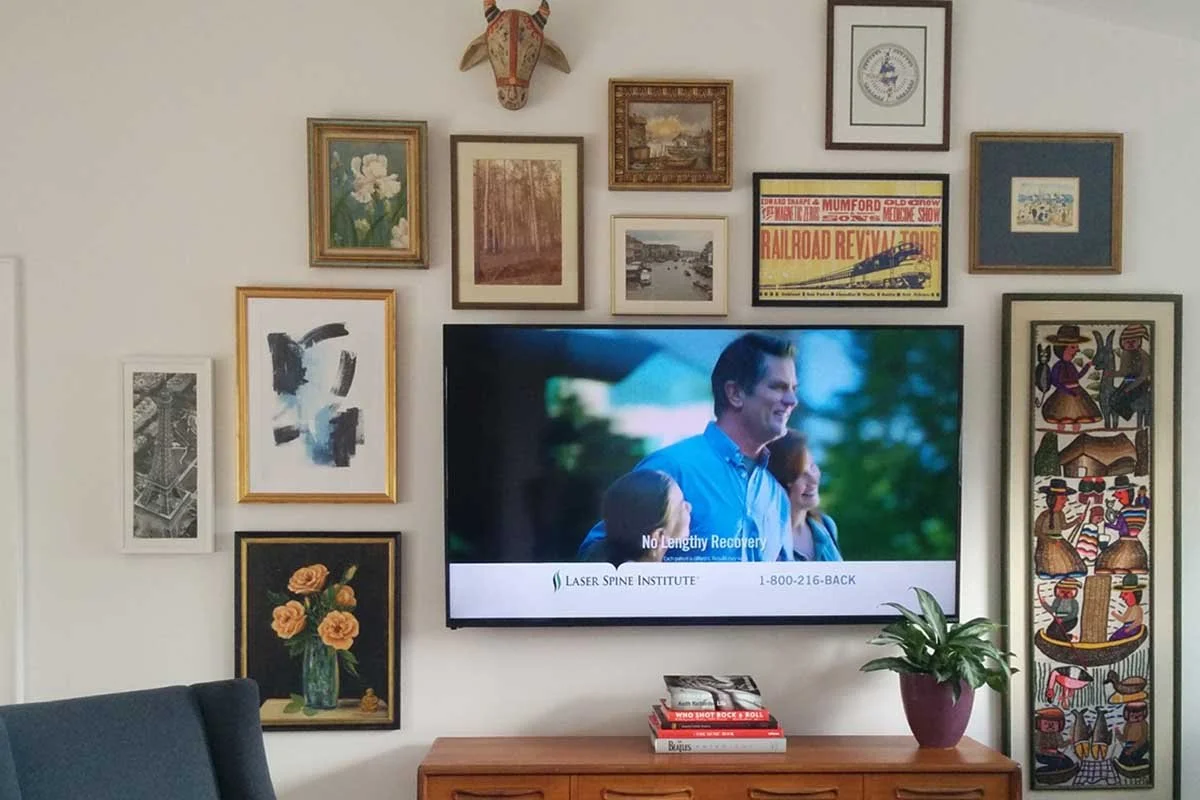
This is an example of using the art the client owns from family heirlooms to art collected while traveling. I arranged the art pieces around a TV in the loft area of their Highlands Ranch home. I do not typically do the hanging, I have art installation services that I recommend.
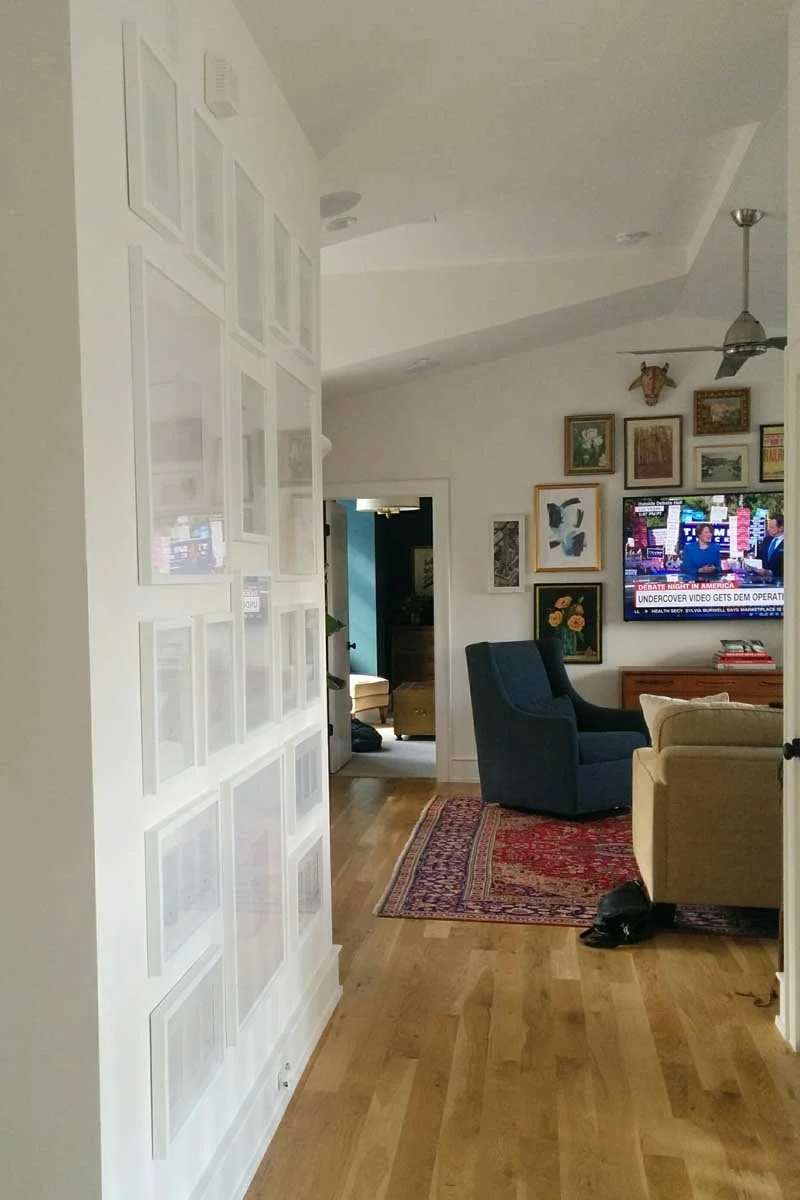
I always consider transitional spaces as opportunities to guide your home through your home but to also personalize your home. In this space I laid out a collection of new white gallery frames from floor to ceiling to be filled with black and white family photos. The family planned a night to gather them together, getting everyone involved creates memories while personalizing your space.
Phase 4: Placement (Bringing It to Life)
Finally, we have everything hung.
This is not random. I'm considering:
Sightlines: What you see when you enter a room
Furniture relationships: How art relates to sofas, consoles, beds
Lighting: Natural and artificial light on each piece
Height: Proper hanging height (usually 57-60" to center for most walls, with adjustments for furniture)
Spacing: Consistent gaps in gallery walls, breathing room for salon hangs
Balance: Visual weight distribution across a wall or room
I've had clients literally tear up when they see their art arranged for the first time. Not because I did anything magical, the art was always beautiful. But because finally seeing it displayed properly, in their home, all working together, makes them realize what they've been missing.
Real Examples: Gallery Walls, Salon Hangs, and Unexpected Pairings
Let me show you what this looks like in practice.
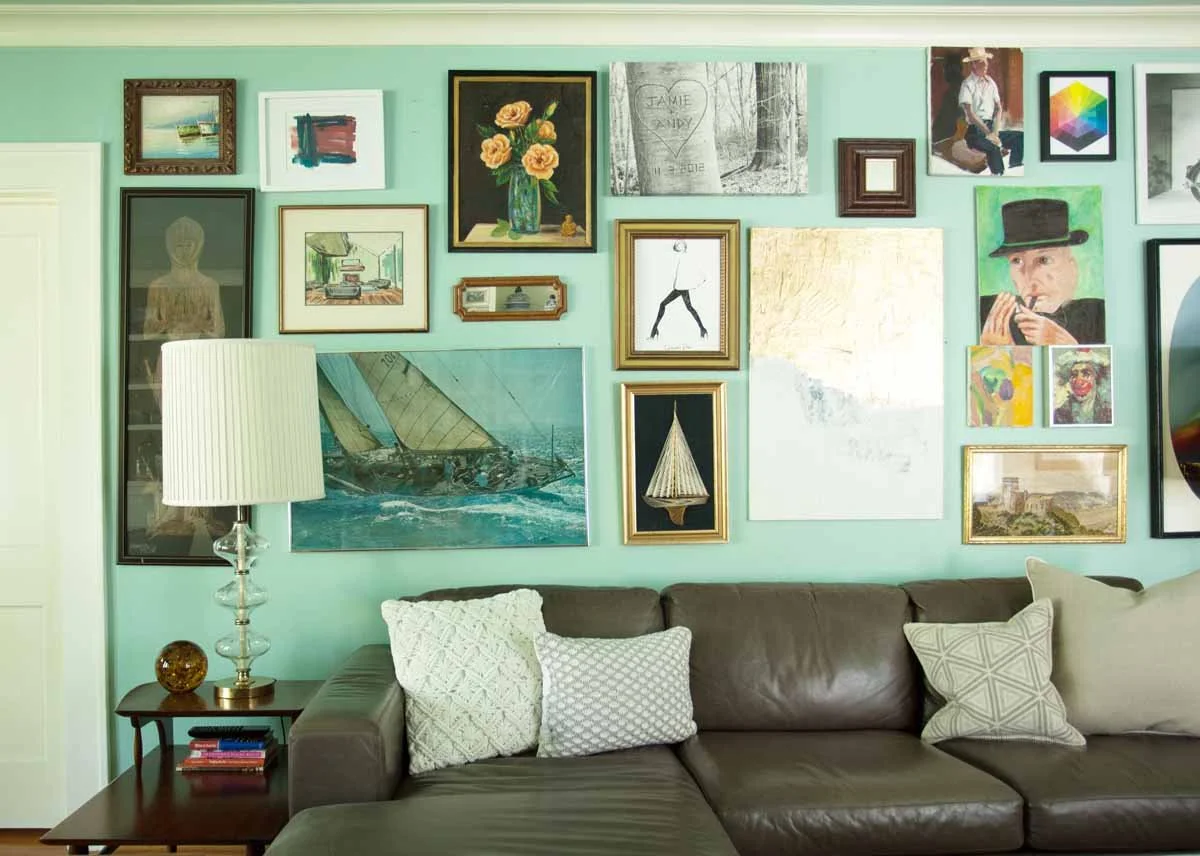
In my previous home, I had been collecting art for years; pieces I made in University, vintage finds, a painting from our home wedding, family photos, a few contemporary prints. Everything was different sizes, different frames, different styles.
On their own, if felt like chaos, overwhelming. But I also had a very long wall that needed art. And either one huge piece or a gallery wall. I went with gallery wall.
I created a salon-style gallery wall that mixes:
A large vintage sailboat race as the anchor
Antique rubbing of a female night standing on a unicorn.
A colorful contemporary abstract
Botanical prints in gold frames
A dimensional ceramic piece
Antique needlework
The "secret"? I unified the wall by keeping consistent spacing (2-3" between all pieces, as close as I could) and choosing a cohesive color story even though the subjects varied wildly. The result looks intentional, collected, and deeply personal.
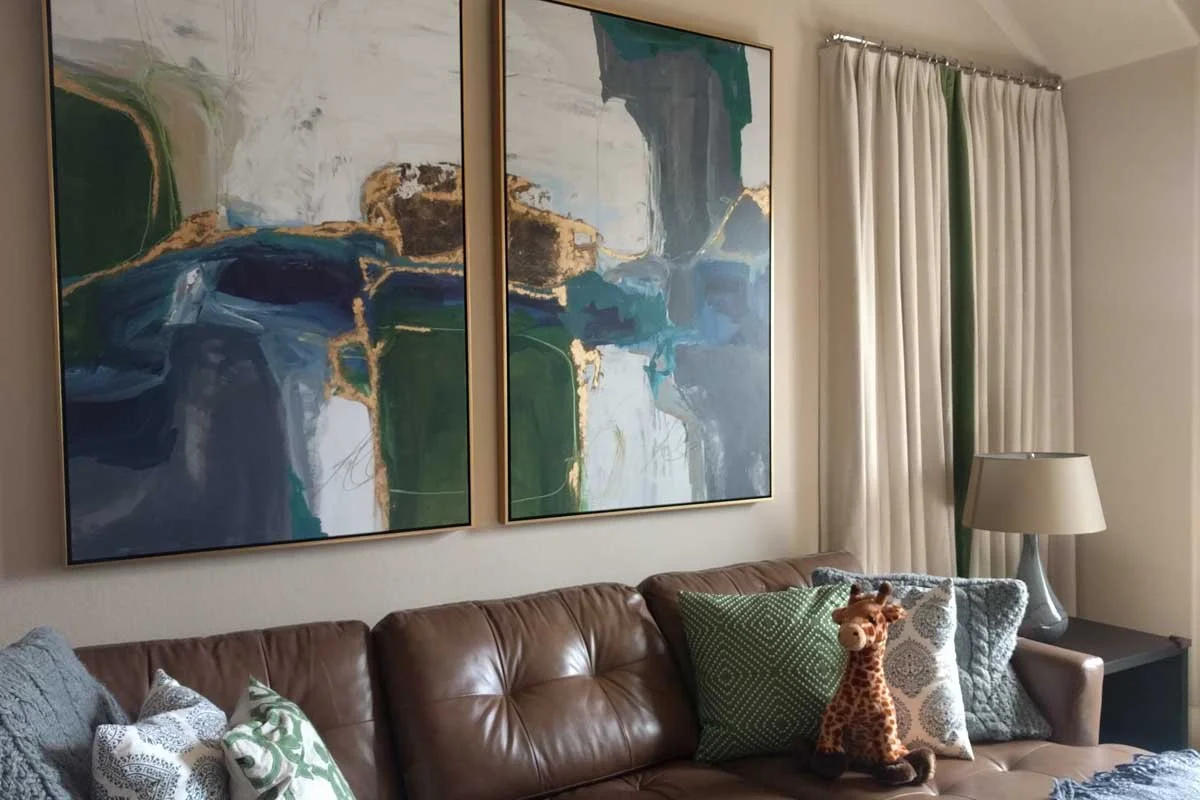
Not every wall needs a gallery arrangement. Sometimes a commissioned diptych is all you need.
This client found an artist they loved and commissioned a diptych to pull in colors they want in their family room. I provided the artist with fabric swatches and images of furniture and lighting selections. The artist brought the oomph.
We hung it as the focal point in their family room, centered above a leather sectional. The painting's colors pulled in the blues and greens from their pillows and custom drapery, and suddenly the whole room made sense. Statement art, properly placed, transformed the space.
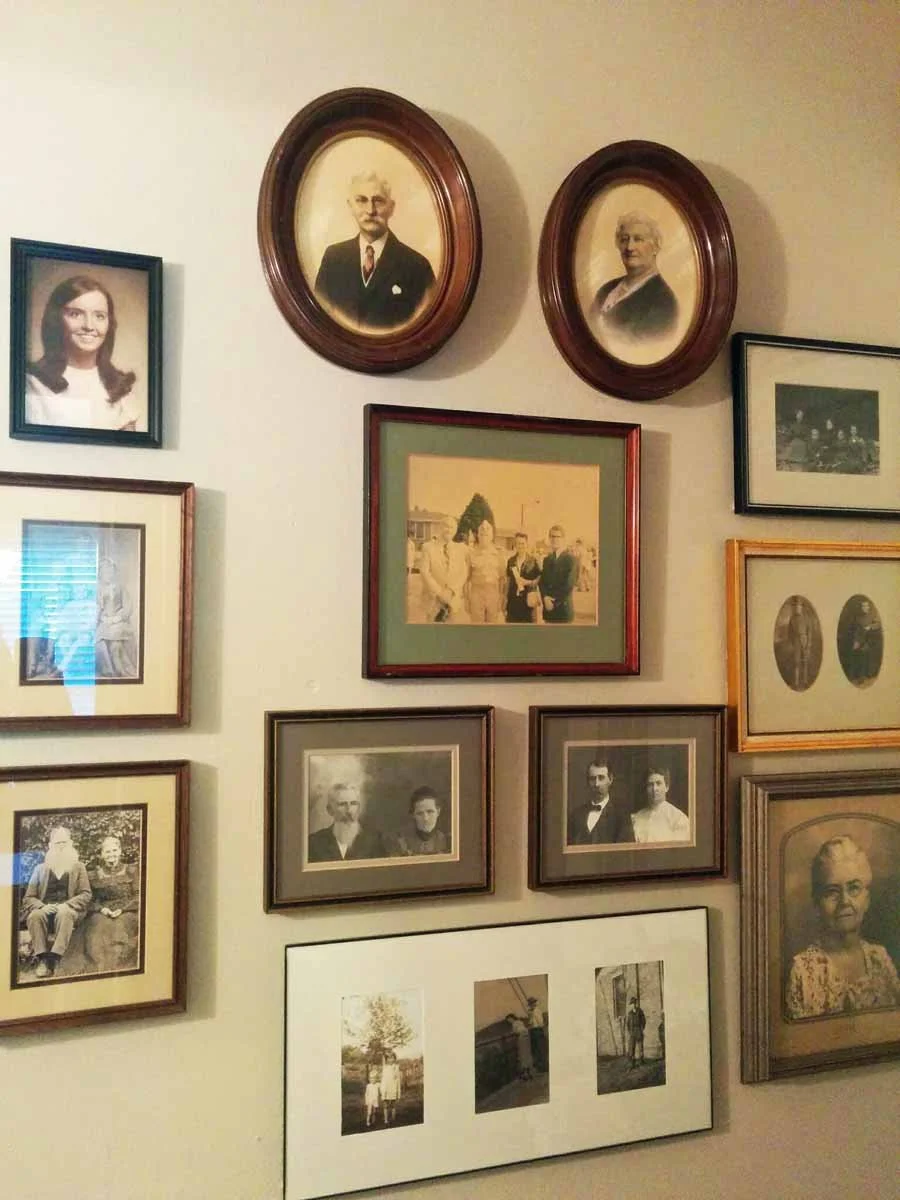
This client had piles of antique family photos; different frames, different eras, but nothing on their walls. Her home felt beautiful but impersonal.
I helped her sort through them to concentrate on the ones that felt meaningful to her, had them professionally hung in an arrangment that honors the time periods and creates interest in an otherwise uninteresting hallway. The treatment creates cohesion even though the photos span hundreds of years and multiple continents.
Now her hallway tells the story of their family in a way that feels museum-quality, not scrapbook-y.
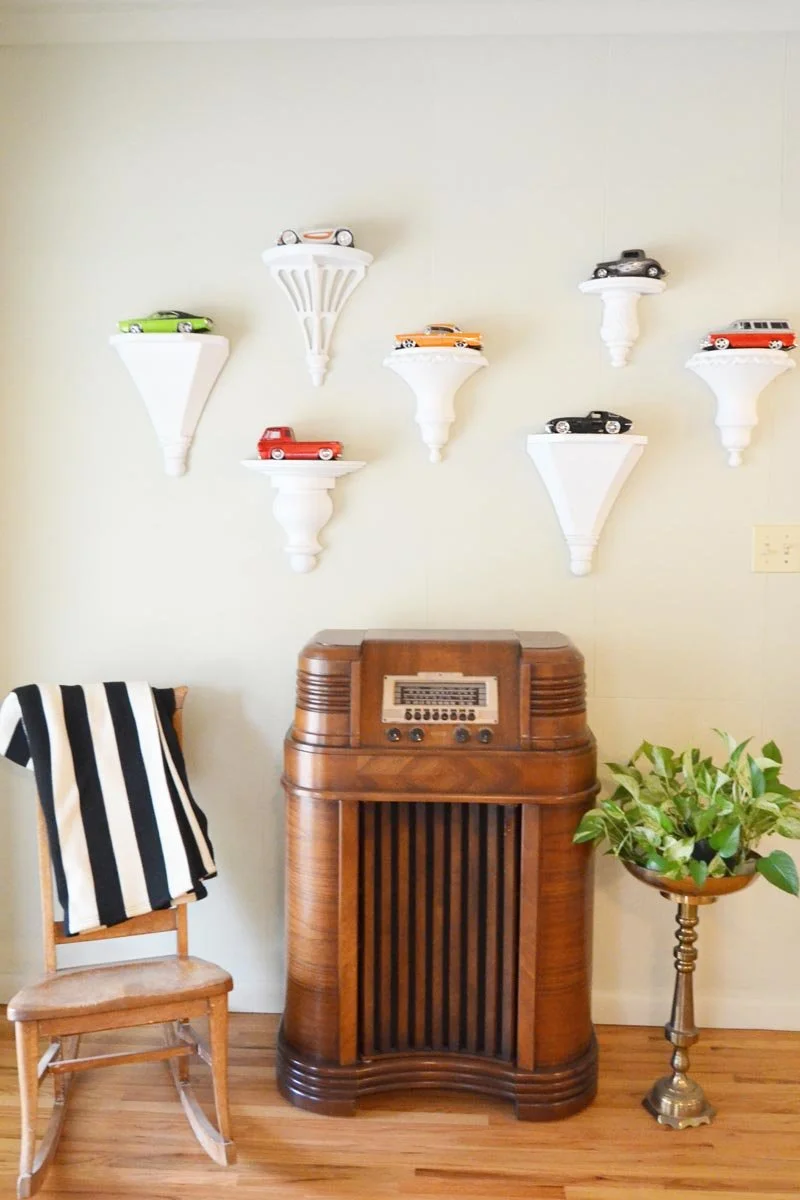
Art doesn't have to be framed paintings. This image is my Dad’s home where I collected brackets and had them all painted the same to display his favorite model cars. Some of my favorite moments happen on shelves, mantels, and console tables where we layer:
Framed art (some leaning, some propped)
Handmade ceramics
Small sculptures
Interesting objects from travels
Books
Natural elements (branches, stones, shells)
This layered approach feels casual and collected, like you've been curating beautiful things forever, even if we just arranged it last week.
What This Service Actually Looks Like
If you're in Centennial, Castle Pines, Highlands Ranch, or Littleton and you're sitting on a pile of art you don't know what to do with, or you want to start collecting but don't know where to begin, here's how we'd work together:
Consultation Service ($500 for 2 hours): We assess what you have, identify gaps, create a plan, and I give you specific sourcing recommendations and layout sketches you can implement yourself.
Partial Services (project-based pricing): I handle procurement, create detailed hanging plans with measurements, and you (or your handyman) execute the installation. This works well for clients who want professional guidance but prefer a hands-on approach.
Full-Service (hourly or project-based): I manage everything, sourcing, purchasing, framing coordination, installation, styling. You approve choices along the way, and I handle all the logistics.
All three options work. It just depends on your timeline, budget, and how involved you want to be.
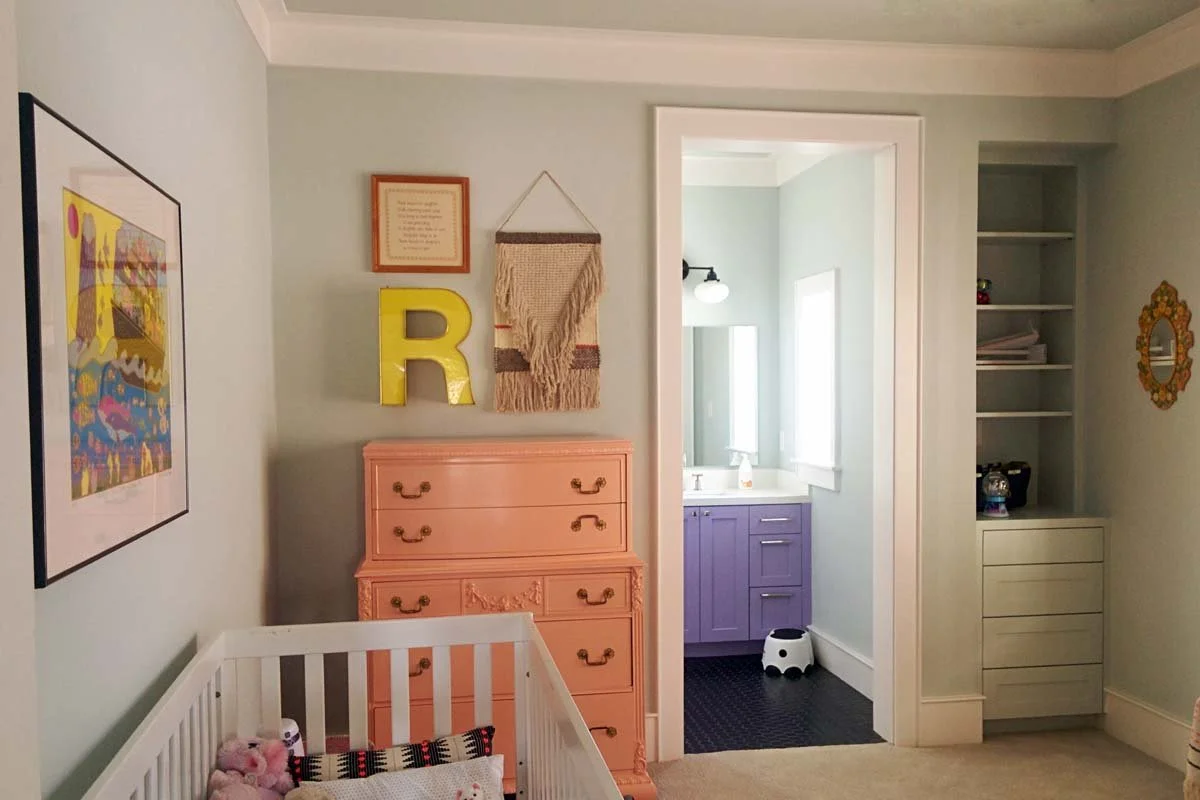
In this new construction home in Highlands Ranch we layered the colors in this nursery to grow with the child and to be playful without looking like a daycare. With those same thoughts in mind we collected and hung personal and antique art in her space to be both interesting and fun. Helping to create a lifelong appreciation of art and her space.
Why This Matters
I could write a blog post about kitchen remodel costs. I could talk about countertop materials and cabinet finishes and timeline expectations, and those are all important and I have talked about them.
But I want to write about art because this is where design becomes personal.
Your kitchen will be beautiful and functional. Your bathrooms will have all the right fixtures. Your furniture will be well-proportioned and properly scaled.
But your art? That's what makes your home yours.
It's the painting you bought on your anniversary trip. The ceramics you collected from that studio in the mountains. The family photos that make you smile every time you walk past them. The abstract piece you didn't think you could afford but splurged on anyway, and now it's your favorite thing you own.
After two decades of designing homes around the world, I've chosen to work exclusively in the South Denver suburbs because I love the people here. You're thoughtful, you're well-traveled, you have incredible stories and beautiful things.
My job is to help you see what you already have, and to find the pieces you're missing, and to arrange it all in a way that finally feels complete.
Because you deserve to walk into your home and feel like everything on the walls was put there on purpose. With intention. With love.
That's what good design does.
Ready to finally do something with all that art in your closet or work on curating a collection? Let's start with a consultation. I'll come to your home in Centennial, Castle Pines, Highlands Ranch, or Littleton, we'll look at what you have, and we'll create a plan that actually works.
About Jamie House Design
Based in Centennial, CO, Jamie House Design brings 20+ years of international design experience to South Denver homes. With architectural training and a commitment to understanding how families actually live, Jamie creates spaces that are both beautiful and deeply functional.
Related Articles: