Creating Your Personal Sanctuary: How to Design a Primary Suite That Feels Like a Five-Star Retreat
Your alarm goes off at 6:30 AM. You hit snooze twice, finally drag yourself out of bed, and immediately face the chaos of the day. Kids need breakfast. The dog needs to go out. You forgot to prep for that morning meeting. Before you've even had coffee, you're already behind.
Now imagine this instead: You wake naturally to soft light filtering through automated blackout shades. You pad over to your built-in breakfast bar, start your espresso machine (already prepped the night before), and actually sit down for ten minutes with your coffee and a book. The bedroom door is closed. The world can wait. This space is yours.
That's not fantasy. That's intentional design.
After spending years designing luxury suites in hotels and private residences from Berlin to Shanghai, I've learned something essential: the best primary suites aren't just beautiful, they're functional sanctuaries that actually improve how you start and end your day. And you don't need a 10,000-square-foot estate to create this. You need smart planning and a clear understanding of what will genuinely serve your life.
Let me show you how to design a primary suite that works as hard as you do, while feeling like a five-star hotel every single day.
What Makes a Hotel Suite Feel So Good?
Think about the last time you stayed at a Four Seasons or Ritz-Carlton. The moment you walked into that room, something shifted. You exhaled. The space felt calmer, cleaner, more intentional than your bedroom at home. But why?
It's not just about thread count or fancy toiletries (though those help). It's about layers of thoughtful design decisions that most people never consciously notice:
Light control that actually works
Hotel rooms have blackout curtains or shades that block 100% of light. No gaps at the edges. No streetlights bleeding through. When you want darkness, you get darkness. When you want natural light, it floods in with the touch of a button.
Everything has a place
There's no visual clutter. Remotes go in a drawer. Outlets are hidden but accessible. Luggage racks keep suitcases off the floor. Every surface has a purpose, and nothing is randomly piled.
Layers of lighting
You're never stuck with just one overhead light. There are reading lights by the bed, ambient lighting for evenings, task lighting at the desk. You control the mood by controlling the light. And turning off the lights from your nighstand/ bed feels so good after walking to the wall, for a switch, then walking across a dark room to go to bed for so long.
Climate control you can adjust
The room is the temperature you want it. Not too hot, not too cold, and you can change it without negotiating with anyone.
Intentional quiet
Sound is controlled. Carpets absorb noise. Doors seal properly. HVAC systems are whisper-quiet. The space feels like a retreat from the outside world.
But of course you know, you can have all of this at home. You just have to design for it from the beginning.
The Foundation: Motorized Blackout Shades (Yes, This Is Worth It)
If you do nothing else in your primary suite renovation, invest in motorized blackout shades. I'm going to be blunt: they're one of the highest-impact upgrades you can make, and homeowners consistently underestimate their value until they have them.
Here's why they matter:
You'll actually sleep better
Complete darkness triggers melatonin production. Even small amounts of light, streetlamps, car headlights, early sunrise, disrupt sleep cycles. Blackout shades eliminate that problem entirely.
They're effortless
With motorized operation, you can control them from bed via remote, phone app, or voice command. No more getting up to close heavy curtains. No more struggling with manual blackout shades that never quite align properly.
You can program them
Set your shades to open gradually in the morning, letting natural light wake you gently instead of a jarring alarm. Or schedule them to close automatically at sunset so you're never lying in bed realizing you forgot to shut them and now have to get up.
They look better than DIY solutions
No more clunky brackets, gapping curtains, or blackout panels you attach with Velcro. Professional motorized shades are clean, tailored, and nearly invisible when raised.
The investment: Expect $800–$2,500 per window depending on size and fabric. For a primary suite with three windows, you're looking at $2,400–$7,500 total. It sounds like a lot until you realize you'll use them twice a day, every day, for the next 15+ years. That's pennies per use, and it fundamentally changes how you experience your bedroom.
In Centennial and Highlands Ranch, where we get 300 days of sunshine and summer light that starts at 5:30 AM, this isn't a luxury, it's practical. In Castle Pines homes with mountain views, it lets you enjoy those views during the day and have complete privacy at night.
The Morning Game-Changer: A Built-In Breakfast Bar
This is the upgrade that clients tell me changed their entire morning routine. A small, thoughtfully designed breakfast bar built into your primary suite.
I'm not talking about a full kitchen. I'm talking about a dedicated spot; usually 4–6 feet of counter space, often in a walk-in closet, dressing area, or tucked into an alcove, where you can make coffee, have a light breakfast, and ease into your day before facing the household.
What to include:
Coffee setup
Either plumb for a built-in espresso machine or create a dedicated spot for a high-quality countertop model. Include an under-counter mini fridge for milk, creamer, or cold brew. Add a small drawer for coffee pods, beans, or tea bags.
Sink (if possible)
A small prep sink (15–18 inches) means you can rinse your coffee cup without leaving the suite. It's not essential, but it's worth considering if you're doing any plumbing work anyway.
Storage
Lower cabinets for mugs, a kettle, and breakfast items. Upper cabinets or open shelving for everyday dishes. A shallow drawer for napkins, spoons, and other small items.
Outlets with USB ports
At least two outlets so you're not unplugging the coffee maker to charge your phone. Include USB-C ports for convenience.
Good lighting
Under-cabinet lighting makes everything more pleasant to use. Include a dimmer so it's not harsh at 6 AM.
Why this works:
You can have your coffee while still in your pajamas, without encountering anyone else's morning chaos. You can ease into the day on your terms. And if you're someone who needs quiet time before engaging with the world, this creates that buffer zone without requiring you to leave your private space.
The investment: A simple breakfast bar setup (counter, cabinets, small appliances) runs $3,000–$8,000 depending on materials and whether you're adding plumbing. If you're already renovating your primary suite, adding this is a relatively small incremental cost with disproportionate daily impact.
For Castle Pines clients who travel frequently, this is especially valuable, it brings that hotel-suite functionality into your home. For busy Highlands Ranch families, it means parents can have a few minutes of peace before the morning rush begins.
The Bed: Where Investment Actually Matters
I'm going to say something that might sound obvious but that people ignore constantly: your bed is the most important piece of furniture in your home. You spend a third of your life in it. Yet most people invest more in their living room sofa than their mattress.
Hotels understand this. That's why their beds feel so good. They invest in quality foundations, proper mattresses, high thread-count linens, and layered bedding that looks and feels luxurious.
The mattress and foundation
This is deeply personal, so I won't prescribe a specific brand. But invest in a quality mattress that supports how you sleep. Don't buy the first thing a salesperson recommends. Test multiple options. Consider split kings if you and your partner have different preferences.
Equally important: the foundation. A proper box spring or platform bed makes a noticeable difference in how your mattress performs and how long it lasts.
Bedding that feels hotel-quality
This is where you can genuinely replicate the Ritz-Carlton experience at home:
Sheets
Look for 400-600 thread count Egyptian or Supima cotton. Higher isn't always better (beyond 600, you're often just paying for marketing). Buy multiple sets so you're never without when one is being washed.
Mattress pad
A quilted mattress pad adds an extra layer of comfort. Hotels use these universally.
Duvet or coverlet
Invest in a quality down or down-alternative duvet. Layer with a coverlet or quilt for visual interest and temperature flexibility.
Pillows
This is highly personal. Some people love down, others need firm support. Hotels provide multiple pillow types for a reason. Have options.
Shams and decorative pillows
This is where you can add personality. But keep it reasonable, you shouldn't have to move 12 pillows every night just to get into bed.
The investment: A quality mattress runs $2,000–$5,000. Proper bedding adds another $800–$2,000. Yes, that's a significant investment. But amortized over 10+ years of daily use, it's one of the best values in your home.
Nightstands That Actually Function
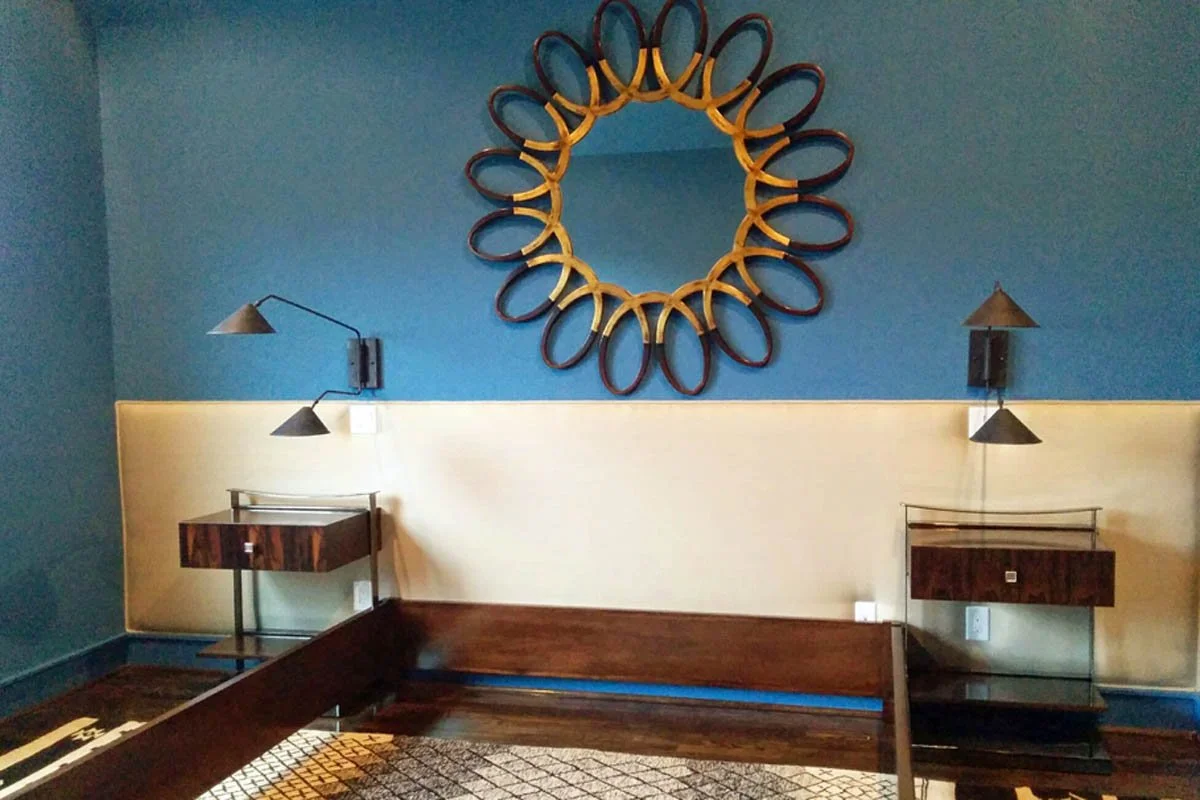
Hotel nightstands are designed for functionality: a surface for your book, water, and phone; a drawer for personal items; built-in outlets and USB ports; and adequate lighting for reading without disturbing your partner.
Your nightstands should do the same.
What to look for:
Adequate surface area
You need room for a lamp, a glass of water, your phone, and whatever book or magazine you're reading. Small nightstands look cute but function poorly.
At least one drawer or cabinet
Visible clutter kills the serene vibe you're trying to create. You need storage for reading glasses, hand cream, chargers, and whatever else accumulates.
Built-in power
Either wire power into the nightstand itself or position your nightstands where outlets are easily accessible. Nothing's worse than fumbling behind furniture to plug in your phone.
USB ports
Modern nightstands often include built-in USB charging. If you're buying new or doing custom millwork, include USB-A and USB-C ports.
Proper scale
Your nightstand should be approximately the same height as your mattress top, give or take a few inches. Too low and you're reaching down awkwardly. Too high and it's visually off.
The investment: Quality nightstands run $600–$2,500 each depending on materials and whether they're stock or custom. If you're doing built-in millwork (floating nightstands attached to the wall, or nightstands integrated into headboard cabinetry), expect $2,000–$5,000 for the pair.
Layered Lighting: Creating the Right Mood
Remember how I said hotels always have multiple light sources? That's not decorative, it's functional. Different times of day and different activities require different lighting.
What your primary suite needs:
Overhead ambient lighting
A central fixture or recessed cans provide general illumination. But this should not be your only light source, and it should always be on a dimmer.
Bedside reading lights
These can be table lamps, wall-mounted swing-arm sconces, or pendant lights hung from the ceiling. The key is that they provide focused light for reading without flooding the entire room.
Closet lighting
If you have a walk-in closet, it needs dedicated lighting. LED strips or recessed cans make it easy to see what you're choosing.
Bathroom lighting
This is its own category and requires separate planning, but it's part of your suite experience so it matters.
Accent lighting
Consider LED strips under floating vanities, behind headboards, or inside millwork. These create soft ambient glow for evening hours.
Lighting control
This is where smart home technology shines. With a single system (Lutron is the gold standard), you can program scenes: "Morning" gradually brings up lights, "Evening" dims everything to warm, soft levels, "Reading" illuminates bedside lights while keeping ambient low, "Sleep" turns everything off.
You control it all from a wall switch, your phone, or voice command. No more fumbling with multiple switches or getting up to turn things off after you're already in bed.
The investment: Quality bedside lamps run $200–$800 each. Overhead lighting fixtures range from $400–$3,000+ depending on style. A Lutron lighting control system for a primary suite adds $1,500–$4,000 but is worth every penny for daily convenience.
Storage That Keeps Visual Clutter at Bay
Hotels feel so serene because there's no visual clutter. Everything has a place, and that place is out of sight.
Your primary suite should work the same way.
Clothing storage
Ideally, your clothing is in a walk-in closet separate from the sleeping area. But even if you have a smaller space, prioritize closed storage over open. Visible clothing racks, piles on chairs, or overflowing baskets all work against the calm you're trying to create.
Tech management
TVs, speakers, and chargers create cable clutter. Use furniture with built-in cord management. Mount TVs on the wall with power and cables hidden. Consider a charging drawer where phones and tablets go at night, eliminating visible cords and the temptation to scroll in bed.
Bedside necessities
Everything you need within arm's reach, tissues, lip balm, eye drops, hand cream, should fit inside your nightstand drawer. If it doesn't fit, you have too much.
Climate Control You Can Adjust
Temperature is deeply personal. Some people sleep hot, others cold. Hotels solve this by giving you individual control over your room temperature.
Your primary suite should do the same.
Options:
Zoned HVAC
If you're building new or doing major renovation, zone your primary suite separately from the rest of the house. This lets you set your bedroom to 65°F while the rest of the house stays at 70°F.
Ceiling fans
A quality ceiling fan with remote control provides air circulation and personalized cooling. Modern fans are whisper-quiet and vastly more attractive than the builder-grade options from the 1990s.
Heated floors (for bathrooms)
If you're renovating your primary bathroom, radiant floor heating is a luxury that pays daily dividends. Stepping onto warm tile on a cold morning is genuinely transformative.
The Bathroom: Extending the Spa Experience
Your primary bathroom should feel like a luxury spa, not a utilitarian pit stop.
What makes the difference:
Quality fixtures
A rainfall showerhead, handheld sprayer, and body jets turn your shower into a legitimate spa experience. Invest in fixtures that feel solid and function reliably.
Heated towel rack
Warm towels after a shower are a daily luxury that never gets old. Wall-mounted electric towel warmers run $400–$1,200.
Soaking tub (if you'll use it)
Tubs are a very personal decision. If you genuinely enjoy baths, invest in a freestanding soaking tub. If you haven't taken a bath in five years, skip it and use that space for a larger shower or more storage.
Proper lighting
You need bright, even light at the vanity (for grooming) and softer ambient light elsewhere. Always include dimmers.
Storage that works
Vanity drawers should be organized with dividers for toiletries. Medicine cabinets should be recessed. Linen closets should be easy to access.
Sound Management: Creating Actual Quiet
Hotels invest in sound control: solid doors, weather stripping, carpet to absorb noise, and white noise systems.
Your suite should too.
Practical steps:
Solid core doors
If you're replacing doors, upgrade to solid core. They're heavier and block significantly more sound than hollow core doors.
Weather stripping
Adding weather stripping around your door dramatically reduces sound transfer and also improves heating/cooling efficiency.
Carpet or thick rugs
Hard flooring is beautiful, but it reflects sound. If your suite has hardwood or tile, add area rugs to absorb noise.
White noise
A subtle white noise machine (or even a fan) masks household sounds and creates consistent ambient noise that promotes sleep.
Common Mistakes to Avoid
After two decades designing primary suites from Centennial ranch homes to Castle Pines custom builds, I've seen these mistakes repeatedly:
Skipping the blackout shades because they seem expensive
This is the one upgrade people regret not doing. Sleep quality matters more than decorative pillows.
Buying a cheap mattress "for now"
"For now" becomes five years of poor sleep. Just invest properly from the start.
Overfilling the space with furniture
Your suite should feel spacious and breathable, not crowded. Less is more.
Ignoring storage needs
If visible clutter bothers you, design storage to handle it. Don't just hope you'll keep things tidy through willpower alone.
Adding a bathtub you'll never use
Be honest. If you don't regularly take baths, use that space for something you'll actually enjoy.
Treating this like a showroom instead of a sanctuary
Design for your actual life, not for Instagram. Function first, aesthetics second.
Your Space Should Serve You Every Single Day
Here's what I want you to remember: your primary suite isn't a guest room. It's not a space you're decorating to impress others. It's your daily retreat, the place where you start and end every single day.
That means every design decision should be filtered through one question: Will this actually make my life better?
Motorized shades mean you'll sleep better and wake more naturally. A breakfast bar means you get peaceful mornings before the chaos starts. Quality bedding means you rest more deeply. Proper lighting means you can read comfortably or create evening ambiance. Sufficient storage means visual calm instead of clutter.
These aren't frivolous luxuries. They're investments in your daily wellbeing.
Throughout Centennial, Castle Pines, Highlands Ranch, and Littleton, I work with families who are ready to transform their primary suites from basic bedrooms into genuine sanctuaries. Not because they want hotel-style luxury for its own sake, but because they recognize that how they start and end their day matters.
If you're waking up exhausted, dealing with harsh morning light, and navigating a cluttered bedroom that adds stress instead of providing peace, it's worth rethinking how this space is designed.
You deserve a room that serves you as well as any five-star hotel suite. The difference is, this one is yours every single night.
Ready to Create Your Personal Sanctuary?
Jamie House Design specializes in transforming primary suites throughout Centennial, Castle Pines, Highlands Ranch, and Littleton. Whether you're renovating an existing space or building new, I help you design a suite that genuinely improves your daily life.
Three ways to work with me:
Design Consultation
2-3 hour in-home session covering layout optimization, material recommendations, and realistic budget planning for your primary suite renovation.
Partial Design Services
Professional design for specific elements (bathroom, closet, built-ins) while you manage execution. Perfect for homeowners who want expert guidance on key decisions.
Full-Service Design
Complete project management from concept through installation, including space planning, contractor coordination, material selection, and final styling.
Schedule a consultation to discuss your primary suite project.
Related Articles:
About Jamie House Design
With 20+ years of international design experience, including work with luxury hotels across three continents, Jamie House brings both creative vision and technical expertise to every residential project. Based in Centennial, she works exclusively within South Denver suburbs, creating primary suites that function as beautifully as they look.
Service areas: Centennial, Castle Pines, Highlands Ranch, Littleton, Cherry Hills Village, Greenwood Village, Lone Tree
A Luxurious Primary Retreat by Jamie House Design
Creating a primary bedroom that serves as a true retreat is one of my greatest joys as an interior designer. Your bedroom should be more than just a place to sleep—it should be a sanctuary, a reflection of your style, and a luxurious escape from daily life. Today, I’m sharing a stunning transformation that embodies these principles.
This primary retreat, originally designed in Houston, showcases the timeless elegance and personalized design that Jamie House Design is known for. Now based in Denver, our approach remains rooted in sophisticated, high-end interiors that cater to the unique needs of each homeowner.
Creating a primary bedroom that serves as a true retreat is one of my greatest joys as an interior designer. Your bedroom should be more than just a place to sleep—it should be a sanctuary, a reflection of your style, and a luxurious escape from daily life. Today, I’m sharing a stunning transformation that embodies these principles.
This primary retreat, originally designed in Houston, showcases the timeless elegance and personalized design that Jamie House Design is known for. Now based in Denver, our approach remains rooted in sophisticated, high-end interiors that cater to the unique needs of each homeowner.
A Serene & Elegant Primary Bedroom
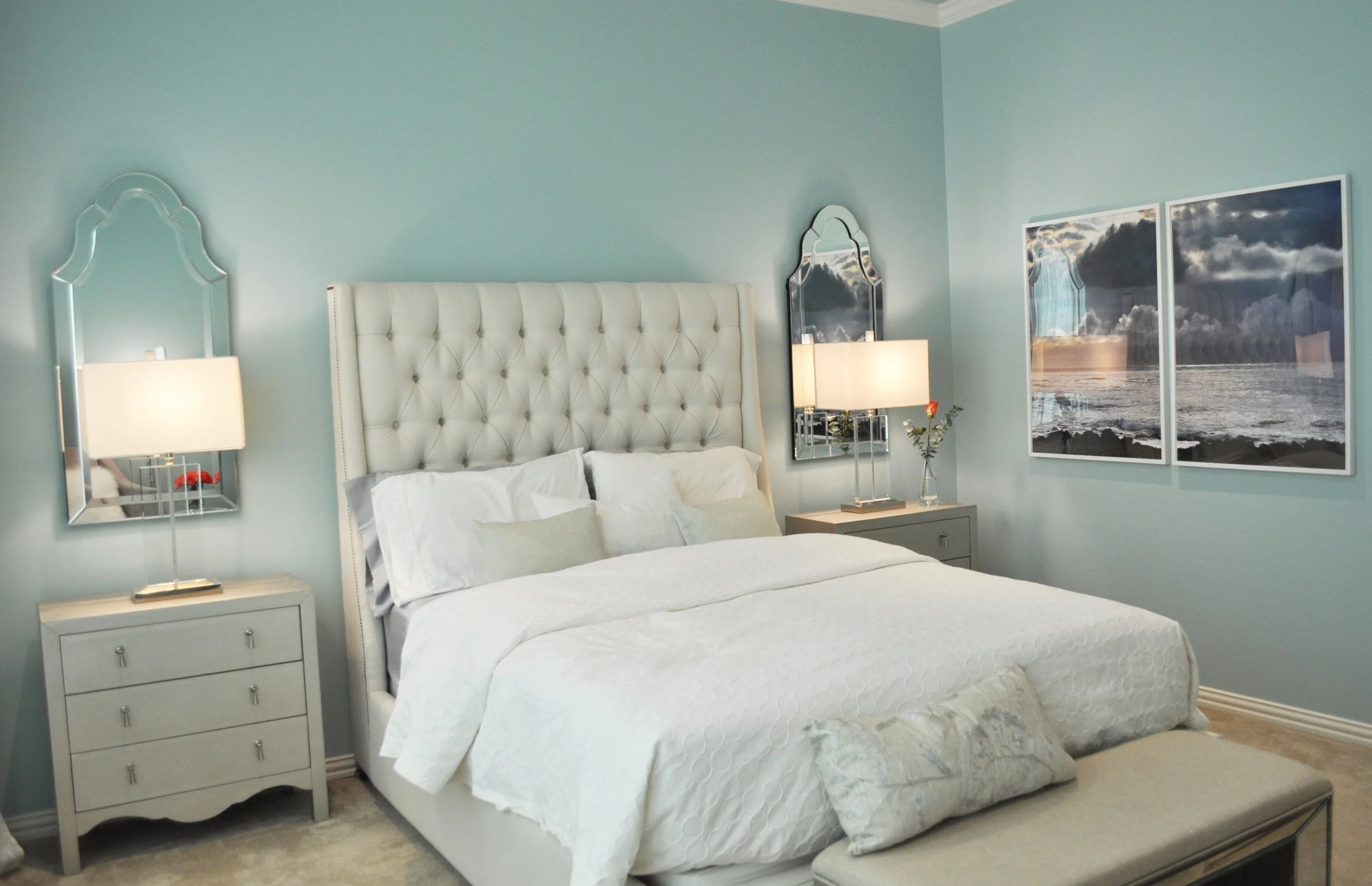
The foundation of this luxurious primary bedroom is a tranquil color palette. Soft aqua hues envelop both the walls and the soaring ceiling, creating a serene atmosphere. A full wall of windows, dressed in sheer embroidered drapery, allows natural light to filter in beautifully while maintaining a sense of privacy.
At the heart of the room is a sumptuous, tufted velvet bed, its high-back design adding a sense of grandeur. Flanking the bed, shagreen-covered nightstands provide both texture and elegance, each topped with crystal lamps that bring a touch of brilliance. Above them, tall, graceful mirrors enhance the feeling of space and light.
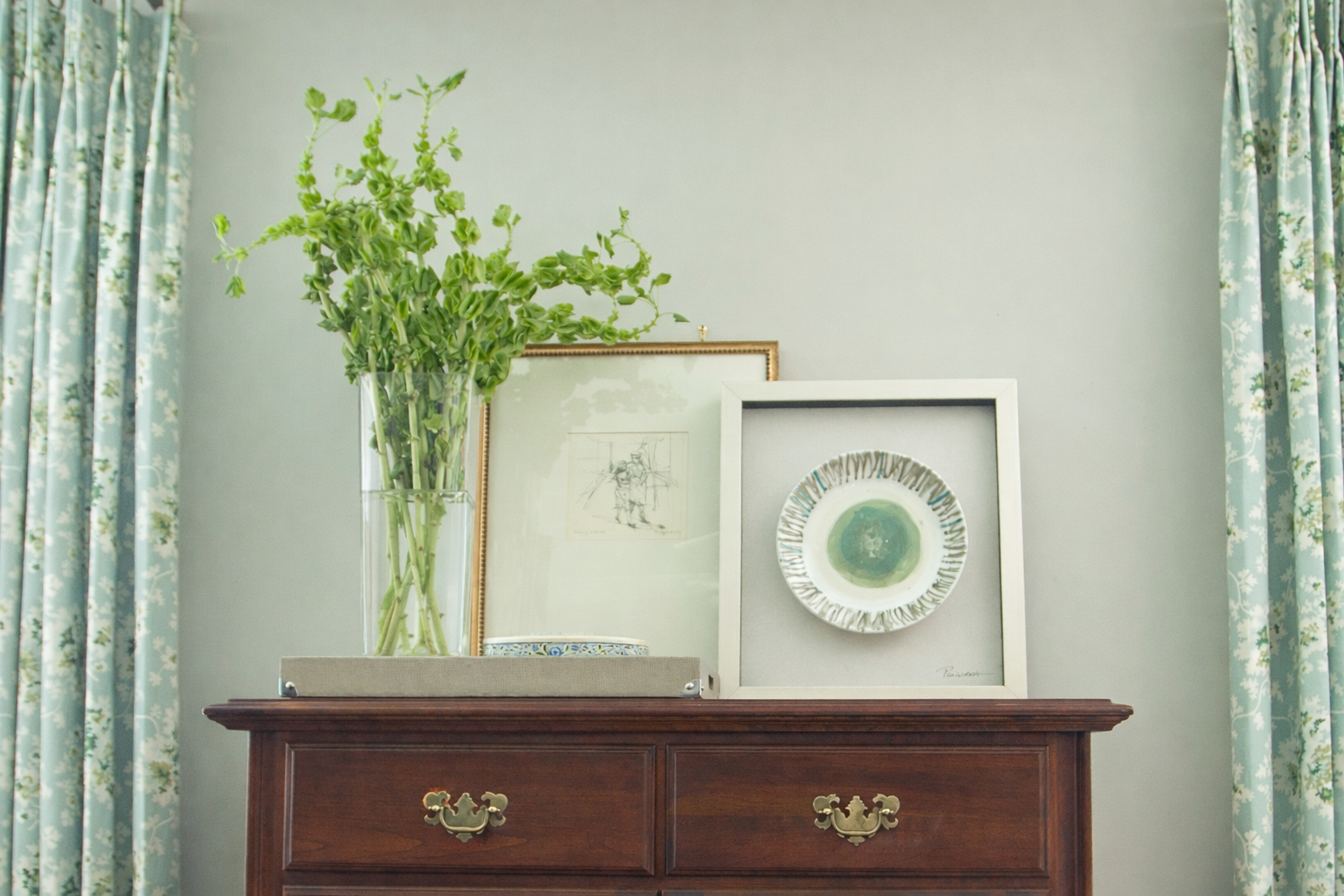
Art plays a pivotal role in this design. A diptych featuring a calming Hawaiian seascape serves as a striking focal point, grounding the room in a sense of tranquility. Across the space, a curated collection of art sketch prints adorns the wall above the client’s existing dresser, blending seamlessly with the refined aesthetic.
For moments of quiet retreat, a plush chaise lounge sits in the corner, offering a cozy spot to unwind—whether that’s escaping into a book, enjoying a morning coffee, or simply stealing a moment of relaxation from the demands of daily life.
Elevate Your Own Primary Bedroom
Luxury bedroom design isn’t just about aesthetics—it’s about creating a space that truly supports your lifestyle. Whether you dream of a serene escape, a bold and dramatic retreat, or a space infused with timeless elegance, Jamie House Design can bring your vision to life.
Based in Denver, we specialize in high-end interior design that reflects the individuality of our clients while delivering the ultimate in comfort and sophistication.
Are you ready to transform your primary bedroom into a luxurious sanctuary? Contact Jamie House Design today and let’s create a retreat that’s tailored just for you.