Why Your Kitchen Isn't Working (And How to Fix It Without a Full Renovation)
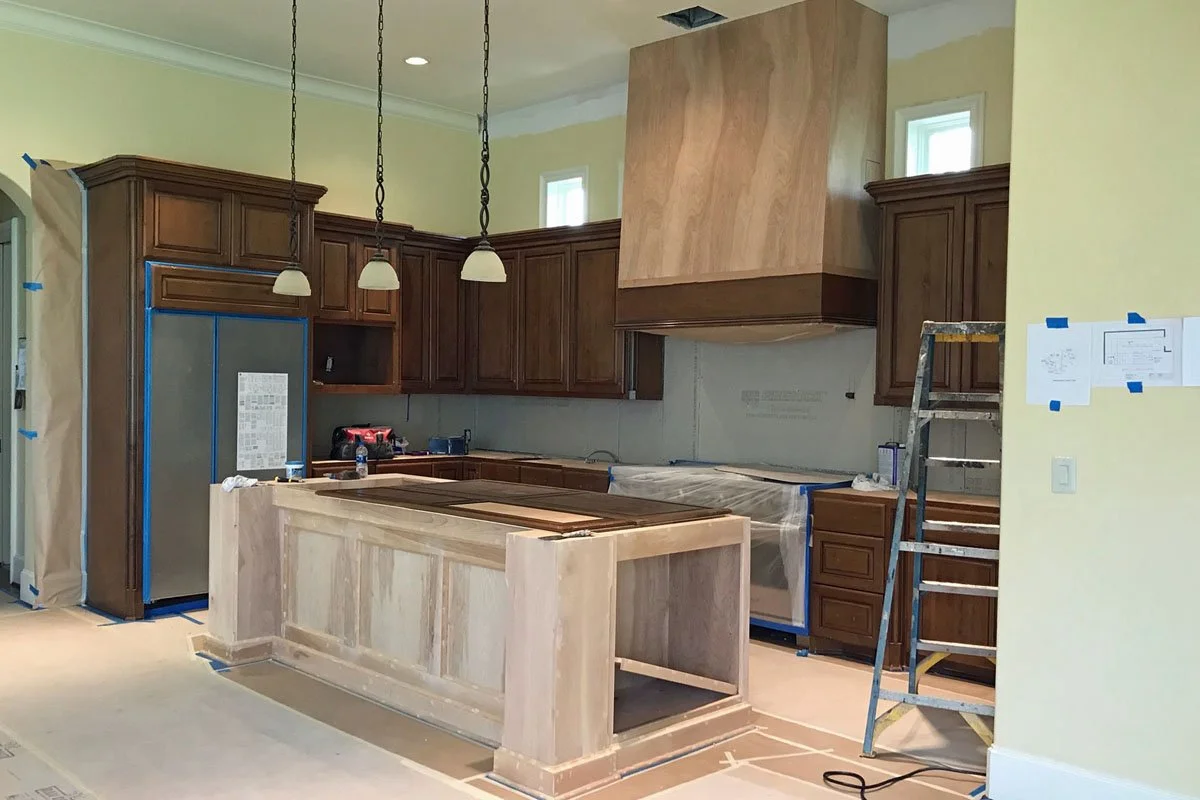
Most kitchens in Centennial and Littleton aren't broken. They're just wrong.
Not wrong in the way that requires tearing everything out and starting over; wrong in the way that means the space fights you every single day. The counter that's never clear because there's nowhere logical to put anything. The island you walk around constantly because it's positioned slightly off. The lighting that makes cooking feel like a chore. The layout that made sense when the house was built in 1991 and makes no sense for how your family actually uses it now.
I've been inside a lot of these kitchens. After 24 years designing homes, including most of the last several focused on the Denver suburbs, I've developed a clear sense of what's actually wrong versus what people think is wrong. The two are almost never the same.
Here's how I diagnose a kitchen that isn't working; and what can be fixed without a gut renovation.
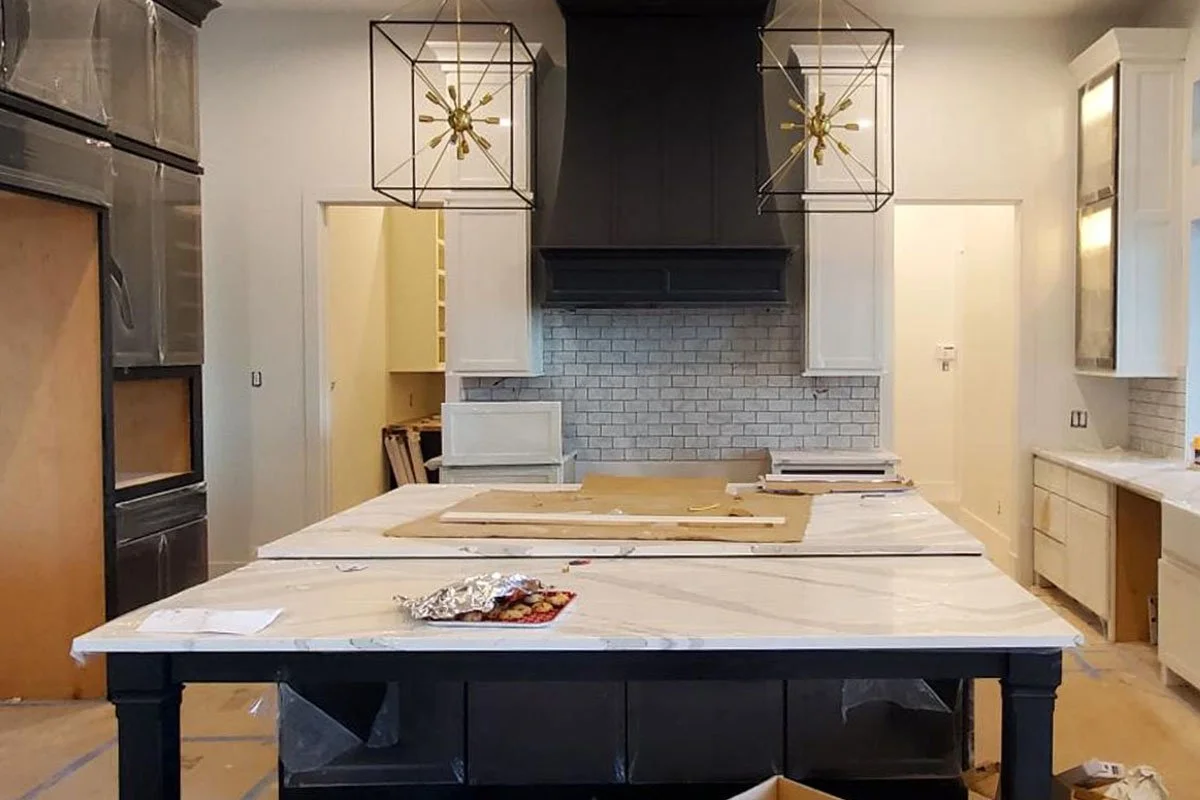
The most common problems, and what's actually causing them
The kitchen feels cramped but it isn't small.
This is almost always a layout problem, not a square footage problem. Specifically: the work triangle, the relationship between the refrigerator, sink, and stove, is inefficient, and traffic moves through the cooking zone rather than around it. In older Centennial ranch homes with closed floor plans, the kitchen was designed as a separate room where one person worked. It wasn't designed for two people cooking together, or for kids doing homework at the island while a parent cooks, or for the kind of open casual entertaining that's become normal.
The fix isn't necessarily removing walls, though sometimes it is. More often it's rethinking where things live; moving the refrigerator to a different position, adding an island that creates a better traffic path, or simply designating zones more deliberately so the cooking area and the pass-through area stop overlapping.
The counter is always cluttered.
This one is almost never about too much stuff. It's about not enough intentional storage close to where things are actually used. The coffee maker lives on the counter because there's no good cabinet for it. The cutting boards are stacked in a random cabinet because there's no pull-out near the prep area. The fruit bowl, the mail, the kids' school forms, they land on the counter because there's no designated home for any of them.
Thoughtful storage design; not more storage, but better-positioned storage, solves this without touching a single cabinet door. A drawer organizer in the right place, a dedicated appliance garage, a pull-out near the stove for oils and spices. These are real fixes that change how a kitchen functions daily.
The lighting is exhausting.
Builder-grade kitchens typically have one overhead fixture or a grid of recessed cans, all on one switch. This produces flat, institutional light that makes the space feel like a break room. It's not a mood issue, it's a functional issue. Flat overhead lighting creates shadows exactly where you need to see clearly: on the counter where you're chopping, at the stove where you're reading a recipe, at the sink where you're washing.
Under-cabinet lighting solves the task lighting problem and is one of the highest-impact, lowest-disruption changes you can make to a kitchen. Add pendants over an island on a separate dimmer circuit, and the room transforms from a place where work happens to a place where you actually want to be. No new cabinets required.
The finishes feel dated but everything is in good condition.
This is the situation where people most often assume they need a full renovation when they don't. Cabinets that are structurally sound but the wrong color, hardware that reads as 2005, tile that's perfectly functional but not what you'd choose today.
Cabinet painting is real and it works, with caveats: the prep work has to be done properly, the paint has to be the right product, and it has to be applied correctly or it will chip and peel within a year. Done right, it's transformative. Hardware replacement is one of the easiest and most underestimated changes in a kitchen, the difference between builder brass and a well-chosen unlacquered brass or matte black pull is immediate and significant. Backsplash tile can be replaced without touching the cabinets or counters if the layout allows it.
The kitchen doesn't connect to where the family actually gathers.
This is the structural one, and it's worth naming separately because it's the most common complaint in homes built before open-plan layouts became standard. The kitchen is closed off from the living room or dining room, which means whoever is cooking is separated from everyone else. In 1988 that was probably fine. In 2026 it's the thing people are most likely to want to change.
Opening a wall, creating a pass-through, or removing a partition entirely, is not a full renovation. It's a structural project, and it requires knowing which walls are load-bearing, but it can often be done in a few weeks with the right contractor. I've done this in Centennial homes where it completely changed how the family used the space. It's the single highest-impact change for kitchens in closed floor plans, and it frequently costs less than new cabinets.
What requires a full renovation
I want to be honest about this, because the answer matters for budgeting decisions.
If the layout is fundamentally wrong and can't be fixed without moving plumbing, a sink in the wrong location, a dishwasher that makes no sense where it is, you're looking at real renovation work. Moving plumbing is expensive and disruptive.
If the cabinets are structurally failing; doors that won't hang right, boxes that are warping, drawers that don't function, painting them is putting lipstick on a problem. Replace them.
If the countertops are damaged beyond the point of refinishing, or if the material is something that can't be updated in place (certain laminate configurations, outdated tile counters), replacement is the right call.
But in my experience, the majority of kitchens I walk into in Centennial and Littleton don't need all of those things simultaneously. They need one or two of them, and the rest can be addressed with targeted changes. The mistake is assuming that because one thing needs replacement, everything needs replacement. It usually doesn't.
How to figure out what your kitchen needs
The most useful thing I do in an early project conversation is walk through a kitchen with fresh eyes and tell clients honestly what's a layout problem, what's a lighting problem, what's a storage problem, and what's a finish problem. Those four categories have very different solutions and very different price tags.
If you've been living with a kitchen that frustrates you and you're not sure whether the fix is a $5,000 targeted intervention or a $80,000 renovation, that's exactly what a consultation is for. Two to three hours in your home, a clear assessment of what's actually wrong, and an honest answer about what it would take to fix it.
Consultation: $500, credited toward full-service if you move forward within 60 days.
If this was useful, these might be too: