Holiday Hosting, the Jamie House Design Way: Warmth, Ease & Elevated Style
There's a particular alchemy to hosting well. It's the moment your guests cross the threshold and exhale, not because the table is perfect, but because it feels like you. The lighting is soft. The air carries warmth. Nothing is trying too hard, yet everything feels considered.
At Jamie House Design, we believe that hosting during the holidays shouldn't feel like performing. Whether you're welcoming family to your Centennial home for Thanksgiving or gathering friends in Littleton for a more intimate celebration, the most memorable gatherings are the ones where the host is present, relaxed, and genuinely enjoying the moment.
That ease doesn't happen by accident. It's the result of thoughtful planning, a clear point of view, and design choices that do the heavy lifting so you don't have to. This year, as you prepare to open your home, consider these two approaches; each beautiful, each achievable, and both rooted in the principle that style should serve life, not complicate it.
Approach One: Relaxed Elegance
Think of this as the cashmere sweater of hosting. Elevated enough to feel special, but so comfortable that no one—including you—feels the need to tiptoe. This is the Ralph Lauren Thanksgiving: rich textures, warm layers, and an ease that comes from confidence rather than formality.
The Foundation: Natural Textures & Warm Neutrals
Begin with a base of natural materials. Linen table runners in oatmeal or warm gray. Worn leather chairs at the head of the table. Wooden serving boards that carry both function and patina. The palette is restrained; cream, camel, sage, and the deep brown of a well-loved saddle, allowing the food itself to become the color story.
This approach thrives on texture rather than pattern. A chunky knit throw draped over the back of a dining chair. Woven placemats layered beneath simple white plates. The play of matte and gloss, rough and smooth, creates visual interest without demanding attention.
The Table: Effortless Layers
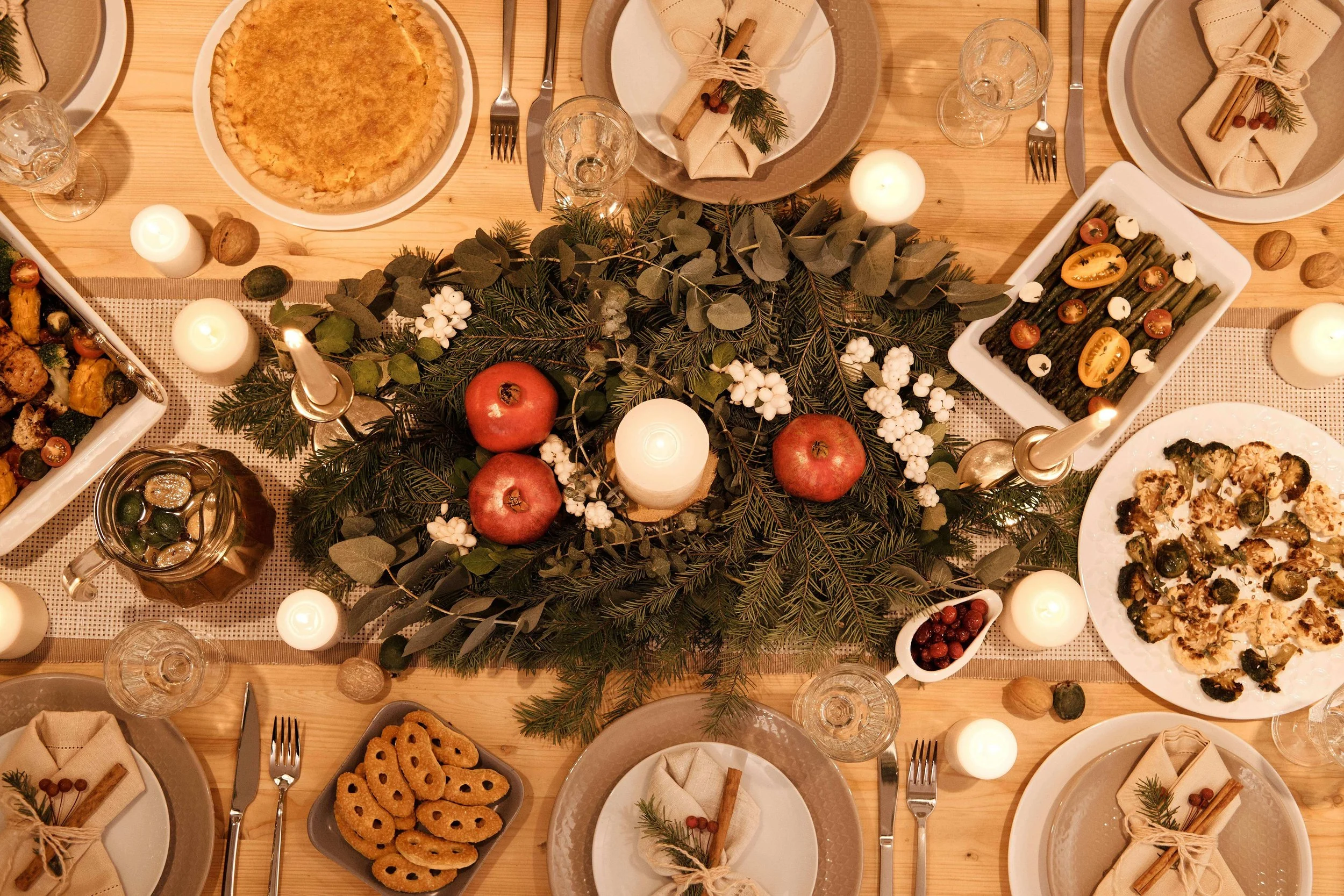
Set your table the day before. There's no reason to rush this. Use white or cream dishes, something classic that won't date in photographs or memory. Layer in vintage brass candlesticks or wooden taper holders. If you have heirloom silver, this is the moment. If not, simple flatware in a matte finish feels equally grounded.
For centerpieces, resist the urge to over-design. A low arrangement of seasonal greenery; eucalyptus, olive branches, or even clippings from your yard, feels more honest than forced florals. Tuck in a few mini pumpkins or winter squash if the mood strikes, but keep everything low enough that conversation flows uninterrupted.
Cloth napkins, always. Linen in natural tones, perhaps tied with leather cord or simple twine. If you're using place cards, write them by hand on small kraft paper tags. The imperfection is part of the charm.
The Lighting: Soft & Layered
Overhead lighting should be dimmed or, better yet, turned off entirely. Rely instead on candlelight; tapers in varying heights along the table, votives clustered on the sideboard, perhaps a pillar or two on the mantel. If your dining room has sconces, set them to a warm, low glow.
The goal is to create pockets of light rather than even illumination. Shadows aren't something to eliminate; they're what makes a space feel intimate. By the time your guests arrive, the room should feel like it's glowing from within.
The Details That Matter
Music should be present but not prominent. A playlist of instrumental jazz or acoustic folk, something that adds warmth without competing for attention. Nothing too recognizable. Nothing that will pull focus from the conversation.
Scent, used sparingly. A single candle in the entry, something woody or spiced, never sweet. By the time guests reach the dining room, the only scent should be from the food.
Have drinks ready when people arrive. A signature cocktail keeps things simple: perhaps a bourbon-based old fashioned or a sparkling wine with a sugar cube and bitters. Offer it as they walk in, before coats are even fully removed. This signals that the evening has begun and you're already in hosting mode, not scrambling.
What to Wear
Your clothing should echo the table. Cashmere in camel or cream. A silk blouse tucked into high-waisted trousers. Loafers or low heels—something you can stand in comfortably for hours. If you're wearing an apron while finishing last-minute details, make it linen in a neutral tone. Even your work should look considered.
Approach Two: Elevated & Intentional
This is the hosting style for those who love the ceremony of it. It's more polished, more layered, and requires additional planning; but the result is a Thanksgiving that feels like an event. Not stuffy, but decidedly special. The kind of gathering people remember and reference for years.
The Foundation: Considered Color & Pattern
Here, you can introduce more color. Deep jewel tones work beautifully for fall; emerald, sapphire, burgundy, or you might lean into unexpected sophistication with charcoal and blush. The key is cohesion. Choose two or three colors and let them repeat throughout the table, the florals, and even your serving pieces.
Patterns can enter the conversation through linens or china. A subtle stripe on the tablecloth. A delicate floral on vintage plates. But resist the urge to mix too many patterns, this approach is about refinement, not eclecticism.
The Table: Layered Like a Work of Art
Start with a beautiful tablecloth. Linen, always, but perhaps in a deeper tone; charcoal, forest green, or even a muted plum. Layer a runner down the center if your table is long enough. This creates a visual anchor and provides a stage for your centerpiece.
Chargers beneath your dinner plates add formality. Choose something with subtle texture, woven rattan, hammered metal, or even marble if you're feeling bold. The dinner plates themselves can be your opportunity for pattern or a pop of color, but keep everything else neutral to balance the richness.
Crystal glassware catches candlelight in a way that plain glass cannot. If you don't own a full set, even mixing a few crystal pieces among simpler glasses elevates the entire table. Same with silverware, real silver, if you have it, polished the day before. The weight of it in the hand signals that this meal is significant.
Napkins should be more formal here: perhaps linen in a deeper color, folded into a classic rectangle and topped with a simple napkin ring. Brass, silver, or even wrapped with velvet ribbon. Place cards are non-negotiable for this style, handwritten in calligraphy or printed in an elegant serif font.
The Centerpiece: Intentional Abundance
This is where you can indulge. A proper floral arrangement, something lush but still low, becomes the focal point. Work with a local florist or create your own using seasonal blooms: garden roses, dahlias, astilbe, and plenty of textured greenery. The arrangement should feel abundant without being precious. Slightly wild, but clearly intentional.
Flank the centerpiece with taper candles in varying heights. At least five, perhaps seven if your table is long. The candlesticks should be beautiful—vintage brass, silver, or hand-blown glass. When lit, the entire table should shimmer.
The Lighting: Dramatic & Warm
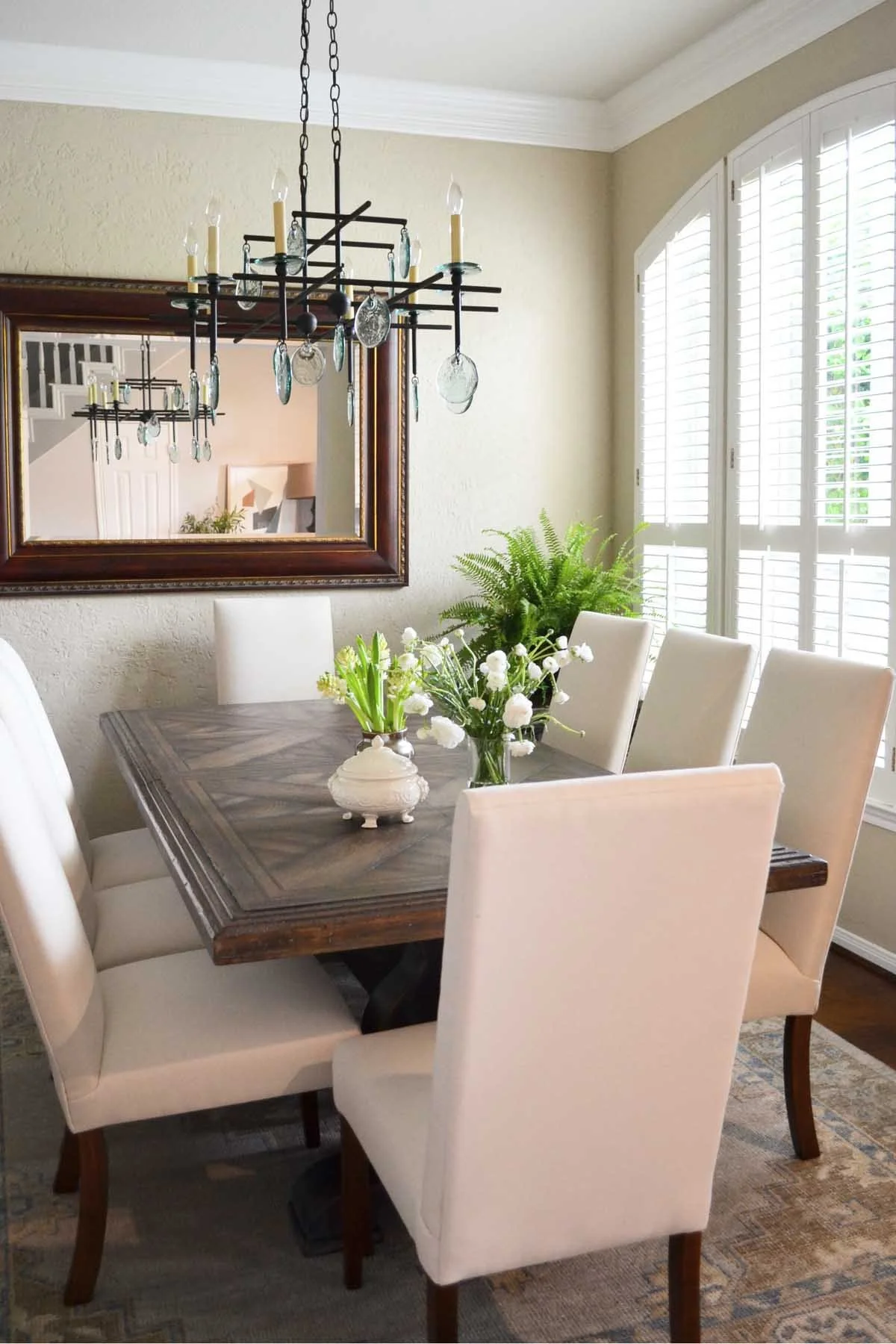
If you have a chandelier, this is its moment. Dim it significantly, you want it to glow, not illuminate. Add additional light sources at different levels: tall candlesticks on the table, votives on the sideboard, a pair of table lamps in the adjoining room visible from the dining space.
Consider adding small string lights or a subtle garland with tiny lights woven into the mantel arrangement. The effect should be magical without veering into overtly festive. You're creating ambiance, not decoration.
The Details That Elevate
Every serving piece should be beautiful. Transfer dishes from baking pans to vintage platters or wooden boards before bringing them to the table. Garnish matters here: fresh herbs on the turkey platter, a drizzle of olive oil and flaky salt on roasted vegetables, pomegranate seeds scattered over salads.
Use small place cards not just for seating, but for labeling dishes on the buffet or sideboard. Handwritten in the same style as your place cards, they add a layer of intentionality that guests notice and appreciate.
Music should be more present in this approach, still instrumental, but perhaps strings or piano. Something that builds the sense of occasion. Start quieter as guests arrive and allow it to swell slightly as dinner progresses.
Scent can be more deliberate. A room spray with notes of fig or cedarwood in the powder room. A subtle candle in the living room. Layer scents carefully so they complement rather than compete.
What to Wear
This calls for something with structure. A silk blouse in a jewel tone paired with tailored trousers. A cashmere dress in a rich color. Heels are appropriate here, though still low enough to be comfortable. Jewelry should be simple but noticeable; a statement earring or a few layered necklaces. You're part of the tableau, and your presence should feel as considered as the table.
The Common Thread: Being Present
Regardless of which approach resonates with you, the most important element of hosting well is your own presence. The most beautiful table in Centennial or Castle Pines means little if you're stressed, distracted, or counting the minutes until it's over.
This is why planning matters. Why setting the table the day before matters. Why choosing recipes you've made before matters. The goal isn't perfection—it's creating space for connection. For laughter. For the kind of conversation that happens when people feel welcomed, fed, and genuinely seen.
Preparing Your Denver Home for Holiday Hosting
For homeowners throughout Littleton, Castle Pines, and Centennial, the holidays offer an opportunity to experience your home at its best. The spaces we design are meant for living, and hosting is one of the highest expressions of that.
If your dining room doesn't yet support the kind of hosting you envision, or if you find yourself avoiding entertaining because the space doesn't flow, this might be the moment to reconsider. A table that seats your people comfortably. Lighting that creates ambiance. Storage that allows you to own beautiful serving pieces without them cluttering your daily life.
At Jamie House Design, we create homes where hosting feels effortless—not because everything is perfect, but because the design supports your life. Where the table is always ready. Where the lighting is already right. Where you can welcome people without apologizing for the space or scrambling to make it work.
The Lasting Impression
Holiday hosting, done well, isn't about impressing anyone. It's about creating a moment—a pause in the rush of the season—where people feel cared for. Where the food is warm, the light is soft, and the home itself becomes part of the memory.
Whether you lean toward relaxed elegance or elevated intentionality, the most important ingredient is you. Unhurried. Present. Delighted to have gathered the people you love in a space that reflects your care.
That's hosting, the Jamie House Design way.
Related Articles:
About the Author
Jamie House is an award-winning interior designer serving Centennial, Littleton, Castle Pines, and throughout Colorado. With over 20 years of experience designing luxury homes, she specializes in creating spaces where families naturally gather. Her work has been featured in Country Living, Houston Chronicle, and Design Sponge.
Schedule a Consultation | View Portfolio | Read More Articles
Jamie House Design creates interiors for discerning homeowners in Littleton, Castle Pines, Centennial, and throughout the Denver metro area. If your home doesn't yet support the way you want to live and gather, we'd welcome the conversation. Contact us to begin.
Creating Space for Gathering: Dining Rooms that Invite Connection
The best memories happen around the table.
Not just on Thanksgiving or special occasions, but on ordinary Tuesday nights when someone shares a small victory over pasta. On Sunday mornings when coffee stretches into conversation. On the evening when laughter over a simple dinner creates the kind of moment you wish you could bottle.
Yet in so many homes throughout Centennial, Littleton, and Castle Pines, the dining room sits unused. Formal. Waiting for occasions that rarely come. Or worse, it's become a mail sorting station, a homework desk, or a place where things land and never leave.
This isn't how it has to be.
After 20+ years designing homes where families actually gather, I've learned that dining rooms that invite connection aren't about formality or expensive furniture. They're about creating spaces that feel so welcoming, so comfortable, so beautiful, so right, that everyone naturally migrates there.
Whether you're renovating your dining room or simply wanting to use it more meaningfully, this guide will show you how to transform it from a room you avoid into the heart of your home.
Why Dining Rooms Matter (More Than You Think)
There's research behind what we intuitively know: families who eat together regularly are happier, healthier, and more connected.
But here's what the research doesn't capture: the quality of the space matters.
A dining room that invites gathering:
Feels comfortable, not stuffy
Welcomes everyday use, not just special occasions
Makes simple meals feel special
Encourages lingering after the plates are cleared
Creates atmosphere that elevates the ordinary
A dining room that sits empty:
Feels too formal to use casually
Has uncomfortable seating
Lacks proper lighting
Doesn't flow well with the kitchen
Feels disconnected from daily life
The difference between these two scenarios often isn't about money or square footage. It's about thoughtful design decisions; some small, some significant, that transform how a space feels and functions.
The Small Changes That Make Everyday Dining Special
Before we talk about renovation and furniture, let's start with the simplest shifts that transform everyday meals into moments worth savoring.
These are the habits that cost almost nothing but change everything.
Dim the Lights
This might be the single most impactful change you can make.
Overhead lighting, especially bright, undimmed lighting, creates an institutional feel. Think school cafeteria. Office break room. Hospital waiting area.
Dimmed lighting creates intimacy. It softens faces. It slows time. It signals: this moment matters.
What you need:
Dimmers on every light source in your dining room (overhead fixture, sconces, chandelier)
If you don't have dimmers: hire an electrician for $200-400 to install them
This is one of the highest ROI investments you can make
How to use them:
Dinner with family: 40-50% brightness
Romantic dinner: 20-30% brightness
Entertaining: 60-70% brightness (bright enough to see food, dim enough for ambiance)
Daytime: Full brightness for cleaning, projects, homework
Pro tip: Install dimmers that have memory settings. They'll return to your preferred brightness level automatically.
For Colorado homes specifically: Our intense sunlight during the day makes dimmed evening lighting feel even more dramatic and welcoming by contrast.
Light a Candle
Candlelight is magic.
It's warm. It flickers. It creates focal points. It transforms even take-out pizza into an occasion.
Why candles matter:
They signal intentionality: "I took a moment to create atmosphere"
They provide flattering, warm light at table height (where overhead lighting often fails)
They engage another sense: the gentle scent of a quality candle enhances the meal
They cost pennies per use but feel luxurious
How to do it right:
Unscented candles for dinner: When food is the focus, skip strong fragrance. You want to smell the meal, not compete with vanilla bourbon or autumn spice.
Scented candles for ambiance: Before or after the meal, a subtle candle (fig, tobacco leaf, amber) adds sophisticated atmosphere.
Taper candles in candlesticks: Classic, elegant, creates vertical interest. Use in pairs or groups of three.
Pillar candles in hurricanes: Safe, dramatic, works on any table. Vary heights for visual interest.
Votives clustered: Multiple small candles create ambient glow. Beautiful for entertaining.
Safety for homes with kids:
LED flameless candles (high-quality ones are nearly indistinguishable)
Keep real candles in hurricanes or behind glass
Place on elevated surfaces (sideboard, console) rather than table
Use Cloth Napkins (Every Day)
This small shift has outsized impact.
Paper napkins say: "This is disposable, rushed, not important."
Cloth napkins say: "You matter. This moment matters."
Why cloth napkins transform meals:
They feel substantial and luxurious
They elevate even simple food (grilled cheese feels special)
They're better for the environment (one load of laundry vs. rolls of paper waste)
They last for years (quality linen napkins are a one-time investment)
They force you to slow down (you don't grab-and-go when the table is set with care)
The practical approach:
Everyday napkins:
White or neutral linen that can be bleached
Buy 12-16 (enough for family + a few guests, with some in the wash)
Fold simply or use napkin rings
Cost: $3-8 per napkin for quality linen
Special occasion napkins:
Darker colors or patterns (hide stains better)
Hemstitched or embroidered details
Coordinate with your dishes or table aesthetic
Washing: Wash with kitchen towels in hot water. They don't require special care. Wrinkles are part of the charm (or use light starch if you prefer crisp).
Storage: Keep in a drawer near the dining table or on a sideboard. Make them as easy to grab as paper napkins.
Set the Table (Even When It's Just You)
There's something transformative about sitting down to a set table instead of eating off paper plates at the counter.
What "setting the table" actually means:
Minimum:
Plate (real plate, not paper)
Utensils (fork, knife, spoon if needed)
Napkin (cloth, as discussed)
Glass (water, wine, whatever you're drinking)
Elevated:
Placemat or charger
Cloth napkin with ring
Multiple glasses (water + wine)
Serving dishes (not eating from containers)
Salt and pepper within reach
Small centerpiece (flowers, candles, bowl of fruit)
This doesn't take long: Setting a table for four takes 3-4 minutes. That small investment transforms the meal from fuel to experience.
Create Atmosphere with Small Details
Music: Low-volume background music sets tone. Jazz, acoustic, classical—something that doesn't demand attention but fills silence.
Fresh flowers: Even grocery store blooms in a simple vase say "this space is cared for." Change weekly. Cost: $10-15.
Seasonal elements:
Fall: small pumpkins, branches with fall leaves
Winter: evergreen sprigs, pinecones
Spring: tulips, cherry blossoms
Summer: lemons in a bowl, hydrangeas
Scent: Light a candle 20 minutes before dinner. Blow it out when you sit down if it's scented. The lingering fragrance creates welcome without overwhelming.
Temperature: In Colorado's variable climate, ensure the room is comfortable. Too cold = people won't linger. Too warm = uncomfortable. Adjust thermostat thoughtfully.
Designing Dining Rooms that Invite Connection
Now let's talk about the bigger picture: the design decisions, both renovation-level and decorative, that create dining rooms where people actually want to gather.
Location & Flow: Where Should Your Dining Room Be?
In many Centennial and Littleton homes (especially ranch styles and older builds), dining rooms are isolated: separate from the kitchen, disconnected from daily flow, too formal for regular use.
Modern families need different layouts:
The Problem with Separated Dining Rooms:
Cook is isolated from conversation
Kids won't naturally gather there
Feels formal and "off-limits" for everyday
Becomes storage space by default
Better Approach: Kitchen-Adjacent or Open:
Visual connection to kitchen (cook can participate in conversation)
Easy flow for serving and clearing
Can accommodate homework, projects, and casual meals
Feels integrated into family life
Renovation Considerations:
If you're planning major work:
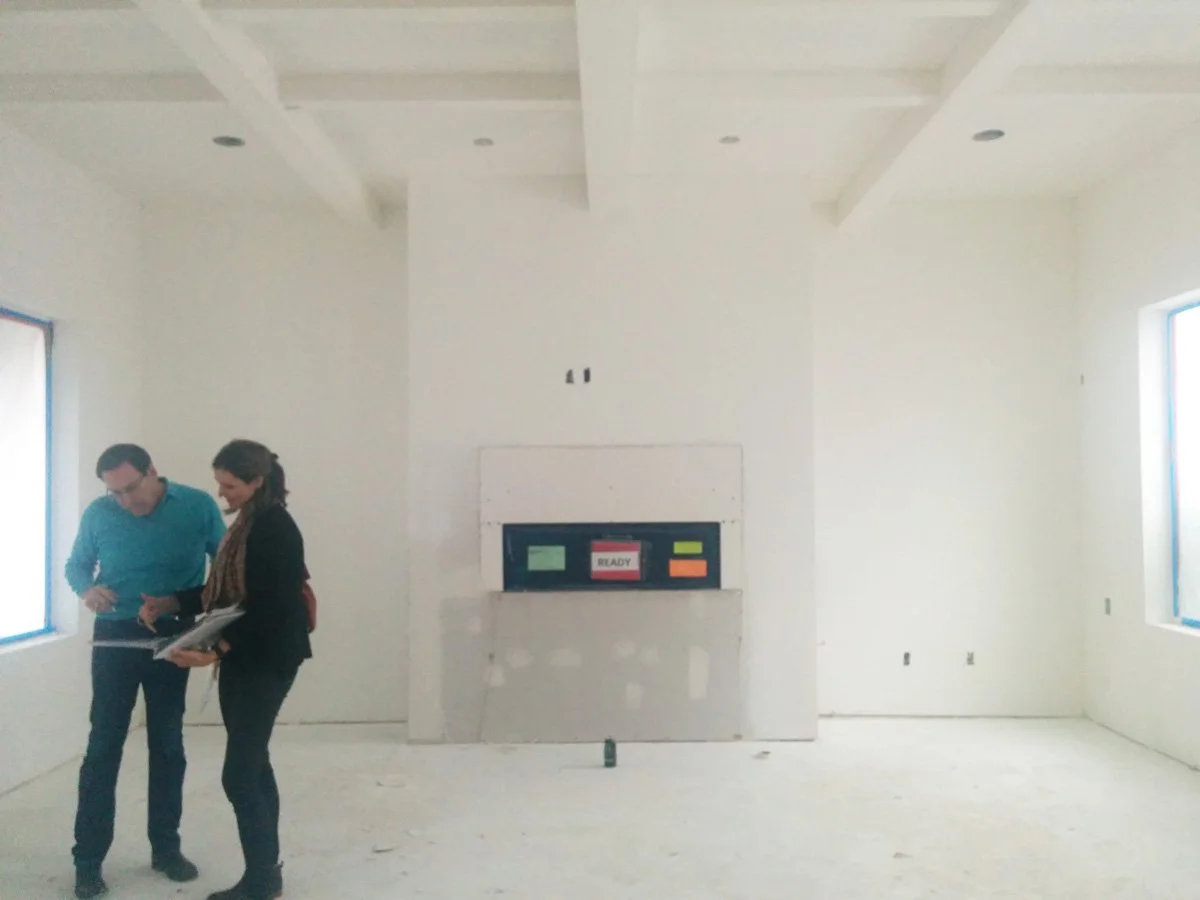
Can you open the wall between kitchen and dining? (Engineer confirms structural feasibility)
Should you create a larger open space with defined zones?
Can you reorient the dining room to face better views (mountains, garden, backyard)?
Does traffic flow work? (People shouldn't walk through dining room to get to other spaces)
For Castle Pines homes with mountain views: Orient the dining table so diners face the views. Install larger windows if needed. The landscape becomes living artwork.
For Littleton ranch homes: Consider opening formal dining to family room. Create one large gathering space with distinct zones, kitchen, dining, living, that feel connected but defined.
Lighting: The Most Important Design Element
I cannot overstate this: lighting makes or breaks a dining room.
You can have the most beautiful table, the most comfortable chairs, the most thoughtful decor; but if the lighting is wrong, the space won't work.
The Three Layers of Dining Room Lighting:
1. Ambient Lighting (Overall Illumination)
Purpose: Provides general light for the room
Options:
Recessed ceiling lights: Evenly spaced, dimmable (always dimmers!)
Flush or semi-flush mount: For rooms with lower ceilings (many Colorado ranch homes)
Cove lighting: Uplighting from crown molding (sophisticated, architectural)
Key: Must be on dimmers. Non-dimmable ambient lighting ruins the space.
2. Task Lighting (The Chandelier or Pendant)
This is your statement piece, but it's also functional.
Purpose: Illuminates the table, creates focal point, defines the zone
Sizing:
Diameter: Table width minus 12-18 inches (allows clearance for chairs)
Example: 42" wide table = 24-30" diameter fixture
For rectangular tables: Consider linear chandelier or multiple pendants
Height:
Bottom of fixture: 30-36 inches above table surface
In rooms with 8-foot ceilings: 30 inches works (common in Colorado ranch homes)
In rooms with 9-10 foot ceilings: 36 inches allows more dramatic scale
Style Considerations:
Modern/Contemporary Homes:
Linear chandeliers (clean lines, often LED)
Sculptural pendants (artistic, statement-making)
Geometric forms (brass, black metal, mixed materials)
Traditional/Transitional Homes:
Classic chandeliers (crystal, candelabra-style)
Lanterns (timeless, works in many contexts)
Drum shades (fabric softens light beautifully)
Mountain Modern (Popular in Castle Pines):
Organic materials (wood, rope, natural elements)
Mixed metal and wood
Substantial scale appropriate to mountain homes
Critical: Your chandelier MUST be dimmable. Install LED bulbs that are specifically rated for dimmers. Not all LEDs dim well—test before committing.
3. Accent Lighting (Atmosphere)
This is what elevates good lighting to exceptional.
Options:
Sconces:
Flank a sideboard, buffet, or large artwork
Add vertical interest and wall-washing light
Provide ambient glow that supplements chandelier
Must be dimmable
Picture lights:
Illuminate artwork above sideboard or console
Add sophistication and gallery-like quality
Brass or bronze finishes add warmth
Cabinet or built-in lighting:
LED strips inside glass-front cabinets displaying dishes
Toe-kick lighting on buffets (subtle, dramatic)
Shelf lighting in built-ins
Table lamps:
On sideboard or console
Adds warmth at eye level when standing
Creates layered lighting effect
Why layering matters: With all layers on (ambient + chandelier + accent), the room feels bright and energizing—perfect for daytime projects or big gatherings.
With only chandelier + accent lighting dimmed low, the room becomes intimate and warm—perfect for dinner.
With only accent lighting, the room becomes dramatic and romantic.
You need control over each layer independently. This requires planning during electrical work.
The Table: Centerpiece of the Room
Your dining table is the most used, most visible piece of furniture in the room. Choose wisely.
Size Considerations:
Room Size Guidelines:
Minimum clearance around table: 36 inches (allows chairs to pull out)
Comfortable clearance: 42-48 inches (allows people to walk behind seated diners)
For pass-through dining rooms: 48-54 inches (traffic flow)
Seating Needs:
Plan for regular use + ability to expand for entertaining
Consider: Do you host Thanksgiving? Book club? Dinner parties?
Extension tables offer flexibility
For Centennial and Littleton homes: Most dining rooms are 11x13 to 13x15 feet. This accommodates a 42x72" table comfortably (seats 6-8).
Shape Decisions:
Rectangular:
Most common, most flexible
Accommodates more people
Works in most room proportions
Can extend for large gatherings
Round:
Encourages conversation (everyone faces each other)
Works beautifully in square rooms
Feels less formal
Harder to find extension options
Oval:
Softness of round with capacity of rectangular
Elegant, classic
Works well in longer rooms
Easier to navigate around (no corners)
Material Considerations:
Wood:
Timeless, warm, durable
Shows scratches and water rings (use placemats/coasters)
Can be refinished
Varieties: Walnut (dark, rich), Oak (classic, durable), Maple (light, modern)
Stone/Marble:
Stunning, luxurious, makes a statement
Heavy, permanent (hard to move)
Can stain from acidic foods/wine
Cold to touch (some people love, some dislike)
Glass:
Modern, light-looking, visually expands space
Shows fingerprints and smudges
Can feel cold or impersonal
Works well in smaller spaces
My recommendation for families: Wood table with durable finish. Beautiful, warm, appropriate for daily use, holds up to real life.
For entertaining-focused homes: Stone or high-end wood with impeccable finish. Makes a statement. Requires more care but looks exceptional.
Seating: Comfort is Non-Negotiable
Here's a secret: people won't linger if they're uncomfortable.
You can create the most beautiful table setting, the most delicious meal, the most welcoming atmosphere—but if the chairs hurt after 20 minutes, people will leave.
What Makes Dining Chairs Comfortable:
Seat Height:
Standard: 18 inches from floor to seat
Should allow feet to rest flat on floor
10-12 inches between seat and table apron (underside of table)
Seat Depth:
16-18 inches is ideal for adults
Too shallow: feels perched and unstable
Too deep: can't reach table comfortably
Back Support:
Should support lower back
Angle of back matters (slightly reclined = comfortable for lingering)
Height: should support shoulders without being too tall
Arms vs. Armless:
Armchairs at heads of table: more comfortable, signals importance
Armless along sides: easier to pull in/out, fits more people
Ensure arms fit under table apron (test before buying)
Upholstery:
Pros:
Comfortable for long meals
Adds softness and warmth to room
Absorbs sound (rooms with all hard surfaces echo)
Cons:
Can stain (choose performance fabrics for families)
Harder to clean than wood/metal
May show wear over time
Best of both: Upholstered seats, wood or metal backs. Provides comfort where you need it, durability everywhere else.
For families with kids:
Performance fabrics (Crypton, Sunbrella, indoor/outdoor fabrics)
Darker colors or patterns (hide stains better than light solid colors)
Removable seat cushions with washable covers
Mix it up: Consider mixing chair styles:
Upholstered armchairs at each end
Matching side chairs along sides
Or: bench on one side, chairs on other (works beautifully with kids)
Storage & Serving: The Unsung Heroes
A dining room that functions well for entertaining needs storage for:
Dishes, glasses, serveware
Linens (tablecloths, napkins, placemats)
Candles, vases, centerpiece items
Serving pieces (platters, bowls, pitchers)
Barware (if you don't have separate bar area)
Storage Solutions:
Buffet or Sideboard:
60-72 inches long works in most dining rooms
Height: 30-36 inches (comfortable serving height)
Provides storage + surface for serving + display opportunity
Can hold table lamps for accent lighting
China Cabinet or Hutch:
Beautiful for displaying dishes, glassware, collections
Upper glass-front cabinets (display)
Lower closed cabinets (hidden storage)
Consider interior lighting to showcase contents
Built-In Cabinetry: If you're renovating:
Custom built-ins maximize storage and create architectural interest
Can include wine storage, display areas, closed cabinets
Adds significant value to home
Opportunity for beautiful millwork detailing
Bar Cart or Console:
Mobile serving surface
Can be moved for large gatherings
Stores liquor, barware, cocktail essentials
Adds decorative opportunity
For smaller dining rooms:
Wall-mounted shelving (floating shelves, not heavy cabinets)
Corner cabinets (maximize awkward spaces)
Furniture with hidden storage (bench seats with lift tops)
Flooring: Foundation of the Room
Flooring impacts both aesthetics and acoustics.
Hardwood:
Classic, timeless, warm
Easy to clean (important under dining table)
Can be refinished if damaged
Can feel echo-y (add rug to absorb sound)
Tile:
Durable, beautiful, works in any style
Cold underfoot unless you have radiant heat
Grout lines can be challenging to clean (food spills)
Consider large-format tile (fewer grout lines)
Luxury Vinyl Plank (LVP):
Looks like wood, performs like tile
Waterproof (great for families)
Warmer underfoot than tile
Budget-friendly
Carpet:
Uncommon in dining rooms (hard to keep clean)
If you love it: use low-pile, stain-resistant
Adds warmth and sound absorption
Recommendation for Colorado: Hardwood or LVP. Both handle our dry climate well. Both are easy to clean. Both look appropriate in all home styles from traditional to modern.
The Rug: Defining the Space
A rug under your dining table serves multiple purposes:
Defines the dining zone (especially in open floor plans)
Absorbs sound (rooms with hard surfaces echo)
Adds color, pattern, texture
Protects flooring from chair movement
Sizing:
Rule: Rug should extend 24-30 inches beyond all sides of table
Why: Allows chairs to remain on rug when pulled out
Common mistake: Rug too small = chairs fall off edge (awkward, looks wrong)
For a 42x72" table: Minimum 8x10 rug, ideally 9x12
For a 48x84" table: 9x12 rug minimum
Material Considerations:
Wool:
Durable, naturally stain-resistant
Expensive but worth investment
Soft underfoot
Available in endless styles
Wool/Synthetic Blend:
More affordable than 100% wool
Still durable and stain-resistant
Good middle ground
Natural Fiber (Jute, Sisal, Seagrass):
Casual, textural, organic
Less formal aesthetic
Can be scratchy underfoot
Harder to clean (absorbs spills)
Indoor/Outdoor Rugs:
Virtually indestructible
Easy to clean (hose off)
Less soft, more utilitarian
Works well for families with young kids
Pattern vs. Solid:
Patterned rugs hide stains and crumbs better
Solid rugs show everything but create calm backdrop
Consider your lifestyle: entertaining vs. daily family meals
For families: Medium-toned patterned rug in wool or wool-blend. Hides inevitable spills while looking sophisticated.
Wall Color & Finish
Color dramatically impacts how a room feels.
Warm Tones:
Create intimacy and coziness
Make the room feel smaller (in a good way—cocooning)
Flattering to skin tones in candlelight
Examples: Warm grays, taupes, soft terracotta, muted sage
Cool Tones:
Feel more formal and spacious
Work well in rooms with lots of natural light
Can feel stark without warmth from wood and textiles
Examples: Blue-grays, soft blues, greens
For Colorado homes: Our intense natural light can make cool colors feel even cooler. Balance with warm wood tones, brass fixtures, warm lighting.
My favorites for dining rooms:
Warm gray with greige undertones
Soft sage or muted olive green
Rich navy (dramatic, sophisticated, works surprisingly well)
Deep charcoal (modern, moody, requires good lighting)
Finish:
Eggshell or satin (slight sheen, cleanable, sophisticated)
Avoid flat/matte (shows marks, hard to clean)
Avoid high gloss (too shiny, looks commercial)
Window Treatments: Softness and Control
Windows need treatment for both aesthetics and function.
Function:
Light control (Colorado sun is intense)
Privacy (especially if dining room faces street)
Sound absorption (softens hard surfaces)
Energy efficiency (our temperature swings)
Aesthetics:
Softness in rooms with hard surfaces
Color and texture opportunity
Frames views beautifully
Adds luxury and finish
Options:
Drapery Panels:
Classic, elegant, timeless
Provides softness and warmth
Can be sheer (light filtering) or lined (room darkening)
Hang high and wide (ceiling to floor, extend beyond window frame)
Roman Shades:
Tailored, clean-lined, modern
Provides light control and privacy
Works well layered under drapery
Custom fabrication allows personal fabric choice
Shutters:
Architectural, clean, permanent
Excellent light control
Works in traditional or modern homes
Higher investment but long-lasting
Shades + Drapery:
Best of both worlds
Shades for function (privacy, light control)
Drapery for aesthetics (softness, color)
Most versatile option
For Castle Pines homes with mountain views: Minimize window treatments. Use sheer drapery that frames views without blocking them. Install blackout shades behind for privacy and light control when needed.
For Centennial homes with street-facing dining rooms: Layer privacy and style: Roman shades for function, drapery panels for beauty.
Renovation-Level Decisions: Creating Your Ideal Dining Room
If you're planning significant work, these are the bigger decisions that transform how the space functions.
Opening to the Kitchen
The Question: Should we remove the wall between kitchen and dining room?
Consider:
Pros:
Creates visual connection (cook isn't isolated)
Makes space feel larger
Better for entertaining (guests can chat while you cook)
More natural for family use (kids can do homework while you prep dinner)
Allows shared lighting and HVAC (more efficient)
Cons:
Kitchen mess is visible from dining room
Cooking smells permeate dining area
Noise from kitchen during meals
Loss of wall space for furniture or art
May require structural beam (engineering + cost)
Middle Ground:
Create large opening but not fully open
Use half-wall with columns
Install barn door or pocket door (can close when desired)
Keep partial wall for buffet placement
Best for:
Families who eat together regularly
People who entertain casually (not formal)
Homes where kitchen is attractive and organized
Homes where dining room is rarely used as-is
Built-In Storage & Millwork
Custom built-ins transform dining rooms from generic to architectural.
Options:
Full Wall of Cabinetry:
Upper glass-front cabinets (display dishes)
Lower closed cabinets (storage)
Central open shelving (art, decor, wine)
Interior lighting
Can incorporate wine storage, beverage fridge
Flanking Cabinets:
Built-ins on either side of window or door
Symmetrical, architectural
Less dominant than full wall
More affordable
Window Seat:
If room has bay window or large window
Adds seating without taking floor space
Creates cozy nook
Storage underneath
Investment: Custom built-ins: $8,000-$25,000+ depending on size and finish
Value:
Adds architectural interest and character
Provides storage you'll use daily
Increases home value
Makes standard builder room feel custom
Ceiling Treatment
Most dining rooms have flat, white ceilings. Opportunity missed.
Options:
Coffered Ceiling:
Grid of recessed panels
Architectural, substantial, traditional
Works in rooms with 9+ foot ceilings
Investment: $3,000-8,000+
Tray Ceiling:
Recessed center with step-down perimeter
Creates sense of height
Opportunity for accent paint or wallpaper
Can add cove lighting in recess
Beams:
Wood beams (real or faux)
Adds character and warmth
Works in traditional, rustic, or mountain modern homes
Can incorporate recessed lighting between beams
Paint:
Simply painting ceiling a color (not white) adds drama
Darker than walls: intimate, cocooning
Same as walls: seamless, modern, expansive
Consider: navy, charcoal, warm black
Wallpaper:
On ceiling (yes, really)
Dramatic, unexpected, sophisticated
Works especially well in tray ceiling recess
Hire professional installer
For 8-foot ceilings (common in Colorado ranch homes): Skip coffered/beams (will feel lower). Instead: paint ceiling same color as walls for seamless, taller appearance.
Fireplace: Ultimate Ambiance
If you have the opportunity (and budget), adding a fireplace to your dining room creates unmatched atmosphere.
Options:
Traditional Fireplace:
Wood or gas
Architectural focal point
Requires chimney or venting
Significant investment: $8,000-$25,000+
Linear Gas Fireplace:
Modern, horizontal, sleek
Clean-burning, easy to operate
Can be installed in wall or built-in
Cost: $3,000-$8,000+ installed
Electric Fireplace:
No venting required
Installation is straightforward
Looks less authentic than gas
Cost: $1,000-$3,000
Why it matters: A fireplace transforms the dining room from "where we eat" to "where we gather." It's a reason to linger. It creates warmth (literal and metaphorical). It anchors the room.
Best for:
Homes in cooler climates (perfect for Colorado)
Rooms with exterior walls (easier venting)
Families who value cozy, extended meals
Decorating Your Dining Room: The Finishing Touches
Once the bones are right, these are the details that make it feel complete.
Art & Walls
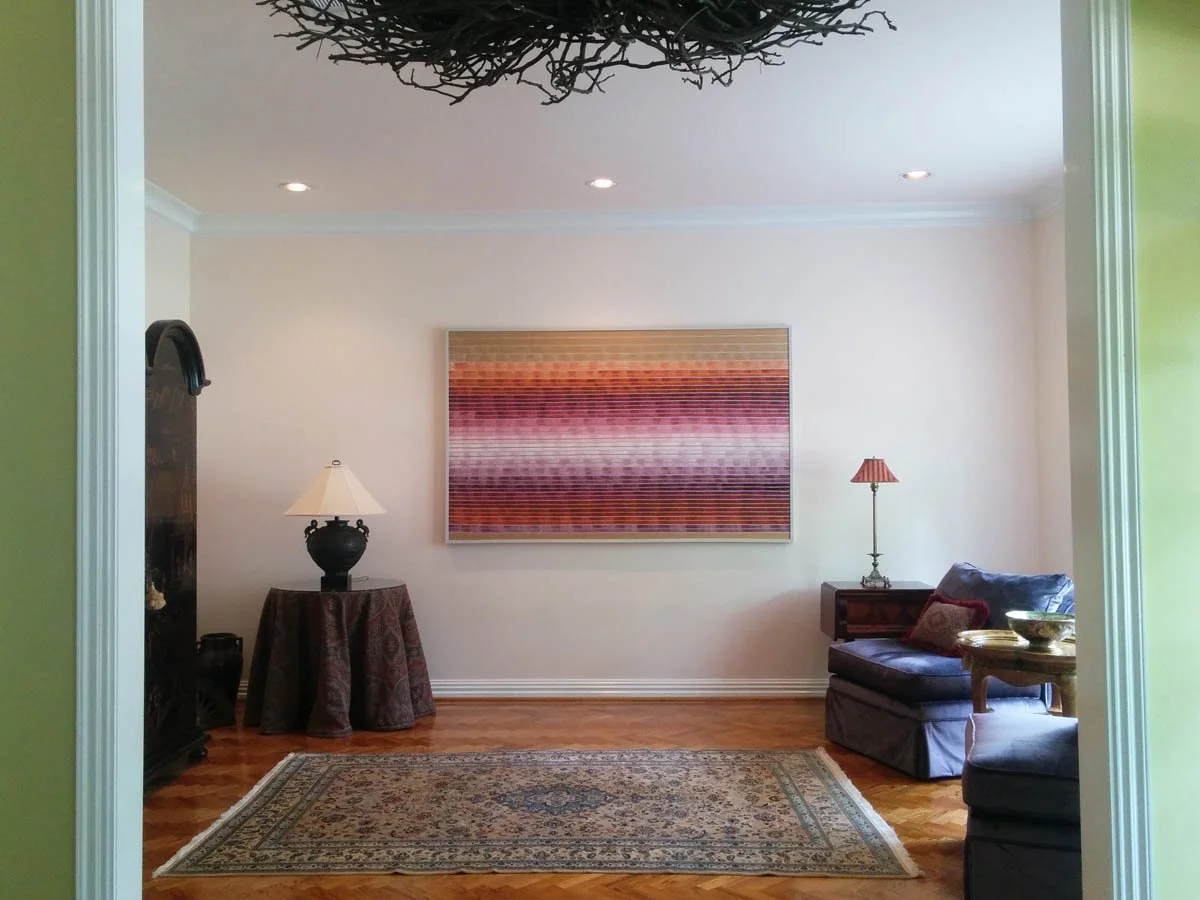
Large-Scale Art: Above sideboard or on focal wall—go big. One large piece has more impact than gallery wall in dining rooms.
Mirror: Reflects light, makes room feel larger. Beautiful above buffet or opposite windows.
Wallpaper: Accent wall or all walls. Adds pattern, texture, personality. Works beautifully in dining rooms (less wear than high-traffic areas).
Shelving: Floating shelves to display dishes, glassware, decor. Mix pretty and functional.
The Centerpiece
Your table's centerpiece should:
Be low enough to see over (max 12 inches tall)
Look good from all angles
Be easily removable for serving meals
Everyday Options:
Low bowl with fruit (lemons, pears, seasonal)
Tray with candles and small objects
Simple vase with fresh flowers
Wooden dough bowl with greenery
Seasonal Rotation: Change quarterly to keep it fresh. Doesn't have to be elaborate—simple seasonal elements work beautifully.
Tableware
Invest in dishes you love and will use:
Everyday set (durable, dishwasher-safe)
Special occasion set (can be more delicate)
Mix and match is fine (more interesting than matching)
Making It Happen: Your Dining Room Transformation
Whether you're making small changes or planning a full renovation, here's how to approach it:
Start Small (This Week):
Install dimmers on all dining room lights
Buy cloth napkins for daily use
Purchase candles (unscented for dinner)
Set the table for dinner tonight
Medium Investment (This Month): 5. Assess chair comfort—replace if uncomfortable 6. Buy proper dining room lighting (if current fixture is wrong) 7. Add a rug if you don't have one 8. Create a small centerpiece for daily use
Significant Changes (This Year): 9. Reupholster chairs or purchase new seating 10. Paint walls in color that creates the feeling you want 11. Install built-in storage or add buffet 12. Replace table if current one doesn't serve your needs
Renovation-Level (Next 1-2 Years): 13. Open wall to kitchen if desired 14. Add built-in cabinetry 15. Upgrade flooring 16. Install fireplace if possible
Working with Jamie House Design
If you're planning a dining room renovation or simply want guidance on creating a space that invites gathering, I'd welcome the opportunity to help.
I specialize in:
Space planning that creates flow and function
Lighting design that transforms atmosphere
Custom millwork and built-ins
Material and finish selection
Complete renovation coordination
Styling and final touches
My process: We start by understanding how you actually live and entertain. Then we design solutions that serve your lifestyle while creating beauty that lasts.
Serving: Centennial, Littleton, Castle Pines, Denver, and throughout Colorado
Contact: 720.432.2029
jamie.lanie@gmail.com
www.jamiehouse.design
Final Thoughts: The Gift of Gathering
The most valuable rooms in your home aren't the ones that look the best in photos.
They're the ones where life actually happens. Where people gather without being summoned. Where conversation flows as easily as wine. Where ordinary Tuesday becomes a memory.
Your dining room can be that space.
Not because it's formal or expensive or perfectly decorated. But because it's comfortable, beautiful, welcoming—designed for the life you actually live, not the one in magazines.
This Thanksgiving, and every day after, may your table be a place where people want to linger.
Related Articles:
About the Author
Jamie House is an award-winning interior designer serving Centennial, Littleton, Castle Pines, and throughout Colorado. With over 20 years of experience designing luxury homes, she specializes in creating spaces where families naturally gather. Her work has been featured in Country Living, Houston Chronicle, and Design Sponge.
Schedule a Consultation | View Portfolio | Read More Articles