Jamie House Design, interior design projects Jamie House Design Jamie House Design, interior design projects Jamie House Design

Designing a Big Kid Bedroom: Functional, Personal, Built to Last

When my Garden Oaks clients and I discussed the future of their home, we knew this room would eventually become their son RC’s big kid bedroom. Initially, it served as a guest room, office, and general storage space—a common scenario in many homes. However, with a new baby on the way, the "in the future" project quickly became a priority. It was time to create a functional, stylish, and timeless space that RC could grow into while also serving as a playroom.
The brief for this room was simple and genuinely useful: a boy named RC was about to become a big brother, which meant the room that had been serving as guest room, office, and general storage needed to actually become his room. Not a temporary fix. A real room he could grow into over the next decade.

That's a different design problem than a nursery or a toddler space. It requires thinking about who the child is now and who they'll be at twelve, and designing something that serves both without feeling like a compromise to either.

Start with built-ins, not furniture

The back wall of this room was generous enough to do something real with, so that's where I started. Custom built-ins spanning the full width: a window seat for reading, a desk with real workspace, file storage, and adjustable shelves that can be reconfigured as his needs change over the years.

A few decisions in here that are worth explaining:

I typically design built-ins to run ceiling height, it looks better, and it eliminates the dead space on top that inevitably collects clutter. In this room, full height overwhelmed the proportions. So we scaled them down slightly and matched the crown molding profile to the rest of the house, which kept them feeling intentional rather than truncated.

The back panels of the shelves are beadboard painted in a deep green; a detail that adds visual depth without adding visual noise. From across the room it reads as quiet texture. Up close it has real character.

Window treatments are doing more work than they appear to

The window seat is now RC's favorite spot in the room; good place to watch rain, good place to read. The window treatment above it is a tailored valance designed specifically to conceal the blind hardware, which also creates the illusion that the window is slightly taller than it actually is. It's a finishing detail that most people wouldn't be able to name if you asked them what changed, but they'd notice if it were missing.

Bunk beds, but make them practical

Bunk beds were a given for this age and this client. The decision I pushed back on was the impulse to over-coordinate everything, matching bedding sets, decorative pillows, the full themed approach. Instead the bedding is complementary rather than coordinated. Everything in this room is meant to be used, not arranged for a photograph. That's the right call for a space that belongs to a child.

One piece that anchors the whole room: a framed piece of rhino artwork that RC's dad painted as a child. It hangs in a prominent spot and it changes the register of everything around it. Personal objects like that do something no sourced piece can, they make a room feel like it belongs to a specific family rather than a generic version of childhood.

The ceiling trick worth knowing

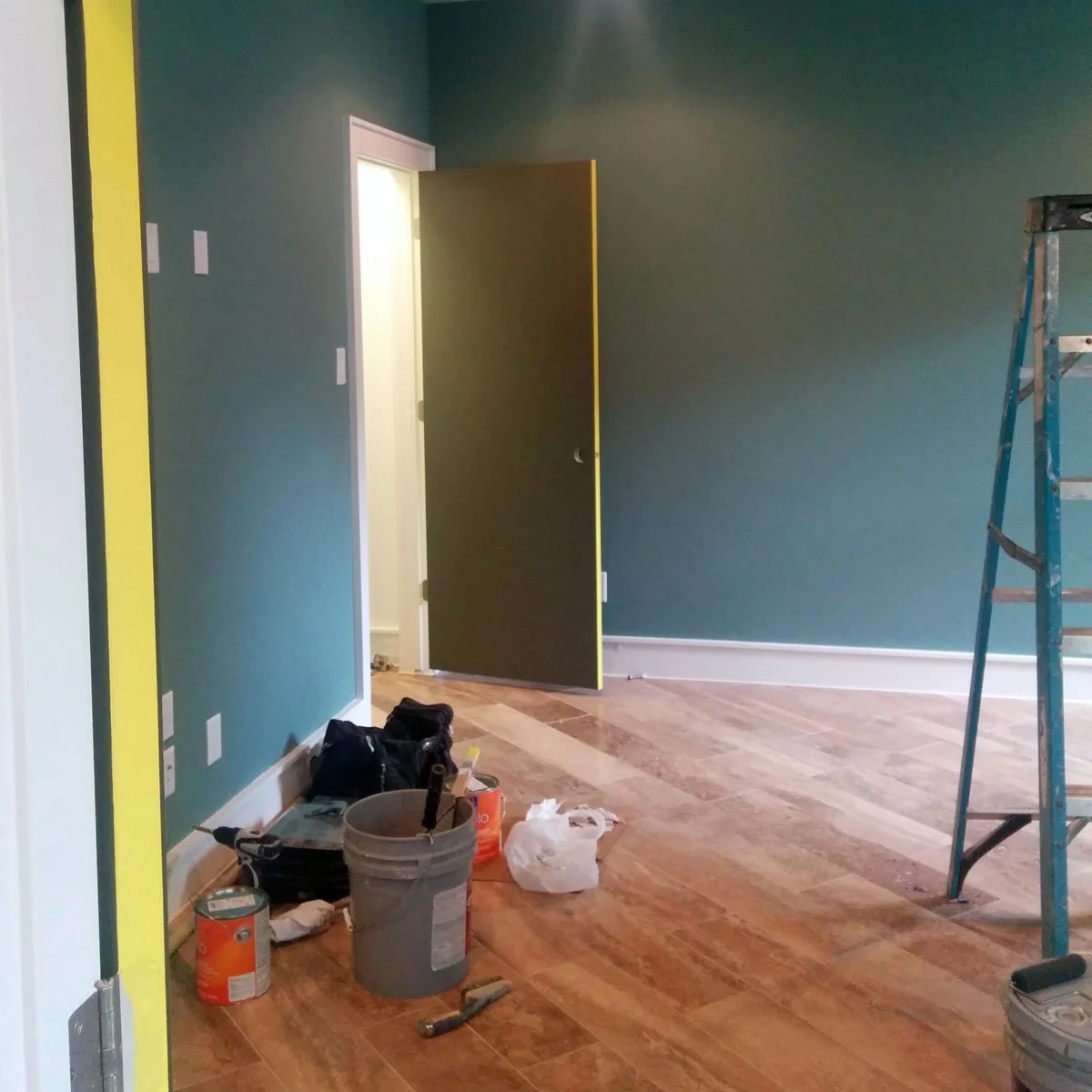
The walls are a mid-tone color. The ceiling is a 50% dilution of the same paint, not white, not the full wall color, but a quieter version that bridges the two planes. It makes the room feel cozy without feeling small, and it creates a visual completeness that white ceilings rarely achieve in a room with strong wall color. I use this approach regularly and it's one of those details that's easy to overlook in photos but immediately noticeable in person.

The existing lounge chair and train table stayed. Not everything needs to be replaced; part of the work is figuring out what's worth keeping and what the new elements need to do around it.

The result is a room that functions well for a child now and will keep functioning well as he gets older. That's the goal for any room, really, not that it looks right at the moment of installation, but that it holds up to being actually lived in.

If you're working through a room that needs to serve a child across multiple stages, or any space that needs to be genuinely functional rather than just photographable, I'd love to hear about it.

Read More
Jamie House Design, interior design projects Jamie House Design Jamie House Design, interior design projects Jamie House Design

Restoring a Houston Heights Bungalow: Thoughtful Design for Modern Living

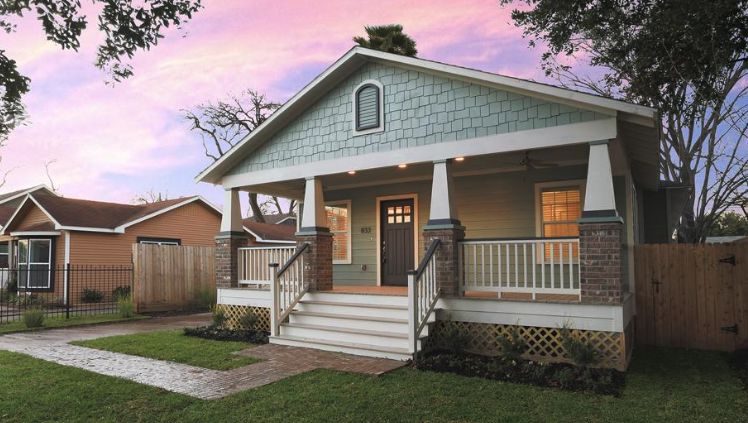
I’m thrilled to be collaborating with a builder on the renovation of a charming bungalow in the Houston Heights—a neighborhood I hold dear. Preserving the character of these historic homes is incredibly important, especially as the area is increasingly filled with generic townhomes that lack the warmth and charm that make the Heights so unique. Whenever I have the opportunity to restore a home rather than replace it, I jump at the chance.

Designing for the Future Homeowner

Because this is a speculative build, meaning there’s no specific homeowner in mind yet, the design choices must appeal to a broad audience while maintaining a high level of style and functionality. We’re just getting started with selections, and I’m excited to take you through the transformation as it unfolds.

In Houston, architects are not required to have formal accreditation, which is why working with an interior designer is crucial to ensuring a home is both beautiful and livable. My expertise allows me to anticipate how future homeowners will use the space based on demographics and lifestyle needs, creating a home that’s as functional as it is aesthetically pleasing.
I’m thrilled to be collaborating with a builder on the renovation of a charming bungalow in the Houston Heights, a neighborhood I hold dear. Preserving the character of these historic homes is incredibly important, especially as the area is increasingly filled with generic townhomes that lack the warmth and charm that make the Heights so unique. Whenever I have the opportunity to restore a home rather than replace it, I jump at the chance.

Designing for the Future Homeowner

Because this is a speculative build, meaning there’s no specific homeowner in mind yet, the design choices must appeal to a broad audience while maintaining a high level of style and functionality. We’re just getting started with selections, and I’m excited to take you through the transformation as it unfolds.

In Houston, architects are not required to have formal accreditation, which is why working with an interior designer is crucial to ensuring a home is both beautiful and livable. My expertise allows me to anticipate how future homeowners will use the space based on demographics and lifestyle needs, creating a home that’s as functional as it is aesthetically pleasing.

Rethinking the Layout

The original floor plan of this bungalow was cramped and outdated, with awkward renovations from the early ’90s that detracted from its original charm. One of the biggest challenges? The master bedroom had no direct access to a bathroom—forcing the homeowner to walk through multiple rooms just to take a shower. Clearly, this needed to change.

The builder’s initial redesign was a step in the right direction, but I saw opportunities for further improvements:

  • Hall Bath & Master Bath: The original plan included a shower-only hall bath and a bathtub-only master bath. However, in a family-friendly neighborhood like the Heights, the hall bath needs a bathtub for children. On the other hand, the argument that the master bath must have a tub “for resale” is outdated, most buyers today prioritize a well-designed, luxurious shower over a tub they may never use.

  • Front Rooms & Sightlines: The two front rooms felt too closed off, and I wasn’t a fan of the direct sightline from the front door to the back door. I wanted to introduce more architectural interest while maintaining an open, welcoming flow.

  • Study & Architectural Details: The front “study” didn’t feel well-integrated into the home’s layout. By opening it up, we could create an opportunity for a beautiful Craftsman-style architectural moment, perhaps with built-in bookcases and classic columns.

  • Laundry Placement: The laundry area in the breakfast room felt out of place, but finding an alternative location proved challenging.

The front “study” didn’t feel well-integrated into the home’s layout. By opening it up, we could create an opportunity for a beautiful Craftsman-style architectural moment, perhaps with built-in bookcases and classic columns.

Concept image for architectural details in a Houston Heights bungalow restoration project designed by Denver interior design firm Jamie House Design
  • Back Porch Access: The initial plan placed the main porch doors in the master bedroom, making furniture placement difficult and creating an awkward flow from the porch to the backyard. By reconfiguring the access points, we ensured a more practical outdoor living space.

  • Vestibule & Circulation: The back vestibule didn’t add much function, it was essentially a “room of doors.” By streamlining this space, we improved the home’s circulation and maximized usable square footage.

Finalizing a Thoughtful, Livable Design

Through collaboration with the architect and builder, we refined the layout into a well-balanced, highly functional home. The final floor plan enhances natural light, improves traffic flow, and maintains the bungalow’s historic charm while making it work for modern living.

As a designer, I firmly believe that the best projects happen when the entire design team; builders, architects, and interior designers, work together with open minds and without ego. That level of collaboration truly elevates a home’s design, making it not just beautiful, but deeply considered and livable.

Next Steps: Selections & Finishes

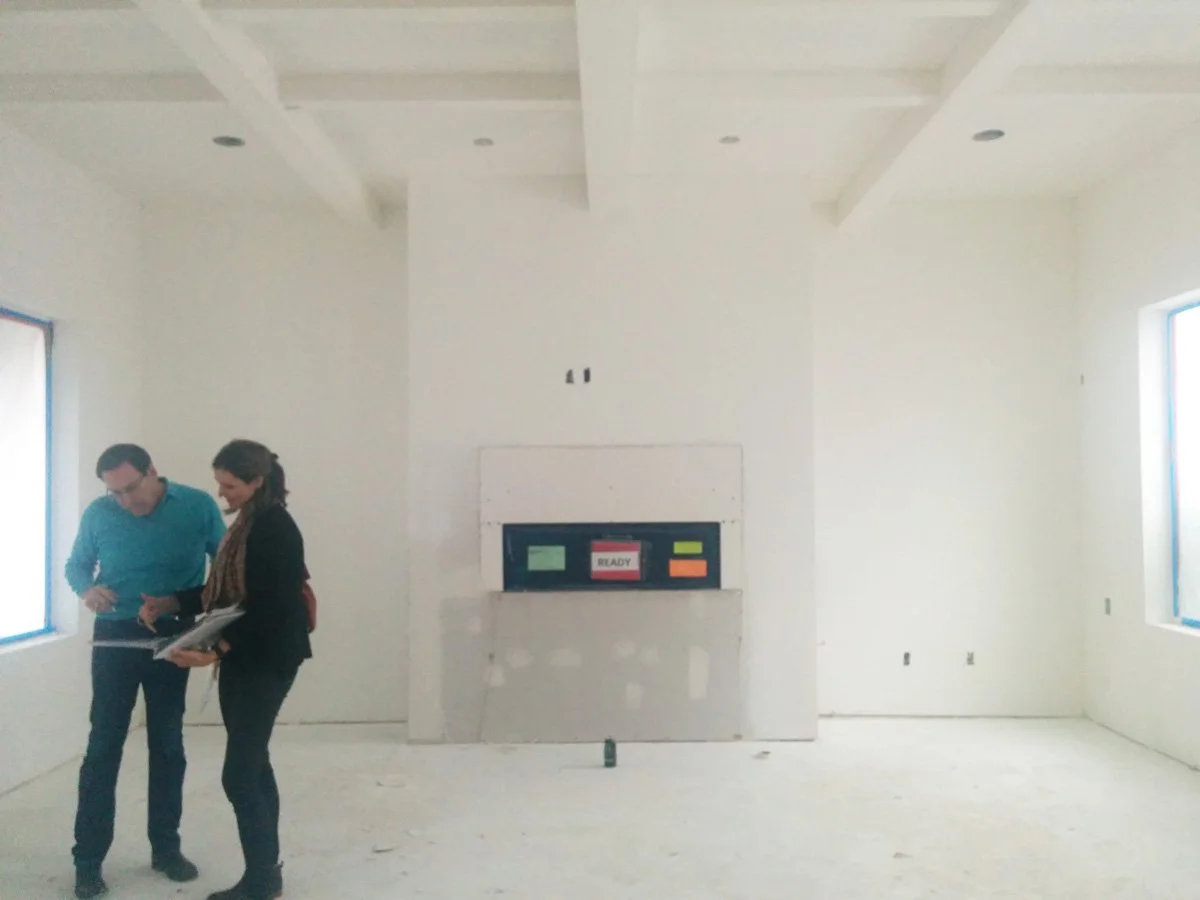
Right now, the home has been demoed, raised, and is in the permitting phase. Next, we’ll be diving into the selection process for finishes, fixtures, and materials. I’ll share those details soon, stay tuned!

This project was completed during my years working in Houston's Heights, a neighborhood that taught me more about historic preservation than anywhere else I've worked. The questions it raised are the same ones I bring to every older home I work on now: what does this house want to be, what did it used to be, and how do you close the gap between those two things without erasing the character that made it worth saving in the first place.

Those questions don't belong to Houston. Littleton's older bungalows and mid-century ranches ask them just as insistently. If you're working with a home that has real bones and you're trying to figure out what's worth keeping and what needs to change, that's exactly the kind of project I do best.

Read More
Jamie House Design, interior design projects Jamie House Design Jamie House Design, interior design projects Jamie House Design

Elevating a Dining Room: A Refined Approach to Interior Decorating

At Jamie House Design, we collaborate with clients in a variety of ways—whether it’s being involved from the initial planning stages of new construction, refining a single space, or developing a long-term vision for a home. Every client’s needs are unique, and our role is to provide the expertise and flexibility required to create a beautifully designed, cohesive home.

For our Garden Oaks project, we partnered with a delightful family to refine and complete their dining room. They had already curated some meaningful pieces—a dining table, chairs, a stunning Turkish platter from their travels, and a pedestal acquired at a charity auction. While these elements provided a strong foundation, our goal was to bring cohesion, elegance, and a fresh perspective to the space.

At Jamie House Design, we collaborate with clients in a variety of ways—whether it’s being involved from the initial planning stages of new construction, refining a single space, or developing a long-term vision for a home. Every client’s needs are unique, and our role is to provide the expertise and flexibility required to create a beautifully designed, cohesive home.

For our Garden Oaks project, we partnered with a delightful family to refine and complete their dining room. They had already curated some meaningful pieces—a dining table, chairs, a stunning Turkish platter from their travels, and a pedestal acquired at a charity auction. While these elements provided a strong foundation, our goal was to bring cohesion, elegance, and a fresh perspective to the space.

A dining room before Jamie House Design redecorated the space using a Turkish platter the family bought on a trip to Turkey.

A Thoughtful Color Palette

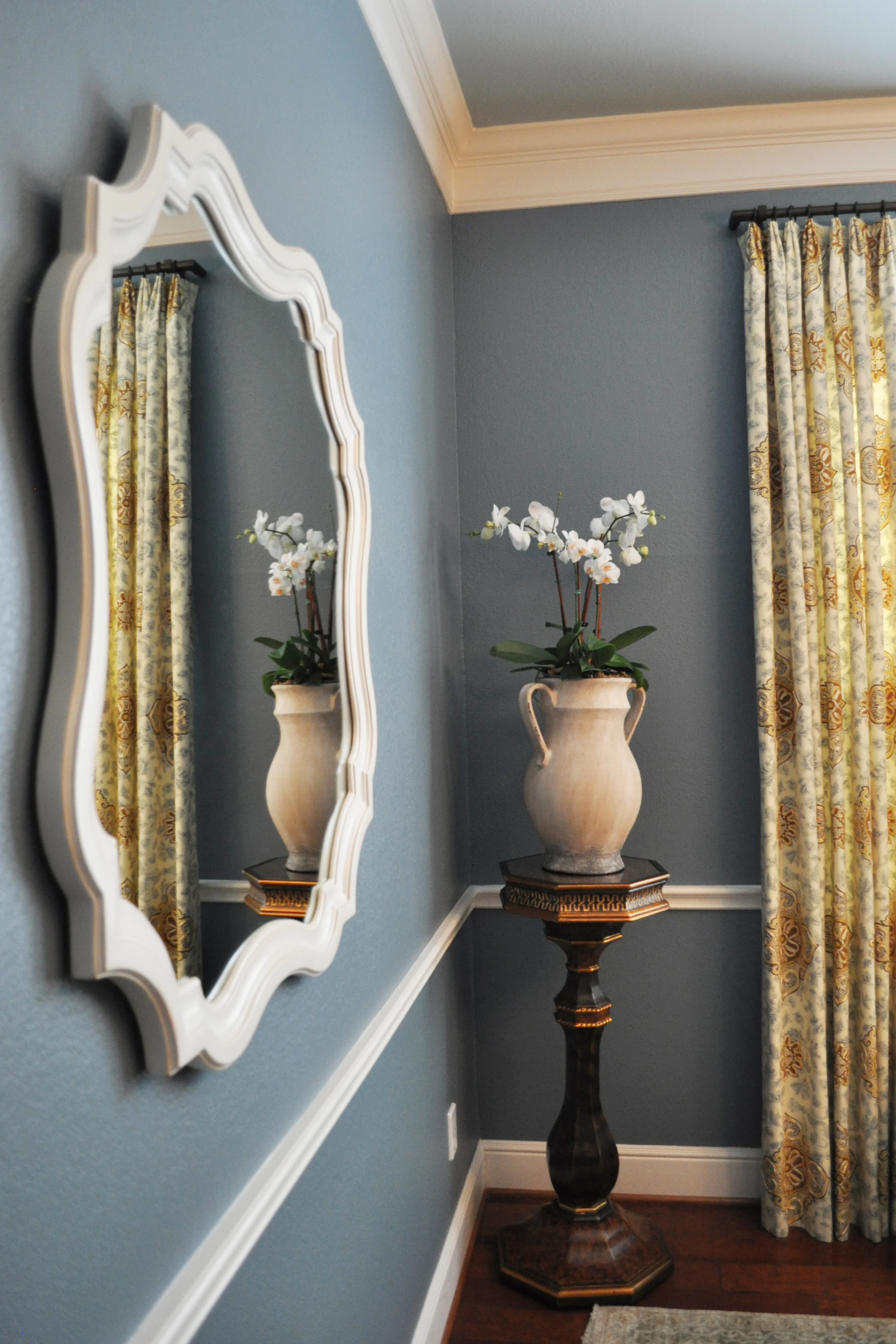
The transformation began with color. Inspired by the intricate blue hues of the Turkish platter, we selected a complementary shade for the walls. To create depth and harmony, we applied a 50% mix of the wall color to the ceiling—a designer’s secret that ensures the ceiling feels integrated rather than an afterthought. This subtle yet effective technique enhances the overall ambiance, making the space feel warm and inviting.

Custom Window Treatments: The Unifying Element

One of the most impactful additions to the room was custom drapery. We sourced an exquisite fabric featuring a delicate embroidered ribbon detail, effortlessly tying together the colors of the walls, chairs, and platter. The soft cream background in the fabric echoed the existing trim color, reinforcing the room’s refined aesthetic. While wood blinds remained, we recommended layering woven shades beneath the drapery for added texture and warmth—an enhancement the homeowners may consider in the future.

Balancing Function and Aesthetic

With the room’s compact size in mind, we opted for a mirror installation instead of traditional artwork. A carefully selected mirror not only echoes the organic patterns found in the platter and drapery but also enhances the sense of space by reflecting light. While we initially considered a Kelly Wearstler-inspired installation, this elegant mirror provided the perfect blend of artistry and function.

The Kelly Wearstler Inspiration.

A Harmonious Flow

Every detail in this dining room was curated to ensure seamless integration with the rest of the home. While the Turkish platter is positioned in a corner, its placement is intentional—visible from the entrance, drawing the eye and creating a focal point. The color palette established in this space extends throughout the home, reinforcing a sense of cohesion and sophistication.

Ready to Elevate Your Space?

Your home should reflect your personal style while maintaining a sense of balance and refinement. Whether you need a single-room refresh or a full-scale design transformation, Jamie House Design specializes in creating polished, intentional spaces tailored to your needs. Contact us today to begin your journey toward a beautifully designed home with expertly curated decor and custom window treatments.

Read More

Search Posts


Featured Posts