Jamie House Design Jamie House Design

How I Approach Ranch Kitchen Renovations (And Why They're Trickier Than You Think)

If you own a ranch-style home in Centennial, Littleton, or even Highlands Ranch, you've likely wrestled with the same challenge: a kitchen that's closed off, cramped, and stuck in 1972 or even 1992.

Ranch homes, those classic single-story properties that define so many Colorado neighborhoods, were built with a very different vision of how families live. Formal dining rooms. Separate kitchens where mom cooked alone. Small, compartmentalized spaces.

Today? We live differently. The kitchen is command central. It's where you're answering work emails while making dinner, helping kids with homework while prepping for a dinner party, and hosting friends who inevitably migrate from the living room to gather around the island.

But here's what most homeowners don't realize when they start planning a kitchen remodel: the difference between a functional kitchen and a transformative one isn't just about moving walls or picking pretty tile.

It's about understanding how you actually live and designing every single detail to support that life.

After 20+ years designing luxury kitchens throughout Colorado and beyond, I've learned that the most successful kitchen renovations aren't about following trends or copying magazine spreads. They're about asking the right questions, making strategic decisions, and orchestrating hundreds of details that work together seamlessly.

This is what interior designers actually do—and why hiring one for your Centennial or Littleton ranch home kitchen remodel might be the smartest investment you make.

Why Ranch Home Kitchens Need More Than Just "Opening Things Up"

Let's start with the reality of ranch home kitchens in Denver metro area.

Most were built between 1960-1990, when:

  • Kitchens were small, enclosed workspaces

  • Formal dining rooms were standard (and mostly unused today)

  • Open floor plans weren't a thing

  • Storage meant one pantry (if that) and base cabinets

  • Countertop space was minimal

  • Islands didn't exist

Today's lifestyle requires:

  • Open, connected spaces for family interaction

  • Massive amounts of storage (hello, Costco runs)

  • Multiple work zones for cooking, homework, and entertaining

  • Seating at an island for casual meals

  • Appliances that actually fit how you cook

  • Lighting for function AND ambiance

The gap between what you have and what you need is exactly where interior design expertise matters.

Littleton ranch kitchen before remodel.

BEFORE : The galley style ranch kitchen was dated and lacking storage. It’s spacious enough to have furniture at the back but not spacious enough for a seating area. The dishwasher is too far from the sink.

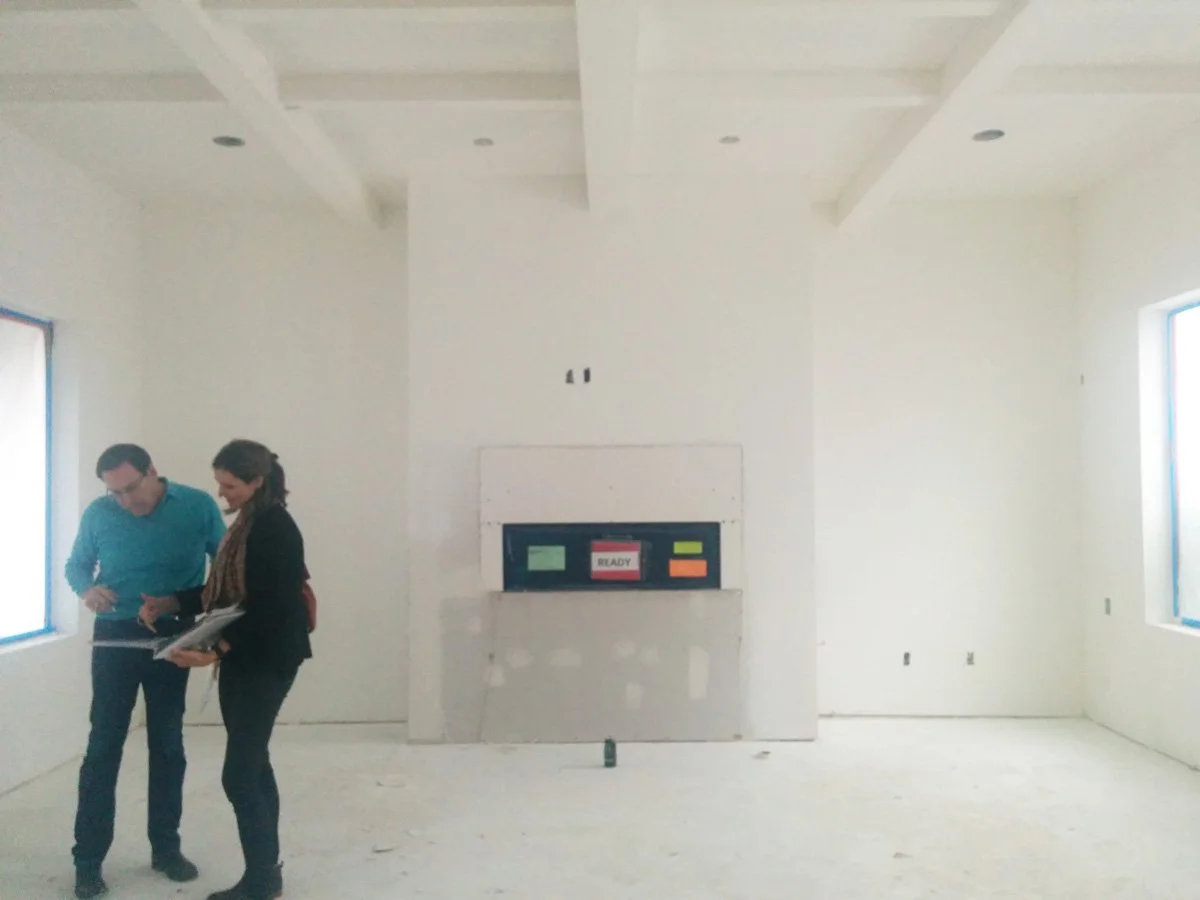
A kitchen remodel in progress in this Littleton CO ranch home.

DURING : The layout is reworked to include a walk-in pantry after finding unused space next to the fireplace in the adjacent living room. Additional storage and display area is created with custom cabinetry along the back wall and viewable as you walk in. The slate tile floors run throughout the family living area.

What Interior Designers Actually Do for Kitchen Remodels

Here's the truth: anyone can pick out pretty cabinets or choose trendy tile. What separates a good kitchen from a great one is the invisible layer of strategic thinking that happens before any aesthetic decisions are made.

1. We Start By Understanding How You Actually Live

Before I touch a floor plan or show you a single finish sample, I ask questions:

About your cooking habits:

  • Do you cook elaborate meals, or are you heating up prepared foods?

  • Do multiple people cook at once, or is it typically one person?

  • Do you bake? Need a baking zone?

  • How often do you entertain? For how many people?

About your family dynamics:

  • Are kids doing homework while you cook?

  • Does someone work from home and need kitchen access during the day?

  • Do you have extended family visiting regularly?

  • Pets that need feeding stations?

About your frustrations:

  • What drives you crazy about your current kitchen?

  • Where do things pile up?

  • What do you run out of first—counter space or storage?

  • What makes meal prep feel chaotic?

Why this matters: A family that cooks together needs a completely different kitchen than a couple who entertains but rarely cooks. Your life dictates the design—not the other way around.

2. We Design Layouts That Actually Function

This is where people think they can DIY with Pinterest and a tape measure. They can't.

Layout design requires understanding:

The Work Triangle (But Evolved) Yes, the classic sink-stove-refrigerator triangle still matters. But modern kitchens need work zones, not just a triangle:

  • Prep zone: Counter space near sink, trash, cutting boards

  • Cooking zone: Stove, oven, spices, oils, utensils within reach

  • Cleanup zone: Sink, dishwasher, dish storage, trash/recycling

  • Storage zone: Pantry, dry goods, small appliances

  • Coffee/beverage zone: Separate area for morning routine or entertaining

Traffic Flow

  • Can two people work simultaneously without bumping into each other?

  • Is there a clear path through the kitchen if someone just needs to grab something?

  • Where do people naturally enter and exit?

  • Does the flow from mudroom → kitchen → dining make sense?

The Island (If You Have Space) Islands aren't just "nice to have"—they're strategic decisions:

  • Should it include seating? How many people?

  • Sink in island or against wall? (This impacts plumbing costs and functionality)

  • Cooktop in island? (Consider venting challenges)

  • What storage goes underneath? (Depends on what's nearby)

  • How much overhang for knees if people sit there?

For ranch homes specifically:

  • Can we remove the wall between kitchen and dining without compromising structure?

  • Where are load-bearing walls? (Requires engineer, but designer identifies opportunities first)

  • How do we create openness while maintaining defined spaces?

  • Can we borrow space from an unused formal dining room? (That’s exactly what I’m planning for my Centennial kitchen remodel)

This isn't guesswork—it's spatial planning backed by decades of seeing what works and what doesn't.

3. We Solve Storage Problems Before They Happen

Here's a secret: most kitchen remodels fail at storage.

Homeowners think "more cabinets = more storage." Wrong. Smart storage = functional storage.

Strategic storage design means:

Understanding what you own:

  • How many pots and pans?

  • Do you have special platters for entertaining?

  • Small appliances that need homes? (Stand mixer, food processor, Instant Pot, air fryer...)

  • Serving pieces, seasonal items, bulk goods from Costco?

Designing specific solutions:

  • Deep drawers (not base cabinets with doors) for pots and pans—easier access, no digging

  • Pull-out pantries for narrow spaces—maximize every inch

  • Drawer organizers custom-sized for your utensils, not generic inserts

  • Appliance garages that actually fit your coffee maker, toaster, blender

  • Vertical dividers for sheet pans, cutting boards, serving platters

  • Corner solutions that aren't black holes (lazy Susan, pull-out systems)

  • Charging drawers for devices (yes, this is a thing, and it's genius)

For Littleton and Centennial ranch homes: Many have basements—we plan for overflow storage there while keeping daily-use items within kitchen reach.

Why designers excel here: We've designed hundreds of kitchens. We know what you'll wish you had six months after the remodel. We prevent "why didn't we think of that?" moments.

4. We Specify Appliances That Match How You Actually Cook

Not all ranges are equal. Not all dishwashers make sense for every kitchen. And that 48-inch refrigerator you love on Pinterest? It might be completely wrong for your space and lifestyle.

Appliance selection requires:

Understanding performance needs:

  • Do you need a pro-style range, or is it overkill for your cooking habits?

  • Dual fuel (gas cooktop, electric oven) vs. all gas vs. induction?

  • Should the refrigerator be built-in (flush with cabinets) or freestanding?

  • Do you need a separate beverage fridge or wine storage?

  • Steam oven? Warming drawer? Second dishwasher?

Coordinating specifications:

  • Dimensions that actually fit your cabinet design

  • Electrical and gas requirements

  • Ventilation needs (some ranges require expensive external venting)

  • Clearance requirements (that range might need 6" on each side)

  • Whether finishes coordinate with hardware and fixtures

Avoiding expensive mistakes:

  • That "deal" on a refrigerator doesn't fit the space once you account for door swing

  • The range you love requires 220V electrical that doesn't exist in your ranch home

  • The hood you want doesn't provide adequate CFM for your cooktop

  • The dishwasher panel doesn't come in a size that matches your cabinetry

Designers have relationships with appliance reps—we get technical specs, know what's backordered, and can source better options than big box stores.

5. We Create Lighting That Actually Works (Not Just Looks Pretty)

Lighting is where most DIY kitchen remodels fail spectacularly.

People think: "Recessed lights + pendant over island = done."

Reality: You need layered lighting designed for specific tasks.

Proper kitchen lighting includes:

Task Lighting (Functional)

  • Under-cabinet lighting so you're not working in your own shadow

  • Pendant lights over island positioned for task work (not just ambiance)

  • Recessed lights over sink, cooktop, and prep areas

  • Inside cabinet lighting for glass-front or open shelving

Ambient Lighting (Overall Illumination)

  • Recessed ceiling lights on dimmers (always dimmers!)

  • Flush or semi-flush mount if ceiling is low (many ranch homes are)

  • Proper spacing (not randomly placed)

Accent Lighting (Atmosphere)

  • Toe-kick lighting for soft nighttime glow

  • Inside glass cabinets to highlight dishes

  • Cove lighting above cabinets if there's space to ceiling

  • Decorative pendants that add personality

Technical considerations:

  • Color temperature matters (warm white for kitchens, not cool/blue)

  • Lumens calculation based on room size

  • Switching logic (what turns on with what?)

  • Dimmer compatibility with LED bulbs

For ranch homes with 8-foot ceilings: We design lighting that doesn't make the space feel lower. Recessed lights, under-cabinet lighting, and carefully scaled pendants create height perception.

Designers coordinate with electricians to ensure lights are positioned perfectly—before drywall goes up.

6. We Select Materials That Are Beautiful AND Durable

Pinterest shows you gorgeous kitchens. What it doesn't show: which materials hold up in real life.

Material selection requires understanding:

Countertops:

  • Quartz: Durable, low-maintenance, huge variety. Best for busy families.

  • Granite: Classic, needs sealing, every slab is unique. Great for traditional aesthetics.

  • Marble: Stunning, high-maintenance, etches and stains. For people who embrace patina or don't cook much.

  • Quartzite: Durable like granite, looks like marble. Premium price but worth it for active kitchens.

But also: Edge profiles, thickness (standard 3cm vs. dramatic 6cm), how seams are placed, how it coordinates with backsplash.

Cabinetry:

  • Paint-grade vs. stained wood: Maintenance, cost, aesthetic

  • Door style: Shaker (timeless), slab (modern), raised panel (traditional)

  • Soft-close hardware: Non-negotiable for quality

  • Interior finish: Matching interior elevates quality feel

But also: Construction quality, warranty, how long until you can take possession, whether drawer boxes are dovetail or stapled.

Backsplash:

  • Subway tile: Classic, affordable, endless layout options

  • Slab (same as countertop): Seamless, modern, easy to clean

  • Mosaic: Visual interest but more grout to clean

  • Statement tile: Beautiful but commits you to a look

  • Antique mirror: Unique and easy to clean

But also: Scale appropriate to room size, how it terminates at windows, whether it goes to ceiling or stops at upper cabinets.

Flooring:

  • Hardwood: Beautiful, refinishable, shows every crumb

  • LVP (luxury vinyl plank): Durable, waterproof, looks like wood

  • Tile: Timeless, cold underfoot unless heated, grout maintenance

But also: How it transitions to adjacent rooms, radiant heat compatibility, slip resistance.

Why expertise matters: We know which quartz fabricators in Denver do quality work. We know which tile looks expensive but cleans poorly. We've seen which cabinet lines hold up and which fall apart. You're not our first kitchen—you're our 200th.**

7. We Coordinate the Aesthetic So Everything Works Together

This is where homeowners think they have it covered ("I have good taste!") but end up with beautiful elements that don't belong in the same room.

Cohesive design means:

Establishing a clear direction:

  • Modern? Traditional? Transitional? Mountain-modern?

  • Warm or cool tones?

  • Busy or minimal?

  • Bold or subtle?

Coordinating finishes:

  • Cabinet color/wood tone

  • Countertop color and veining

  • Backsplash scale and pattern

  • Hardware finish (polished nickel? Matte black? Brass?)

  • Plumbing fixture finish

  • Appliance finish (stainless? Panel-ready? Black stainless?)

  • Lighting finish

  • Paint colors (walls, trim, ceiling)

Balancing proportions:

  • How much pattern vs. solid?

  • Where's the visual focal point?

  • What draws the eye first?

  • Does it feel balanced or chaotic?

Example of how it goes wrong:

  • Homeowner loves: Carrara marble counters (white with gray veining) + gray subway tile backsplash + gray cabinets + stainless appliances + gray walls

  • Result: Monotonous gray room with no contrast or depth

  • Better: White cabinets + Carrara marble counters + warm-toned backsplash + black hardware + brass faucet + warm gray walls = layered, sophisticated

Designers see the whole picture before anything is ordered. We create material boards showing everything together so you can see the vision.

8. We Manage the Project So You Don't Lose Your Mind

Kitchen remodels are consistently rated as the most stressful home improvement project. Here's why:

  • Dozens of decisions needed (often immediately)

  • Contractor questions and change orders

  • Delayed materials and backorders

  • Living without a kitchen for months

  • Budget creep and unexpected costs

  • Coordination between multiple trades

What interior designers manage:

Pre-Construction:

  • Detailed drawings so contractor bids accurately

  • Material selections with lead times planned (although these days lead times are best guess)

  • Ordering everything before demo starts

  • Coordinating delivery schedules

During Construction:

  • Weekly site meetings

  • Answering contractor questions in real-time

  • Problem-solving field conditions ("This wall isn't where the plans showed it")

  • Quality control (Is tile installed correctly? Cabinets level?)

  • Managing change orders (Are they necessary? Fairly priced?)

  • Tracking orders and deliveries

  • Coordinating inspections

Installation:

  • Overseeing countertop template and installation

  • Coordinating backsplash installation

  • Ensuring appliances fit and function

  • Supervising hardware installation

  • Styling and finishing touches

This project management is often what homeowners value most—even more than the design itself.

Galley kitchen remodel in Highlands Ranch before.

BEFORE : This kitchen started off dated and barely functioning. The family was running out of storage, poor lighting, and had a separate beverage fridge off to the side.

Jamie House Design kitchen remodel in Highlands Ranch.

AFTER : The layout was rearranged, making the range and custom hood a focal point. The island was squared up and designed to look like furniture. Appliances were taken off the counter and built-in. The result is a gorgeous functioning investment in their kitchen and lives.


What This Looks Like in Your Centennial or Littleton Ranch Home

Let's get specific to Denver metro ranch homes.

Typical scenario:

  • 1970s ranch, 1,200-1,800 sq ft

  • Kitchen is 10'x12' galley or L-shape

  • Separate formal dining room (rarely used)

  • Small breakfast nook

  • 8-foot ceilings

  • Minimal counter space

  • Limited storage

  • Closed off from family room

What interior designers typically do:

Phase 1: Space Planning

  • Evaluate removing wall between kitchen and dining room (engineer confirms feasibility)

  • Assess whether we can extend kitchen into dining area

  • Determine if breakfast nook becomes part of kitchen or stays separate

  • Design island that provides storage, seating, and work space

  • Create flow that connects kitchen, dining, and family room

Phase 2: Function Design

  • Design storage for current belongings plus room to grow

  • Create dedicated zones: prep, cooking, cleanup, pantry, coffee bar

  • Specify appliances appropriate to cooking habits and space

  • Plan lighting for function and ambiance

  • Design organization systems for drawers and cabinets

Phase 3: Aesthetic Development

  • Select cabinetry style that complements home's architecture

  • Choose countertops and backsplash that elevate but aren't trendy

  • Specify hardware and fixtures that coordinate

  • Design lighting that adds character

  • Select paint colors that flow with adjacent spaces

Phase 4: Documentation & Ordering

  • Create detailed drawings for contractor

  • Specify every material, finish, and fixture

  • Order cabinets, countertops, tile, lighting, hardware

  • Coordinate lead times so everything arrives when needed

Phase 5: Construction Management

  • Weekly site visits

  • Contractor coordination

  • Problem-solving

  • Quality control

  • Final styling

Result: A kitchen that feels like it was always meant to be this way—functional, beautiful, and perfectly suited to your life.

Real Investment vs. Real Value

Let's talk about what this actually costs and why it's worth it.

Kitchen remodel budgets in Centennial/Littleton/Denver typically:

Mid-Range Remodel: $75,000-$150,000

  • Quality cabinets, quartz counters, decent appliances

  • Some structural changes (removing wall, adding island)

  • Good finishes throughout

High-End Remodel: $150,000-$300,000+

  • Custom or semi-custom cabinetry

  • Premium countertops (quartzite, high-end quartz)

  • Pro-grade or luxury appliances

  • Significant structural changes

  • Exceptional finishes and details

Interior design services typically: 10-15% of total project budget

  • For $150K remodel: $15,000-$22,500 in design fees

  • This includes all design work, specifications, and project management

Why it's worth it:

1. Prevents costly mistakes One wrong decision—wrong-sized appliances, poor layout, unsuitable materials—can cost $10K+ to fix. Design fees prevent this.

2. Saves time and stress Your time has value. Not spending months researching tile options or fielding contractor questions during work hours is worth something.

3. Increases home value Professionally designed kitchens photograph better, show better, and sell faster. They consistently command premium prices.

4. Creates lasting satisfaction DIY kitchen remodels often have "wish we'd done that differently" elements. Professional design gets it right the first time—you'll love it for decades, not just years.

5. Optimizes your budget Designers know where to invest (quality cabinets) and where to save (paint vs. expensive wallpaper). We maximize every dollar.

Questions to Ask Yourself Before Starting

Before you call any contractor or designer, ask yourself:

About your timeline:

  • When do we want to start?

  • How long can we live without a kitchen?

  • Are we staying in place or moving out during construction?

  • Is there a specific completion deadline? (Holidays, events)

About your budget:

  • What's our realistic all-in budget?

  • Is that flexible if we find something we love?

  • Are we financing or paying cash?

  • What's our contingency? (Add 15-20% for unexpected issues)

About your priorities:

  • What matters most? (Function? Aesthetics? Resale value?)

  • What's non-negotiable? (Must-have appliances? Specific materials?)

  • What are we willing to compromise on?

About your home:

  • Are we planning to stay 5+ years? 10+ years?

  • Is this our forever home?

  • Do we plan other renovations? (Impact on budget and timeline)

About working with professionals:

  • Do we want full-service design or just consultation?

  • Are we comfortable with a long process? (8-12 months typical)

  • Can we make decisions relatively quickly when needed?

Honest answers to these questions help designers (and contractors) serve you better.

How to Choose the Right Interior Designer for Your Kitchen

Not all interior designers specialize in kitchens. Not all can manage construction. Here's what to look for:

Essential qualifications:

  • Formal interior design education (not just "I have good taste")

  • Experience with kitchen remodels specifically (5+ projects minimum)

  • Understanding of construction and can read architectural drawings

  • Relationships with local contractors, fabricators, and vendors

  • Project management experience

  • Portfolio showing completed kitchens (not just renders)

Questions to ask:

  1. How many kitchen remodels have you completed?

  2. Can I see examples of projects similar in scope and budget to mine?

  3. Do you provide construction drawings and specifications?

  4. How do you handle contractor coordination?

  5. What's your process from initial consultation to completion?

  6. How do you charge? (Hourly? Flat fee? Percentage?)

  7. What's included in your fee vs. what costs extra?

  8. How do you handle budget overruns or unexpected issues?

Red flags:

  • Can't show completed projects (only computer renderings)

  • Vague about pricing or process

  • Pressure to sign immediately

  • No written contract or proposal

  • Promises unrealistic timelines

  • Doesn't ask detailed questions about your lifestyle

  • Wants to impose their style rather than listen to yours

Working with Jamie House Design

If you're planning a kitchen remodel in your Centennial, Littleton, or Denver ranch home, I'd welcome the opportunity to discuss how I can help.

My approach:
Discovery:
We start with an in-depth conversation about how you live, what you need, and what you dream about.

Space Planning: I evaluate your home's structure, identify opportunities, and design a layout that maximizes function and flow.

Design Development: We explore finishes, materials, and aesthetics together—I guide you toward choices that serve your goals while reflecting your personal style.

Documentation: I create detailed specifications and drawings so your contractor can bid accurately and build correctly.

Project Management: I coordinate with your contractor, make site visits, answer questions, solve problems, and ensure quality execution.

Installation: I oversee final details, from countertop installation to hardware placement to styling your new space.

My background:

  • 20+ years designing luxury residential interiors

  • Bachelor of Interior Design with Architecture minor

  • Extensive experience with ranch home renovations

  • Track record of on-time, on-budget project delivery

I specialize in creating kitchens that:

  • Function beautifully for how you actually live

  • Feel timeless rather than trendy

  • Reflect your personal style

  • Stay within budget

  • Get completed without drama

Next Steps: Starting Your Kitchen Remodel

If you're ready to move forward:

1. Schedule a consultation We'll meet at your home to discuss your vision, assess your space, and explore possibilities.

2. Receive a proposal I'll provide a detailed proposal outlining scope, timeline, process, and investment.

3. Begin design Once you're comfortable moving forward, we start the exciting work of designing your dream kitchen.


Final Thoughts

Kitchen remodels are significant investments—of money, time, and energy. They're also some of the most rewarding home improvements you can make.

The difference between a kitchen that merely functions and one that truly transforms how you live comes down to expertise, thoughtfulness, and hundreds of strategic decisions made correctly.

That's what interior designers do. We see possibilities you might miss. We prevent mistakes you don't know to avoid. We coordinate complexity so you don't have to. And we create spaces that feel inevitable—as though they were always meant to be exactly this way.

Your Centennial or Littleton ranch home has potential you might not see yet. The cramped, dated kitchen you live with today could become the heart of your home—a space where family gathers, meals become memories, and daily routines feel effortless.

Let's talk about making that happen.

Related Articles:


About the Author

Jamie House is an award-winning interior designer serving Centennial, Littleton, Denver, and throughout Colorado. With a Bachelor of Interior Design from Texas Tech University and over 20 years of experience in luxury residential design, she specializes in kitchen and bath remodels, whole-home renovations, and historic restorations. Her work has been featured in Country Living, Houston Chronicle, and Design Sponge.

Schedule a Consultation | View Portfolio | Read More Articles

Read More
Jamie House Design Jamie House Design

Before + After: A Transitional Kitchen Remodel

Littleton CO interior designer Jamie House Design remodeled kitchen with two tone cabinets.

The clients who interest me most aren't the ones starting from scratch. They're the ones who have a home with real potential and a clear sense of how they want to live in it, they just need someone to figure out how to get there without blowing the whole budget to do it.

This project was that. A young couple, serious entertainers, mid-century sensibility, a house that had good bones under a dated and compartmentalized layout. They didn't need a teardown. They needed someone to figure out what to keep, what to change, and how to make it feel like them.

The kitchen: one wall changes everything

The original kitchen was closed off from the dining room; functional in isolation, but wrong for how they lived. They cook together. They have people over constantly. The separation between kitchen and dining room meant the person cooking was always missing the conversation.

Opening the wall between the two spaces and creating a pass-through and serving area was the move that changed everything else. Once that was decided, the rest of the kitchen followed logically.

We reimagined the cabinetry layout while keeping as much of the existing material as we could repurpose. The tile floors stayed, they had genuine character and kept the budget where it needed to be. The range stayed too. Most of the cabinetry stayed too, for budget reasons. Not every decision requires replacement, and keeping what's working is part of what makes a thoughtful renovation different from an impulsive one.

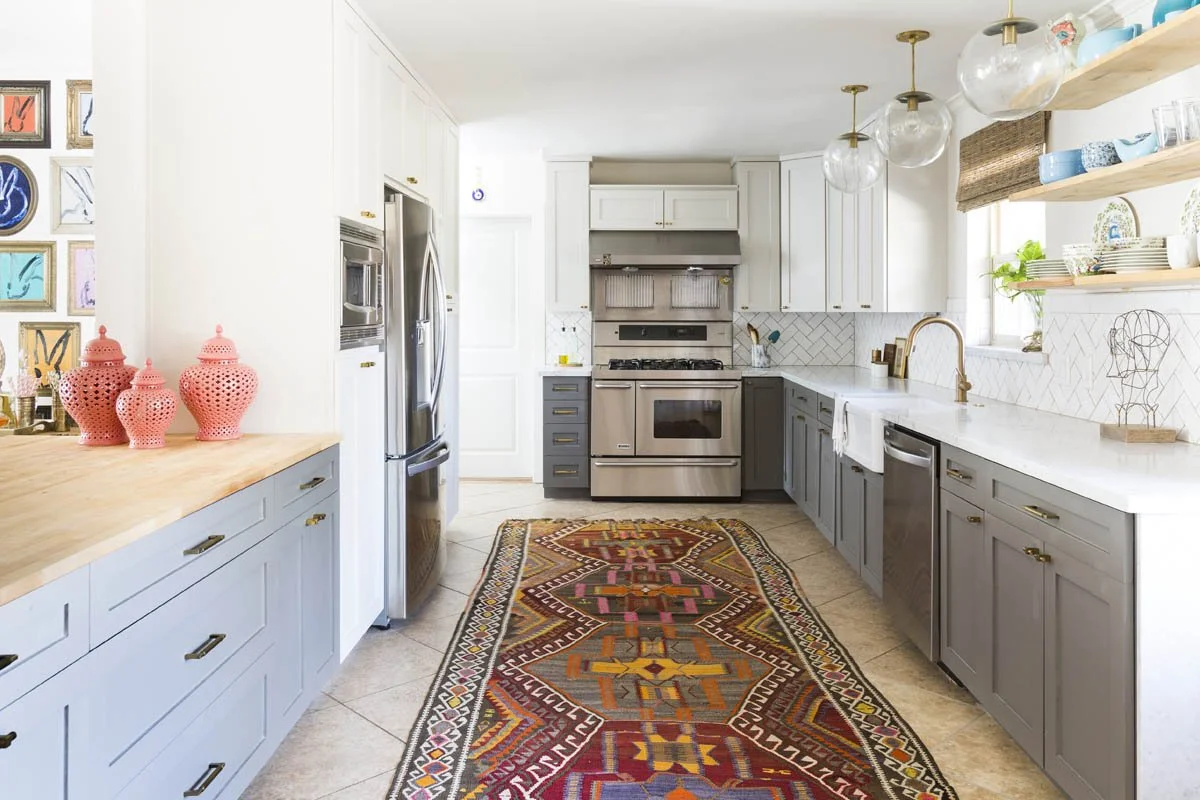
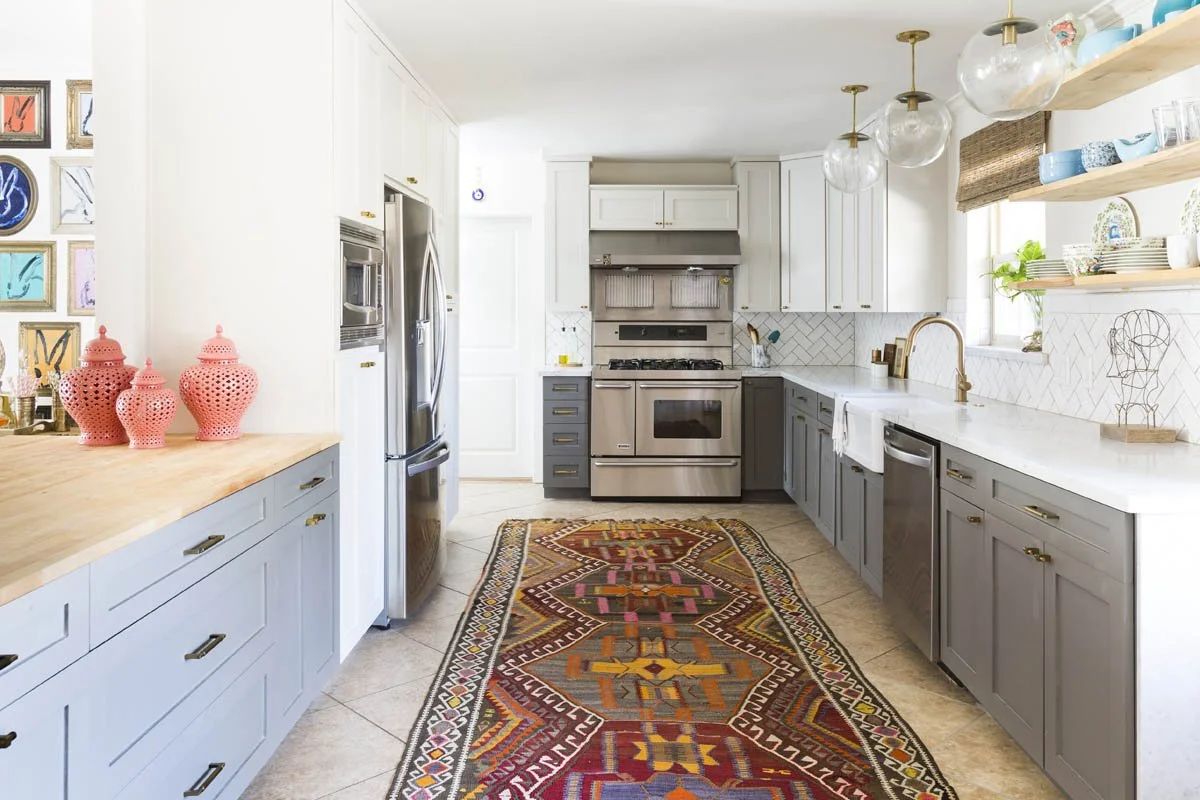
What changed: painted cabinetry in a soft slate blue and crisp white, brass hardware, open shelving that lets their things actually be seen, globe pendant lights that hit the mid-century note they were after, and a vintage Turkish runner underfoot that adds warmth without trying too hard.

The result is a kitchen that functions the way their life does; open, connected, ready for people.

Littleton CO interior designer Jamie House Design opened up the kitchen to the dining room in this kitchen remodel.

AFTER

BEFORE

Personality in the Details

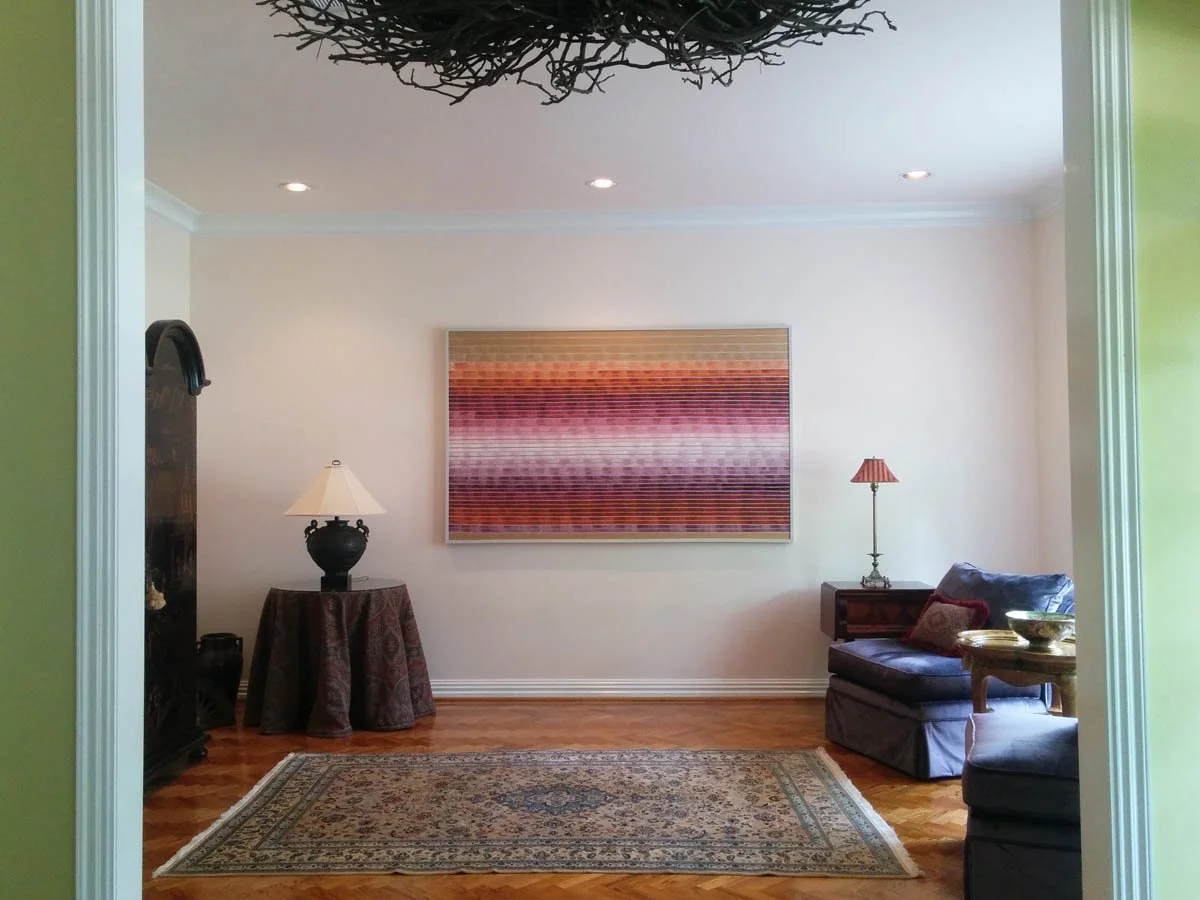
The woman of the house has a genuine love of bunnies, not as a theme, but as a real thing that matters to her. So rather than relegating it to a tchotchke on a shelf, we leaned into it: Hunt Slonem's Lee Jofa wallpaper in the dining space, which creates an unexpected, joyful contrast to the kitchen's more structured palette.

This is the kind of decision that makes a home feel personal rather than assembled. When something specific to the people who live there gets treated as a real design element instead of an afterthought, the whole room changes register.

Bold dining room designed by Littleton Interior Designer Jamie House Design.

AFTER

BEFORE

Beyond the Kitchen

The scope here was larger than just the kitchen. They also wanted a proper primary suite; which the original floor plan didn't really have, with his-and-hers walk-in closets and a connection to the backyard that didn't exist before. We reconfigured the back of the house to make that work: new doors opening to a pool area, wood flooring replacing dated carpet, a bathroom redesigned from a former bedroom.

Each of these decisions was made with the same logic as the kitchen; what can we keep, what needs to change, and how do we make it cohesive rather than piecemeal. The result is a house that reads as a whole rather than a collection of separate renovation decisions made at different times.

Wallpaper accent wall in bedroom designed by Interior Designer Jamie House Design

AFTER- DOORS TO THE POOL, CLOSETS RECONFIGURED

Bedroom before remodeling added doors to the pool.

BEFORE - NO DOOR TO THE BACKYARD

Black walls in primary bathroom after remodel by LIttleton CO interior designer Jamie House Design.

AFTER

Primary bedroom before remodeling to primary bathroom.

BEFORE- bedroom turned into bathroom

Before these rooms were functional but disconnected, from each other and from the people living in them. Now they're not. That's what a renovation should do, and it doesn't require starting over to get there.

Littleton CO interior designer Jamie House Design designed this hall bathroom on a tight budget.

AFTER

hall bathroom in need of remodeling

BEFORE

If you're working with a home that has good bones and a layout that isn't quite working, I'd love to hear about it.

Read More
Jamie House Design, Process Jamie House Design Jamie House Design, Process Jamie House Design

Mid-Century Modern Kitchen Remodel | Kitchen Design

This mid-century modern home in Littleton boasts a fantastic floor plan, natural flow, and striking architectural details—features that Jamie House Design thoughtfully enhanced. Without moving walls or altering the layout, we focused on maximizing its potential, preserving the original charm while elevating the design. This sprawling, rambling home has a dreamy quality—especially for me, imagining all this space from my little Berlin flat.

When I received a call from this wonderful family about their move from our beloved old neighborhood in Houston, The Heights, to a suburb, I wasn’t sure what to expect. Architectural details are a key element of great interior design, yet many suburban homes often lack character—at least in the neighborhoods I grew up in. But the moment I saw this mid-century modern gem in Littleton, I was smitten. A true diamond in the rough, this home had incredible potential. Nestled in a lush, spacious neighborhood filled with unique homes, it was anything but cookie-cutter. (And if your home is a cookie-cutter design, don’t worry—we can infuse it with personality and style! Just hit that inquire link.)

This mid-century modern home in Littleton boasts a fantastic floor plan, natural flow, and striking architectural details—features that Jamie House Design thoughtfully enhanced. Without moving walls or altering the layout, we focused on maximizing its potential, preserving the original charm while elevating the design. This sprawling, rambling home has a dreamy quality—especially for me, imagining all this space from Berlin. LOL.

I’ll start by sharing the "before" stage and walk you through the transformation, leading up to the final rug installation on Friday. WARNING: un-styled progress pictures ahead!

The original kitchen layout feels scrunched up into one end of the room. Presumably the space can be used for a breakfast space plus a possible storage console. Either way, our client did not want space for a table in the kitchen as the dining table is literally steps from the kitchen. Plus we all dream of a spacious open kitchen. Jamie House Design will always design your kitchen to maximize counter space, prioritize the best appliances for you, and create efficient storage.

Our client’s priority was to preserve as much of the original home as possible. Keeping that in mind, I still sketched out a completely reworked mid-century modern kitchen design to show the best possible layout. I always prioritize my clients' wishes while also offering expert recommendations based on how I envision them living in and using the space. In this case—like in most projects—the client agreed with my vision, and we moved forward while keeping as many of the original cabinets as possible. (We kept those globe flush-mount light fixtures and reused them in other rooms in the house. They’re very high quality and currently on trend.)

That said, those closets had to go. They were a massive waste of space—one likely a pantry, the other a coat closet. Eliminating them allowed us to create a more open, functional flow. The island was also far too small; while we couldn’t make it deeper, we extended it for better usability.

Here are the plans:

The first thing to go in this mid-century modern kitchen remodel was the bulky pantry closets. The original island couldn't be extended because the pantry doors cut into the space, limiting functionality. While we initially considered swapping the ovens and refrigerator for better kitchen flow, keeping the appliances in their original locations allowed us to preserve more of the existing cabinetry—honoring the home’s original design while enhancing efficiency.

To improve both storage and entertaining, I added a secondary area with open shelving, perfect for a beverage and serving station. Since our clients love to host, this space is ideal for setting up drinks and appetizers while keeping guests out of the busy kitchen workspace.

Extending the island created a casual dining spot and a place for someone to sit and chat while another person cooks. Kitchen design should always account for how people naturally gather—because no matter how big a home is, everyone ends up in the kitchen!

The new custom pantry cabinets provide far more storage than the original pantry closet, plus we added electrical outlets for a hidden built-in coffee station—a must-have for streamlined functionality.

To open up the space, I removed all upper cabinets above the cooktop and designed a sleek, minimalist range hood. This creates a natural focal point in the kitchen and allows the space to breathe. Any time I can eliminate upper cabinets, I do—being intentional with kitchen storage creates a more open, inviting atmosphere.

Here’s the progress :

The transformation reveals so much beautiful space. At this point, the new flat-front cabinet doors are in place, the range wall features all-new cabinetry, Jamie House Design preserved the original cabinet boxes throughout the rest of the kitchen for a seamless blend of old and new.

On the other side, you can see the newly added beverage and serving center, designed for both style and functionality. One of my favorite design choices is opting for drawers over cabinets in kitchens. There’s nothing chic about crawling on your knees to dig through the back of a cabinet. Drawers are a must—they’re more efficient and accessible. I always design kitchen’s for ease of use, aiming to make meal prep and entertaining smoother for our clients. After all, your kitchen should make your life easier, whether you’re preparing daily meals or hosting dinner parties.

The new pantry set up functions 100% better than before while taking up less space. There’s room for storing large kitchen items and plenty of space for food. Jamie House Design designed the interior organization of the pantry to be extra functional and easy to maintain.

Adding only the simple custom range hood on the range wall highlights the spaciousness of the new kitchen design. Sure, we could have filled it with upper cabinets, but there was no need—there’s already plenty of storage. Making space for beauty is just as important as function.
Below the cooktop, you'll see cabinet doors instead of drawers, even though I usually prefer drawers. In this case, I matched the existing design elements—sometimes, there are exceptions to the rule. This is exactly why it's so important to hire an experienced interior designer for the process. Small design details make all of the difference.

I will always recommend that your refrigerator be built-in or at minimum LOOK built-in. One of the biggest regrets in kitchen design is designing a beautiful new kitchen but seeing the refrigerator simply sitting next to the cabinets as if no one planned for it at all. A built-in refrigerator keeps the space cohesive and polished, adding to the overall luxury and functionality of your kitchen.

The extra depth in the corner was always there. I honestly didn’t know how to make it better so I let it remain as a place to slide in small appliances. Adding a “garage door” would draw attention to it and I don’t want that. The counter material is also the backsplash so it wraps completely around and makes it feel spacious.

The island is finally in place! Due to space constraints, the island could only be 24” deep, which is the standard depth for lower cabinets in kitchens. This means the functional storage is limited to just one side of the island, which houses basic storage and the garbage receptacles. To keep the back of the island from looking too plain, I added a simple yet striking ribbing detail. It’s an easy treatment that delivers big visual impact. (Spoiler alert: the pendant light over the island mirrors the ribbing, and the home’s paneling throughout echoes the same motif, creating a cohesive design.)

Look at that thoughtfully designed pantry! Jamie House Design incorporates built-in organization to make it easy for you to keep your home maintained and functioning.

The green accent paint is finally in place! This is the stage where you can start to see Jamie House Design’s vision for this mid-century modern kitchen remodel truly coming to life.

With the warm tones of the Saltillo tile floors, the original wood stain was overwhelming. The green we chose is the perfect complement, but we knew that an all-green kitchen would be too much. By opting for white upper cabinets, we’ve created a space that feels open and bright—balancing color with light for a more inviting atmosphere.

When selecting paint colors for your own kitchen design, it’s essential to consider how they’ll look from other rooms in the house. Colors don’t have to match exactly, but they should coordinate. A thoughtfully chosen palette can create a seamless flow from room to room, tying your space together.

One piece of advice I always give my clients: Don’t paint the insides of your cabinets. Instead, leave them stained or lightly stained. Stained wood wears far better than paint, especially in high-use areas like the inside of kitchen cabinets. Yes, I’ve painted the inside of cabinets before and it turned out beautifully, but that was the exception—done with a special hard-wearing finish in a cool accent color and applied by a professional.

Littleton CO mid-century modern kitchen remodel designed by Centennial interior design firm Jamie House Design featuring a bold green.

If you're inspired by this mid-century modern kitchen remodel and want to create a space that’s both functional and beautiful, message me today. Let’s discuss how Jamie House Design can help bring your kitchen vision to life!

Read More
Jamie House Design, Portfolio, Process Jamie House Design Jamie House Design, Portfolio, Process Jamie House Design

A Thoughtful Kitchen Remodel in Houston’s Memorial Neighborhood

At Jamie House Design, we believe that a well-designed kitchen is the heart of the home, especially in historic neighborhoods where original architecture deserves to be honored. One of our favorite projects was a full-home remodel in an affluent Memorial neighborhood in Houston, where the homeowners made a conscious decision to preserve their home’s charm rather than tear it down—a choice we deeply admire.

At Jamie House Design, we believe that a well-designed kitchen is the heart of the home, especially in historic neighborhoods where original architecture deserves to be honored. One of our favorite projects was a full-home remodel in an affluent Memorial neighborhood in Houston, where the homeowners made a conscious decision to preserve their home’s charm rather than tear it down—a choice we deeply admire.

The existing kitchen lacked character, function, and flow. The cabinetry was of poor quality, the finishes were outdated, and the flooring did not blend seamlessly with the rest of the home. Initially, the homeowners considered a simple refresh with new paint, but we encouraged them to take full advantage of the renovation and create a kitchen that would stand the test of time while enhancing daily life for their growing family.

Before image of a kitchen remodel by Jamie House Design

Reimagining the Layout for Function and Beauty

A successful kitchen design begins with function, then layers in beauty. The existing layout did not make the best use of the available space, and the pantry was underwhelming in size. Our priority was to improve efficiency, provide ample storage, and create a more open and inviting atmosphere.

Key layout improvements included:

  • Expanding the kitchen pass-through to create a stronger connection to the family room, adding a concrete counter for casual seating.

  • Bumping out the sink wall to accommodate the client’s dream Shaw farmhouse sink and maximize workspace.

  • Reconfiguring the pantry to provide generous storage for a family that values home cooking and entertaining.

  • Designing a functional work triangle to enhance the flow between the sink, range, and refrigerator, ensuring effortless meal prep and cleanup.

Floor-plan of the original kitchen | Jamie House Design

BEFORE. View from the family room to the kitchen.  

DURING. In widening the kitchen peek through we realized that there is NO drywall behind that paneling. You can see the backside of the fireplace next to the original pantry also. 

Timeless Materials and Thoughtful Details

To honor the home’s original character while introducing modern luxury, we carefully curated a mix of materials and finishes:

  • Countertops: Hand-troweled concrete countertops bring an organic texture that complements the home’s natural elements. We extended this material into the utility room and powder bath for continuity.

  • Flooring: Slate flooring adds depth and subtle color variation while seamlessly transitioning between the home’s original wood floors and the kitchen.

  • Custom Cabinetry: Instead of the standard under-cabinet molding, we hid the lighting behind cabinet doors for a streamlined, sophisticated look.

  • Storage Solutions: Deep drawers replace lower cabinets, allowing for easy access to cookware and eliminating the frustration of searching through cluttered shelves.

  • Glass Cabinetry: Textured glass doors on the display cabinets and pantry add vintage charm while maintaining an airy openness.

DURING. New tile is in, cabinets in the kitchen are being built. 

DURING. Concrete counters, tiles, plumbing, paint is all in. 

Overcoming Unexpected Challenges

No renovation is without surprises. When widening the pass-through, we discovered there was no drywall behind the paneling—just the exposed backside of the fireplace.

A Kitchen Designed for Living

The final result is a kitchen that is as practical as it is beautiful. The expanded pantry, concealed small appliance storage, and custom cabinetry ensure effortless organization. The enhanced layout fosters connection, allowing family and guests to gather comfortably.

Overcoming Unexpected Challenges
Another challenge arose with the range wall. Our original design included a spice niche, but the contractor insisted it couldn’t be built due to structural limitations. Instead, they installed a stainless-steel backsplash. While functional, this was not in line with the aesthetic vision. Fortunately, we were able to bring in our trusted team to rework the wall and install the stunning Pratt & Larson tile as originally intended—restoring the integrity of the design.

Just look at those beautiful, huge lead time, handmade, cut tiles.

A Kitchen Designed for Living

The final result is a kitchen that is as practical as it is beautiful. The expanded pantry, concealed small appliance storage, and custom cabinetry ensure effortless organization. The enhanced layout fosters connection, allowing family and guests to gather comfortably.

Oh look! My spice niche! I brought in my contractor, the rest of the remodel to this point was by the client's contractor. I knew we could cut into the wall. The fireplace is nearby but not directly behind the stove. Luckily I have the best clients and they understood why this was important. When you're sitting in their family room and look towards the kitchen, this is what you see. It was such a shame to have such a beautiful kitchen and focus on stainless steel on the wall. 

Pratt and Larson tiles on backsplash behind range in Houston Texas kitchen remodel by Jamie House Design. Concrete counters in kitchen.

IPaint Selections

(Note: Always sample colors in your own space before committing, as lighting varies.)

  • Walls & Ceilings: Benjamin Moore White Dove

  • Cabinet Uppers: Benjamin Moore White Dove

  • Cabinet Lowers: Benjamin Moore River Reflections

  • Interior of Glass & Open Cabinets: Benjamin Moore Gray Cashmere

Transform Your Own Kitchen with Jamie House Design

Now based in Denver, Jamie House Design continues to offer expert interior design services for high-end remodels in Houston and beyond. Whether you’re preserving a beloved home or updating a space to better suit your lifestyle, we bring thoughtful design, timeless materials, and unparalleled attention to detail.

If you’re considering a kitchen remodel, let’s create something extraordinary together. Contact Jamie House Design today to discuss your project.

Read More

Search Posts


Featured Posts