Why Hire Your Own Interior Designer for New Construction (Instead of Using Your Builder's Designer)
The question comes up early. You've signed with a builder, you're picking your lot, things are moving. Then someone mentions the design center appointment, and you realize the builder has a designer on staff.
"Do we really need to hire someone else?"
It's a fair question, and the honest answer is: it depends on what you're trying to accomplish.
I've been involved in new construction projects in Castle Pines, Highlands Ranch, and Centennial for years. I've worked alongside builders' designers and I've come in after clients used them.
Here's what I've learned about the difference.
Who the Designer Actually Works For
This is the thing nobody says plainly, so I will: your builder's designer works for the builder.
That's not a criticism. It's just the structure. They're employed by the builder, evaluated by the builder, and their job is to help the builder's process run smoothly, while also helping you make selections you'll be happy with. Both things can be true. But when those goals conflict, you're not the tiebreaker.
What this looks like in practice: when the builder has leftover tile from a previous job, that tile shows up as a suggested option. When a lighting fixture would require modifying a rough-in, the recommendation shifts to something that uses the standard placement. When you want deeper upper cabinets or custom millwork, the builder's designer might discourage it, not because it wouldn't work better in your kitchen, but because it complicates the schedule.
None of this is dishonest. It's just a different role than working for you.
What Builder Designers Do Well
I don't want to oversell this distinction. Builder designers do something genuinely useful.
They know the builder's systems. They know which selections integrate smoothly with the construction process, which upgrades are fairly priced and which are marked up, how to communicate with the construction team. For clients who want a well-run, on-schedule project with acceptable finish selections, they're often enough.
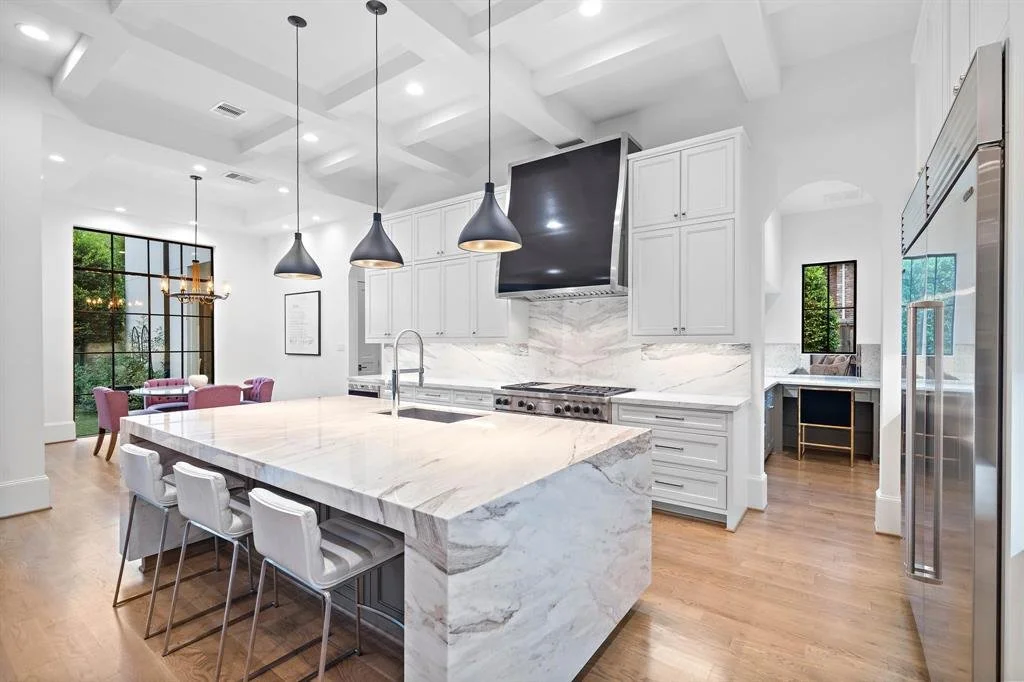
The scope is typically finish selections: paint colors, flooring, tile, countertops, cabinet styles, plumbing fixtures, lighting. The decisions that need to happen during construction to keep things moving. That's legitimate work.
It's just not the whole thing.
What Builder Designers Usually Don't Do
Here's where the gap opens up, not because builder designers aren't capable, but because it's genuinely outside their role.
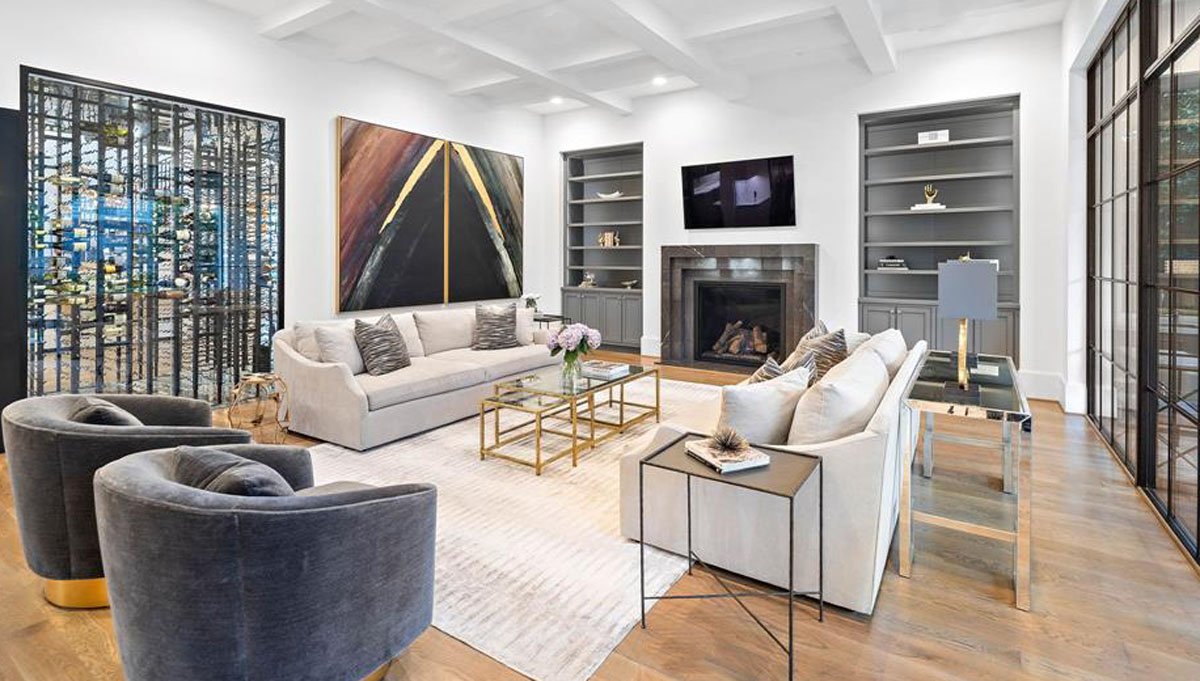
Space planning and furniture layouts. Which furniture goes where, at what scale, considering how you'll actually use each room. This determines whether your great room feels right or just feels big. No amount of nice tile fixes a room where the furniture doesn't work.
Custom furniture. Your media console needs to be 118 inches to fill that wall. You're not finding that retail. Custom pieces require specifications, fabricator relationships, and 12–16 week lead times, which means someone needs to be planning them while the house is still being framed.
Window treatments. Not decorative. Functional: light control, privacy, acoustic softening, and in Castle Pines especially, how you frame a view without competing with it. Builder designers don't spec window treatments. Someone has to.
Lighting design beyond code. Builders install recessed cans on a grid. That satisfies code. It doesn't create the layered lighting that makes a home feel good at 7pm versus noon. This requires planning before the electrician is done, not after.
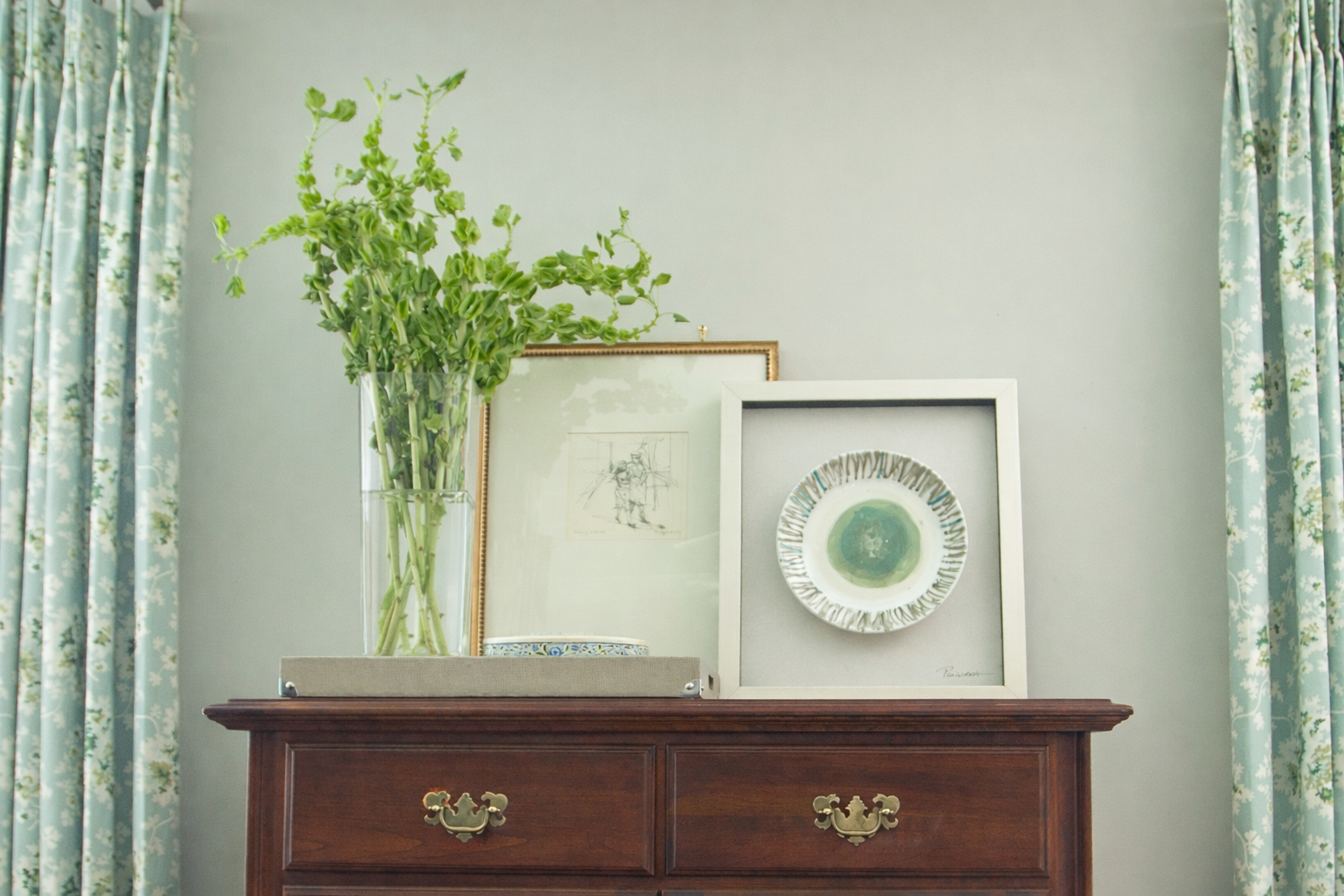
The complete furnished result. Most builder designers' involvement ends when construction does. You close on the house, and everything else, furniture, art, styling, the actual feeling of the place, is yours to figure out.
The Timeline Problem Nobody Warns You About
This is the scenario I see play out constantly.
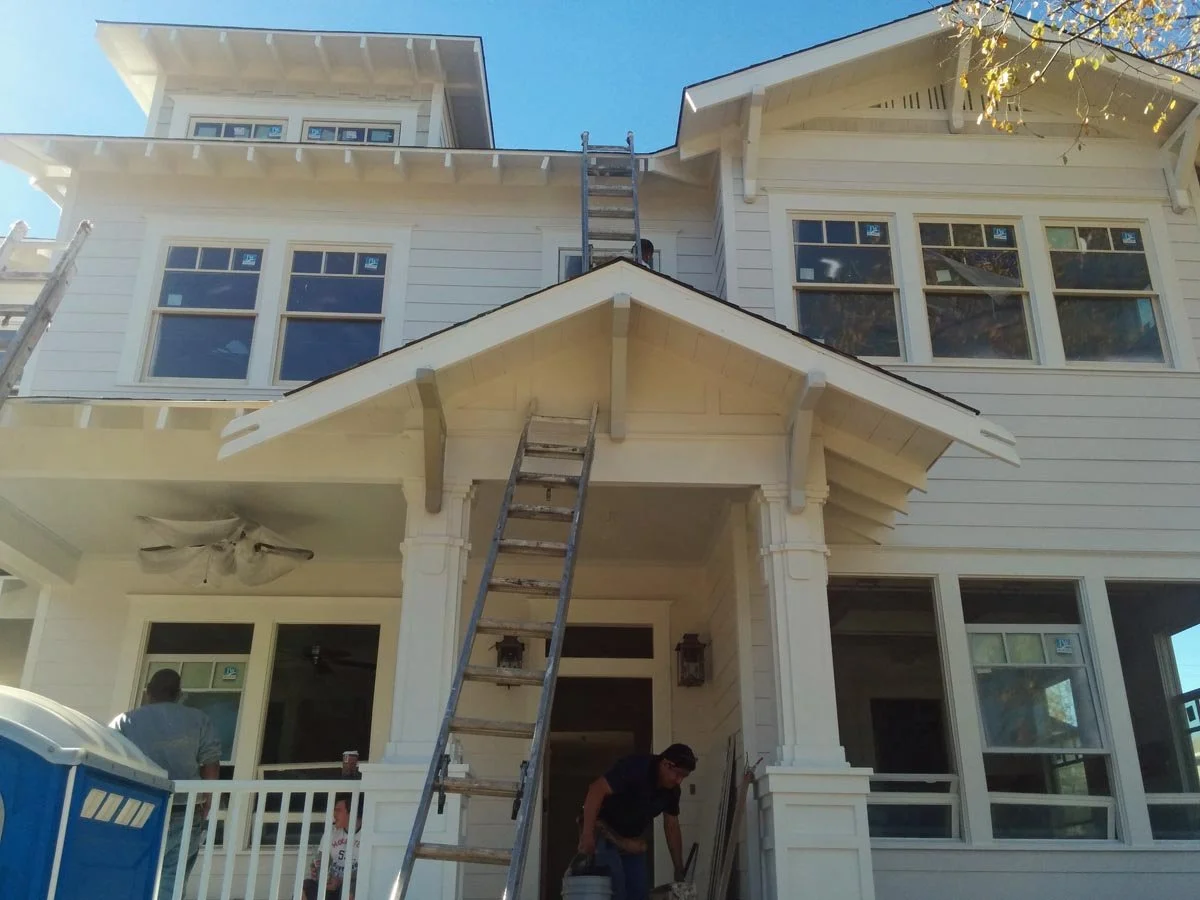
You close in October. The house is beautiful, quality construction, everything new. You move in. Rooms are empty, or filled with furniture from your old house that doesn't fit the scale. Windows are bare. The lighting is harsh. It echoes.
You start shopping. That sofa has a 12-week lead time. The dining table you need doesn't exist at retail, it has to be custom, 16 weeks. Window treatments require measuring, fabric selection, fabrication, 10 weeks minimum.
It's March. You've been living in an unfinished house for five months.
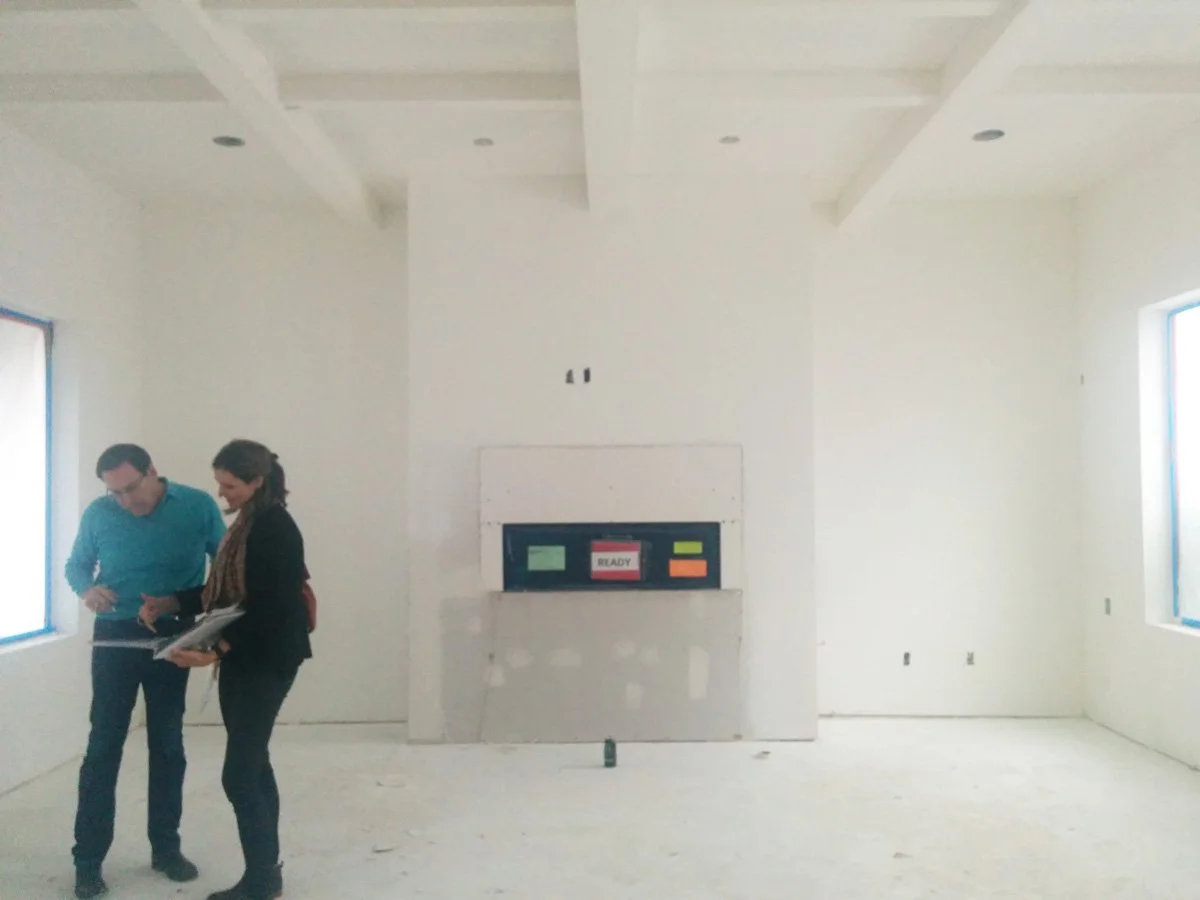
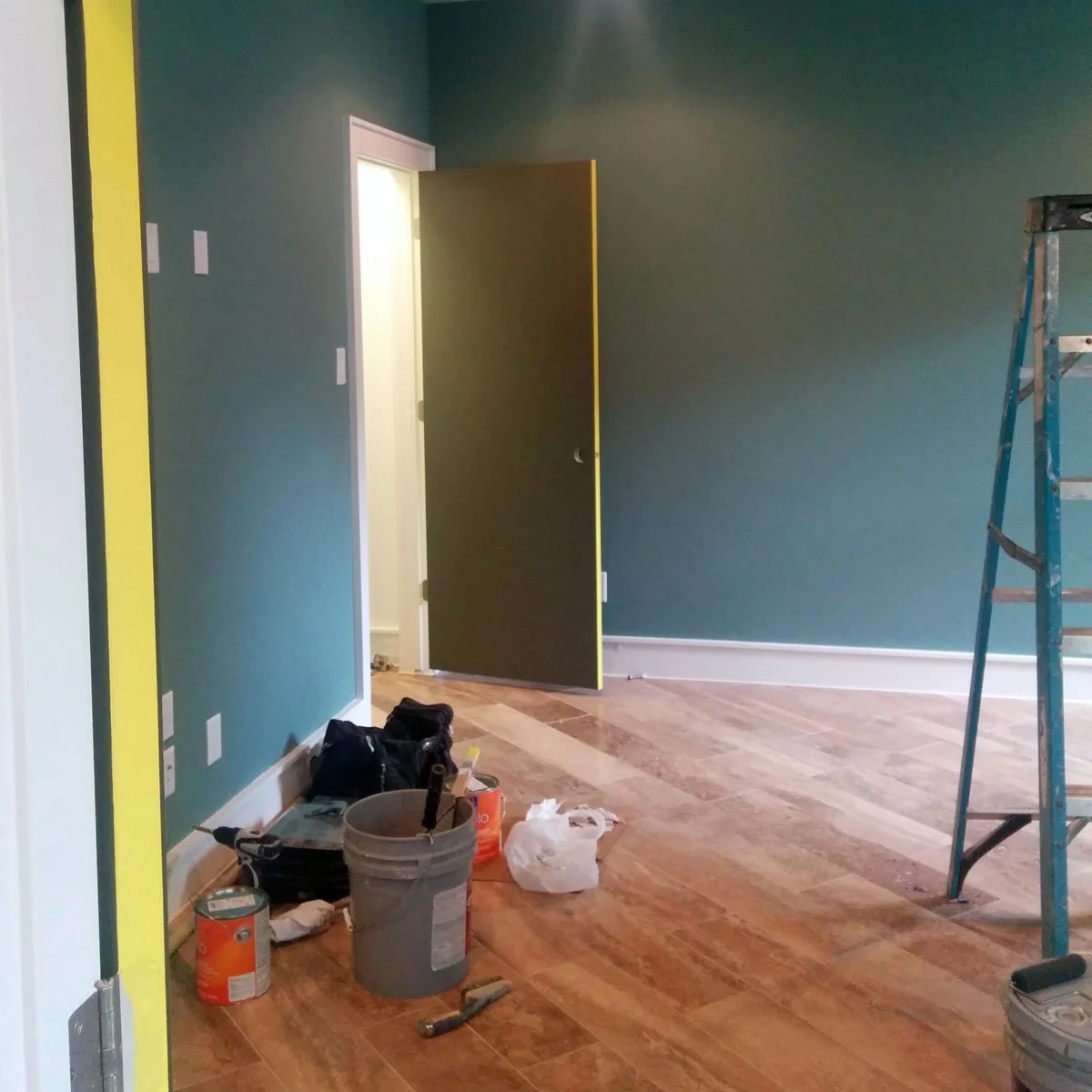
The alternative: you bring in an independent designer before or early in construction. While the framer is working, I'm measuring and planning furniture. While the electrician is doing rough-in, I'm specifying the custom pieces that need to be ordered now. While the painter is finishing drywall, I'm placing fabric orders.
You close in October. Your furniture arrives in November. Window treatments install in December. You're hosting Thanksgiving in a completed home.
The design work is the same either way. The difference is sequence.
The "Two Designers" Concern
Builders sometimes raise this when you mention hiring someone independently: "We already have a designer who knows our process. Won't this create confusion?"
Professional designers work with builders all the time. It's not unusual. Clear roles prevent conflict.
The builder's designer facilitates the builder's process; standard selections, schedule coordination, construction communication. The independent designer creates the complete vision, specifies what's actually optimal for the home, and manages everything through installation.
The builders who resist this arrangement usually do so because an independent designer will ask for things that require more effort: modified lighting layouts, custom millwork, upgraded materials. That resistance tells you something about whose interests are being protected.
The Investment Conversation
"Your builder's designer is included. Hiring you costs $35,000–$90,000. How do we justify that?"
A few things worth saying here.
Your builder's designer isn't free. Their salary is built into your home price. You're paying for those services regardless of whether you use them.
The real comparison isn't "builder designer versus independent designer." It's "finish selections plus figuring out the rest yourself" versus "a completed home."
If you spend $1.5 million on a Castle Pines new build and move into it with bare windows, mismatched furniture, and harsh lighting, and then spend the next two years slowly shopping your way toward something that feels finished; you've paid for that in time, in frustration, and often in money spent on things that don't quite work and get replaced.
Full-service design for new construction: $35,000–$100,000+, depending on scope. This typically represents 4–6% of construction cost on a custom home.
The Castle Pines Specific Context
Castle Pines homes tend toward generous proportions, mountain views, and natural settings that generic finish selections simply don't relate to. Builder finishes that would be fine in any subdivision look generic against that backdrop.
Large-scale spaces need proper furniture scale and deliberate zoning. A 25-foot great room with 20-foot ceilings needs a furniture plan, not just nice flooring. Mountain views need framing, not competition. The outdoor context wants to come inside in a way most builder finish packages never consider.
This isn't something a builder designer is set up to provide. Their scope ends with construction. That's the job.
Mine continues through the furnished, styled, complete result, which is what you actually paid for when you chose Castle Pines.
When the Builder's Designer Is Enough
I want to be honest about this, too.
If you're building a spec home or semi-custom with limited customization, the builder's process is streamlined for a reason. Working against it rarely makes sense.
If your budget is tight and you're prioritizing construction quality, you can furnish gradually over time. The builder's designer handles what needs to happen now.
If you're experienced at design and space planning, you know what you want and just need someone to facilitate the selection process, that might genuinely be sufficient.
If it's a rental or investment property, optimal design isn't the priority.
But if you're building a custom home, investing significantly, and want the complete result to match the investment you made in the structure, the builder's designer alone is going to leave you with a beautiful empty house.
The Question Worth Asking
When you meet with your builder's designer, ask directly: What happens after construction? Do you help with furniture selection? Window treatments? Styling?
If the answer is "that's not our scope", now you know what you're actually deciding.
The question isn't whether you can afford an independent designer. It's whether you can afford to invest $1.5 million in a home and not finish it.
I work with new construction clients in Castle Pines, Centennial, Highlands Ranch, and Littleton. The ideal is to be involved early, before framing, even before permits, because that's when the most important decisions are still open. But if you're mid-build and realizing the scope is bigger than you anticipated, that's a fine place to start too. Wherever you are in the process, I'd love to hear about it.
If this was useful, these might be too: