Kitchen Design in Centennial CO
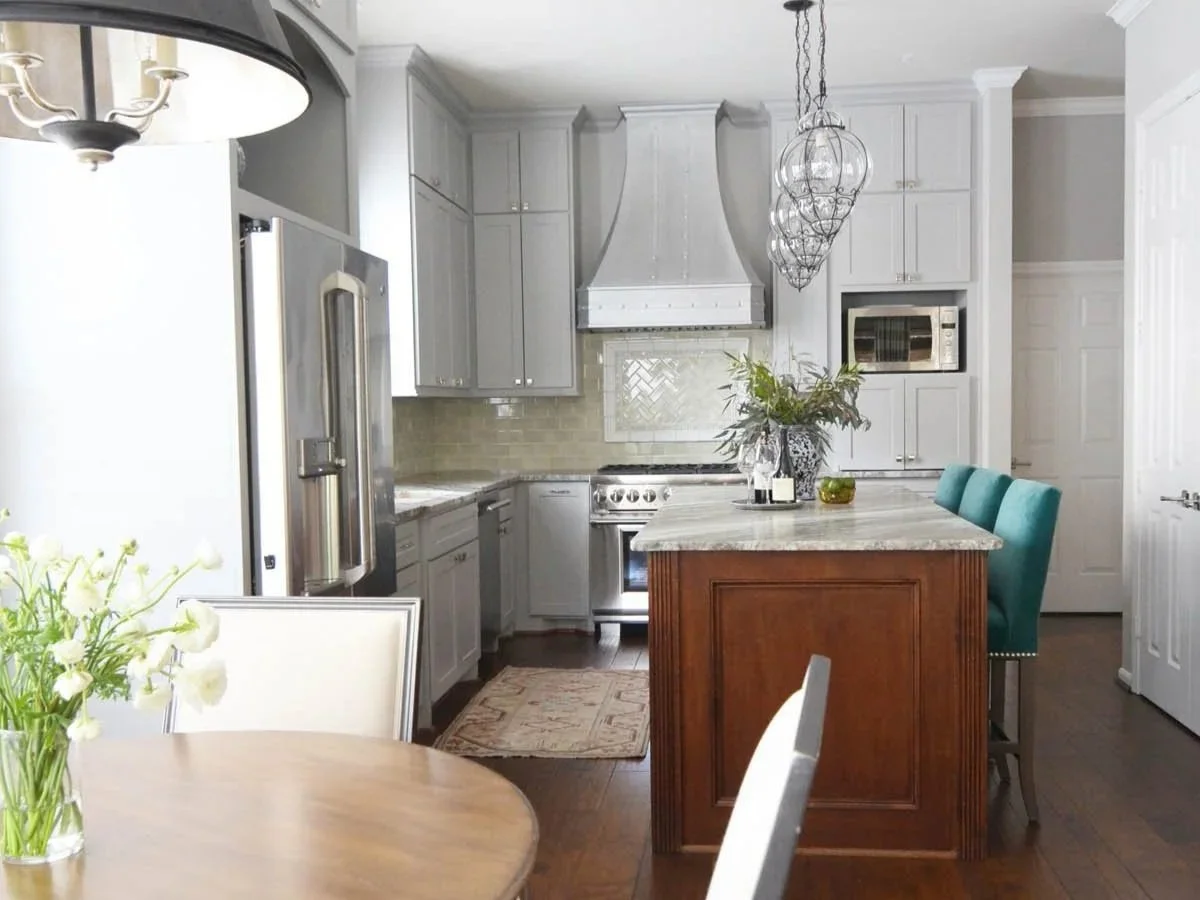
Centennial has a specific housing story. The city was incorporated in 2001, but most of the homes were built between 1975 and 2000, which means the majority of kitchens in neighborhoods like Smoky Hill, Walnut Hills, Foxridge, and Southglenn were designed for a different era of cooking, entertaining, and family life. They were built when kitchens were separate rooms, when the cook faced a wall instead of the family, and when builder-grade oak cabinets and laminate countertops were the standard everyone accepted.
Most of those kitchens are now 25 to 45 years old. And the families living in them have been tolerating layouts and finishes that haven't kept pace with how they actually live.
The good news: Centennial homes renovate beautifully when the design decisions are made thoughtfully. The bones are typically solid. The floor plans often have more potential than they appear. And the specific challenges these homes present; the closed-off layouts, the vaulted ceilings that feel cold, the dated finishes that age poorly, are solvable problems with established solutions.
Here's what I've learned working in these neighborhoods specifically.
The Closed Floor-Plan Problem
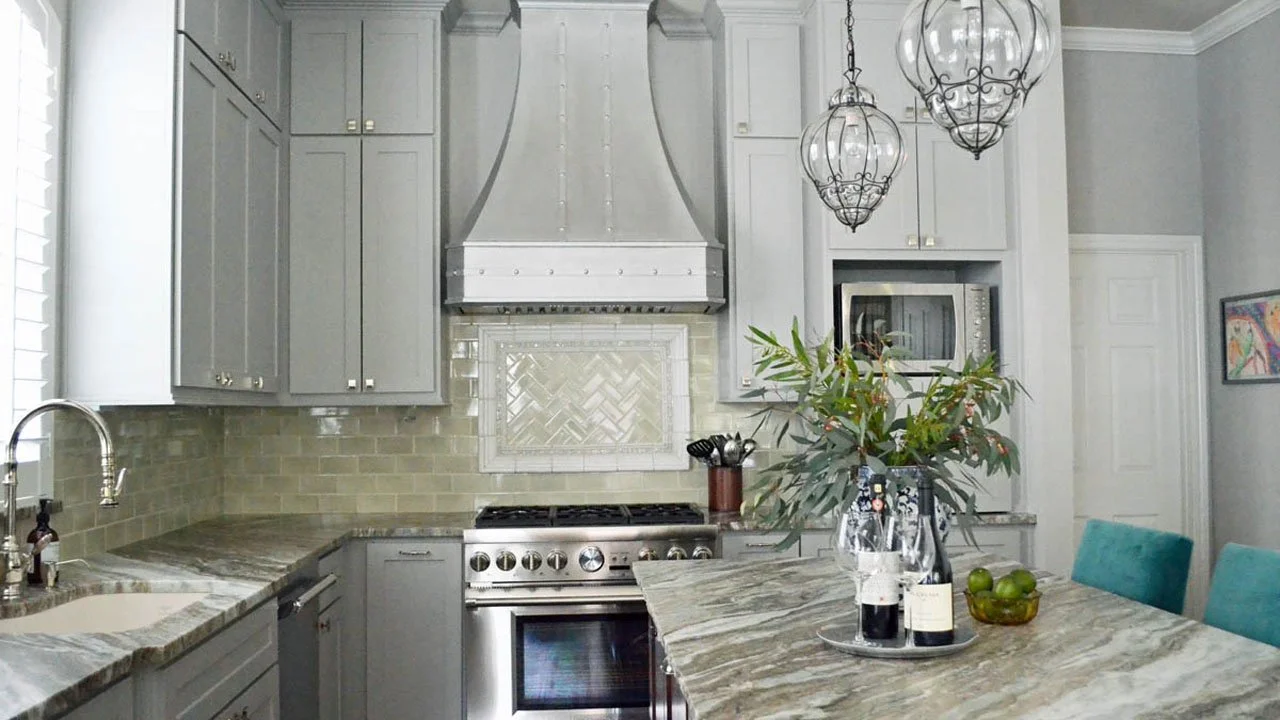
The most common kitchen challenge in Centennial homes is a layout designed around a wall that made sense in 1985 and doesn't make sense now. The kitchen is separate from the family room. The cook is isolated. The counter space is inadequate. And the room feels smaller than it is because natural light can't move through it. Often times the ceiling is lowered just over the kitchen.
The instinct is immediately to remove the wall and open everything up. Sometimes that's exactly right. But it's worth asking first: is this a load-bearing wall, and what happens to the space if it comes down? Do you want your kitchen to be seen as soon as people walk in the front door or from the street? Not everyone does, and that's a completely valid reason to keep the kitchen closed.
A closed kitchen that's been thoughtfully reconfigured can work as well as or better than an open one. The layout can be redesigned to improve traffic flow, maximize counter space, and address the isolation problem through a pass-through or widened opening that connects the cook to the family room without removing the wall entirely. An adjacent hallway, unused dining room or underutilized space nearby can often be converted into a proper pantry, something most of these homes never had and that changes how the kitchen functions daily. The lowered ceiling over the kitchen is also worth addressing in this scenario: raising it to match the adjoining rooms opens the space visually without changing the floor plan at all.
In many Centennial ranches the full wall removal is straightforward; a beam goes in, the floor plan opens, and the whole main level transforms. In others, the structural reality is more complicated and the better solution is a reconfiguration that keeps the kitchen defined while making it work significantly better than it does now.
This is where architectural training matters more than most people realize. Looking at a Centennial floor plan and understanding what's structurally possible, and what the family actually wants, before anyone picks up a sledgehammer is what separates a renovation that accomplishes what was intended from one that gets partway there and runs out of budget.
What the Finishes Need
Centennial kitchens from this era share a recognizable finish palette: honey oak or espresso cabinetry, granite in a brown or black pattern that was chosen from a limited builder selection, ceramic tile backsplash in a neutral that photographs as beige, and flooring that has been updated once or twice but never quite cohesively with the rest of the kitchen.
The renovation that produces the most value isn't always the most dramatic one. In many Centennial kitchens the layout is actually fine, the problem is entirely in the finishes. When that's the case, the most cost-effective path is a focused finish renovation: new cabinetry or cabinet refacing, new countertops, a backsplash that does something intentional, and updated lighting. Done correctly, this can transform a kitchen that feels dated into one that feels designed, without touching the plumbing or moving a wall.
Cabinetry: Painted finishes in warm whites, soft greens, navy, or sage replace the honey oak that dates these kitchens most visibly. If the cabinet boxes are in good condition, refacing rather than replacing is often the better investment. If they're being replaced entirely, this is also the moment to reconfigure, to add an island if the layout supports it, to rethink upper cabinet placement, or to incorporate a pantry that the original design didn't include.
Countertops: Quartz has largely replaced granite as the material of choice in Centennial renovations, and for good reason; it performs better, requires less maintenance, and the current options offer a much wider range of aesthetics than the brown-and-black granite that appears in so many of these homes. Warm white quartz with soft veining, or a warmer stone-look quartz, reads as current without being trendy.
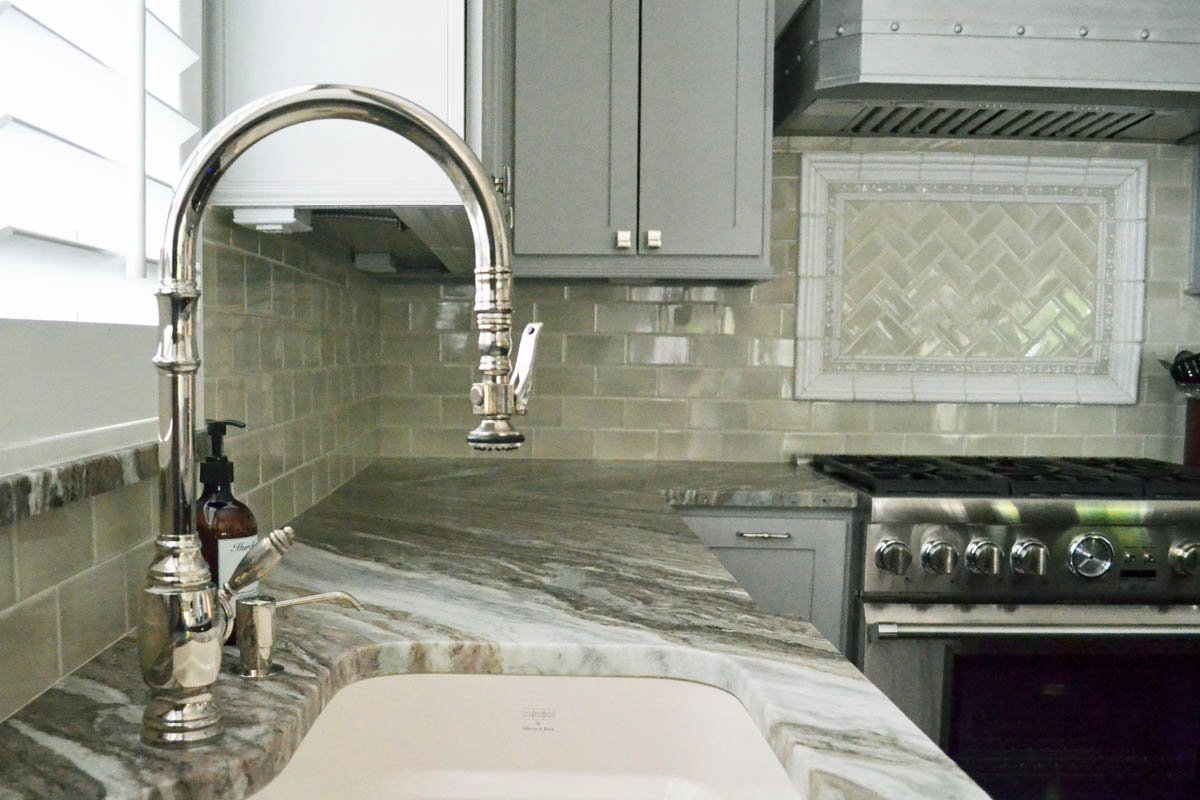
For those willing to go further, marble with beautiful veining is one of the most stunning countertop choices available, and one of the most misunderstood. People get nervous about marble, and understandably so. But stains in marble are not permanent damage, they release with time and the right treatment, and with regular sealing, maintenance is genuinely manageable. Think of the ancient marble buildings across Europe, worn and stained over centuries and more beautiful for it. Marble ages into something no quartz can replicate. If you love it, don't let fear of imperfection talk you out of it.
Backsplash: This is where Centennial kitchens have the most room to improve with the least expense. A tile that was chosen for neutrality, small ceramic squares, basic subway; can be replaced with something that has visual interest and material quality. Handmade or hand-glazed tile in soft colors, zellige, or a larger format natural stone tile changes the character of the kitchen significantly. The backsplash is often the detail that makes the difference between a kitchen that looks updated and one that looks designed.
One of the most elegant and underused backsplash options is also the simplest: carry the countertop material up the wall as a slab backsplash. Whether it's quartz or marble, a full slab behind the range or across the entire backsplash area is clean, durable, and unmistakably upscale. It eliminates grout lines, reflects light beautifully, and lets a stunning stone do what it's meant to do. In a kitchen with marble countertops, a marble slab backsplash is the move that makes the whole room.
Lighting: Almost every kitchen in this area has the same lighting situation: a recessed sheetrock box inset in the ceiling housing fluorescent tubes behind frosted plastic panels. It was standard practice in the 1980s and it produces flat, unflattering light that makes a kitchen feel institutional regardless of what else is in the room. Removing it is almost always the right move, and if the ceiling is being raised as part of the renovation, it has to come out anyway, which opens up the entire lighting plan.
What replaces it is a layered approach that these kitchens are more than capable of supporting. Under-cabinet task lighting that actually illuminates the countertop where the work happens. Recessed lighting in the ceiling for general ambient light. Pendants over the island or peninsula that add warmth and visual interest at human scale. A statement fixture, a chandelier, a lantern, an overscaled pendant, that anchors the room and signals the lighting was chosen rather than defaulted to.
A ceiling fan is worth considering in Centennial homes without central air conditioning, when homeowners prefer not to add it. A well-chosen ceiling fan at a good ceiling height is both functional and, with the right fixture, genuinely attractive. There are ceiling fans now that read as furniture rather than afterthoughts.
Everything on dimmers. Every single circuit. The ability to move from bright morning cooking light to lower evening light is what makes a kitchen feel designed rather than just lit. This is also the area of a kitchen renovation where the upgrade from what's there to what's possible is most dramatic, and often more affordable than people expect.
The Island Question
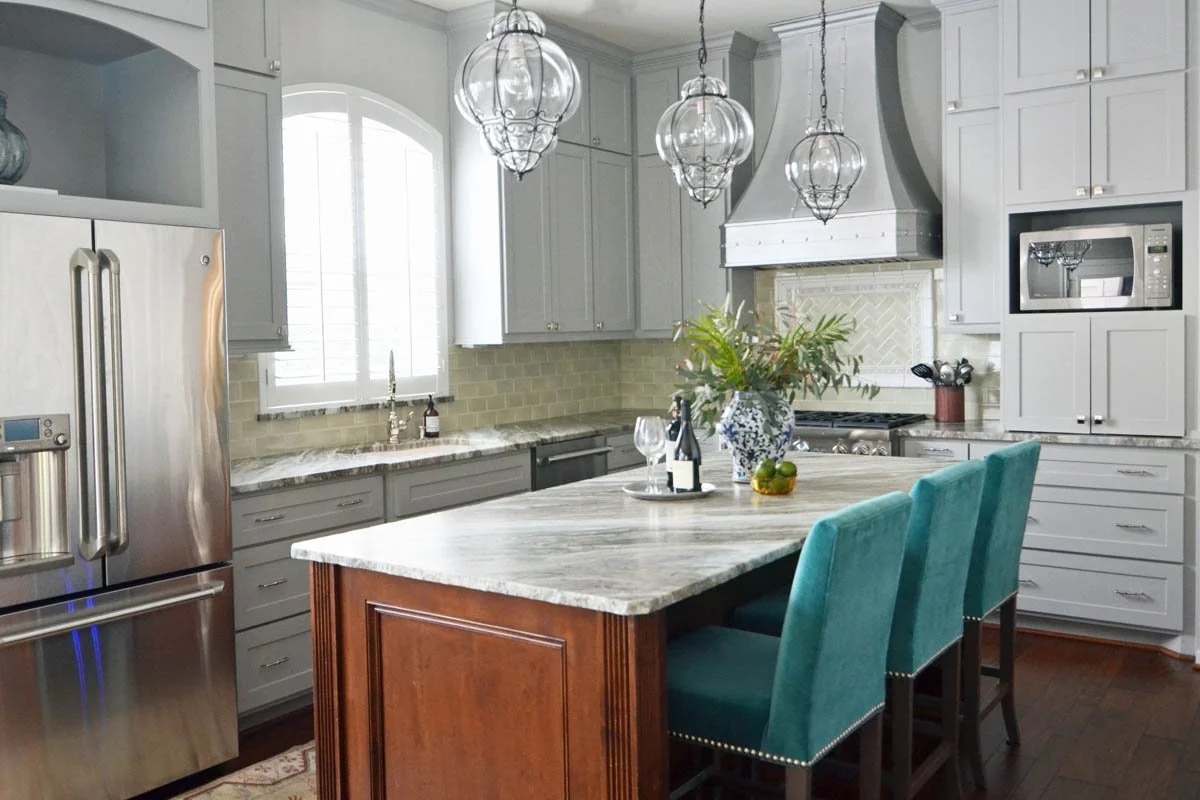
Many Centennial kitchens don't have islands or have a peninsula that functions like an island but doesn't work as well. The question of whether to add an island is one of the most common ones I get in these homes, and the answer is almost always: it depends on the floor plan.
An island needs a minimum of 42 inches of clearance on all sides to function properly, 48 inches is better if two people cook together, 36 inches feels too tight. In a kitchen that's been opened to the family room, there's often room. In a kitchen that's still bounded by walls on three sides, there usually isn't, and an island that's too small, or that blocks traffic flow, makes the kitchen work worse rather than better.
When an island works, it changes how a kitchen functions in ways that are hard to overstate; prep space, seating, storage, and a natural gathering point when people are cooking. When it doesn't fit, a well-designed peninsula or a significant expansion of counter space does more for the room.
This is a decision worth making with someone who's looking at the actual floor plan dimensions rather than what worked in another house.
Cherry Knolls and Foxridge Specific Context
Cherry Knolls and Foxridge are two of Centennial's most established and recognizable neighborhoods, and two of my favorites to work in. Cherry Knolls has homes dating back to the 1960s, which means you find a mix of original homes with genuine mid-century bones alongside later builds that came in through the 1970s and 1980s. Foxridge runs slightly newer but shares the same established neighborhood character; mature trees, larger lots, and homes that have been lived in long enough to have real history.
The kitchens in both neighborhoods reflect their era in specific ways. Cherry Knolls homes from the 1960s often have the most compact original kitchens, designed for a single cook, with minimal counter space and little connection to the rest of the main floor. The bones are frequently excellent and the ceiling heights are often better than the later builds, but the layout requires more creative rethinking than a simple wall removal. Foxridge kitchens tend toward the closed ranch configuration of the 1980s, the wall, the peninsula, the fluorescent box; but with enough adjacent square footage that the renovation options are genuinely good.
What both neighborhoods share is an established character worth honoring. These aren't houses to be flipped into something generic. The renovations that serve them best are the ones that improve how the kitchen functions and update the finishes thoughtfully, without erasing what makes the house feel like it belongs in the neighborhood it's in. A kitchen that could exist anywhere isn't the goal. A kitchen that feels like this house, finished properly, is.
What a Kitchen Renovation in Centennial Actually Costs
The range is wide because the scope varies so much. A focused finish renovation; cabinetry, countertops, backsplash, lighting, typically runs $60,000–$90,000 depending on materials and the extent of the work. A full renovation that includes layout changes, new appliances, and custom cabinetry is typically $80,000–$150,000+. These are construction costs, separate from design fees.
What a designer adds to either project goes well beyond managing the process. It's the difference between decisions made under pressure by people who aren't equipped to make them and decisions made as part of a cohesive plan before anyone picks up a tool. It's avoided mistakes, better contractor bids, and materials chosen to work together rather than selected individually. It's a kitchen that was designed for the way your family actually cooks, eats, and gathers; not a layout borrowed from a showroom or a finish package chosen because it was available.
It's also a return on investment. A thoughtfully designed kitchen renovation in Centennial increases property value in a way that a renovation without design direction rarely does. Buyers notice the difference between a kitchen that was updated and one that was designed. So do appraisers.
And beyond the investment, it's a space you genuinely want to be in. One that doesn't look like anyone else's house in the neighborhood, or like a catalog page, or like a flipped house that got new surfaces applied to an old problem. A kitchen that feels specific to you, finished properly, and better than you imagined when the project started. That's what design produces. That's what it's for.
If you're planning a kitchen renovation in Centennial and want to talk through what's right for your specific home, a consultation is the right place to start. Or if you're ready to talk about a full renovation, I'd like to hear about it.
If this was useful, these might be too: