Kitchen Design in Littleton: What Works in These Homes Specifically
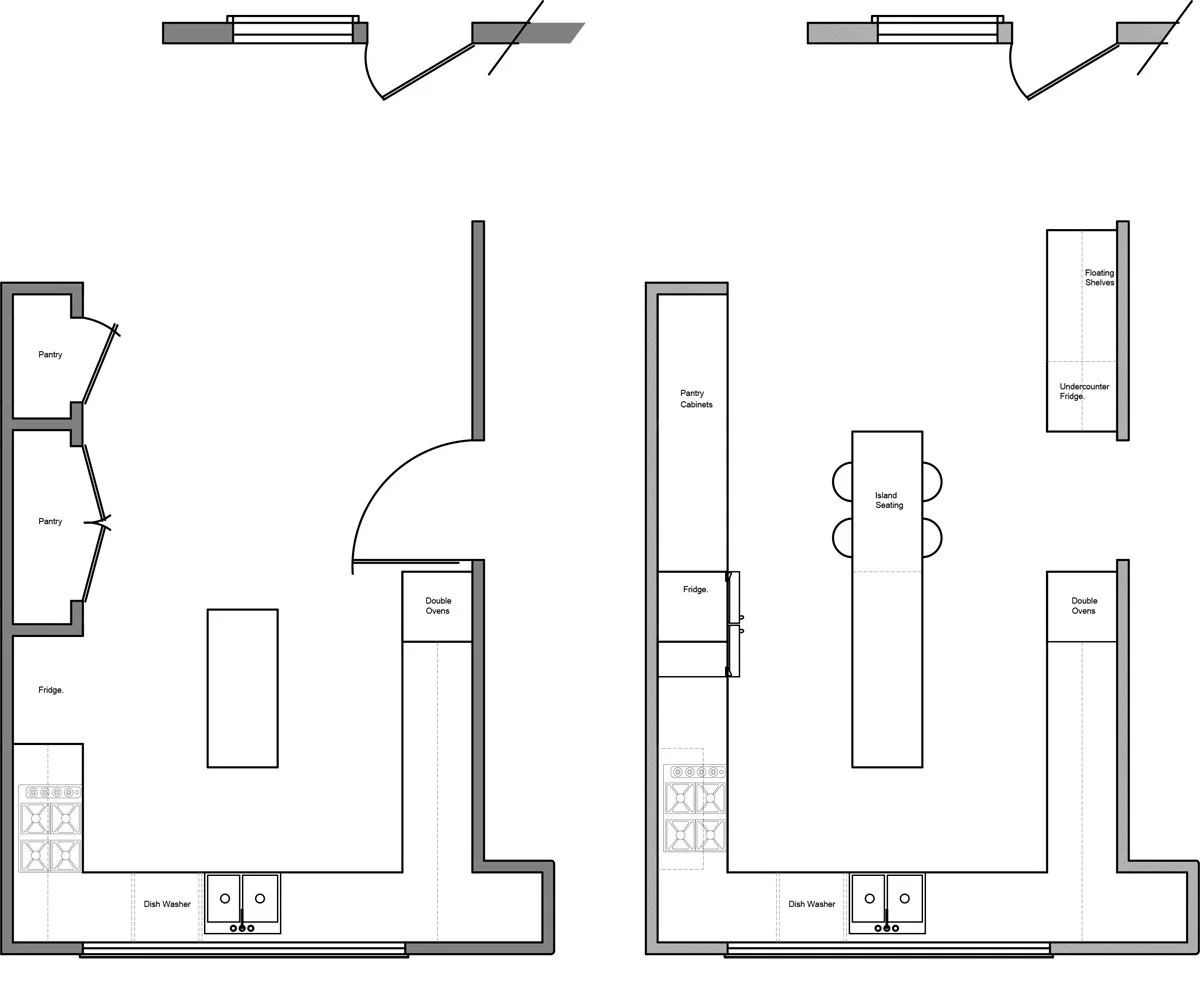
Before & After Floorplans of a Littleton CO Mid-Century Modern kitchen remodel. I respected the original layout and accommodated it to work for a busy family and the flow of the home.
Littleton is one of the most architecturally interesting places to work in South Denver, and one of the most varied. Within a few miles of each other you have 1920s bungalows in Old Town, mid-century modern ranches with original character worth preserving, Victorian farmhouses that predate most of the surrounding development, sprawling contemporary ranches with open floor plans and mountain views, and builder-grade new construction that's less than ten years old and already ready for an upgrade. The mountain modern aesthetic runs through all of it; sometimes appropriately, sometimes applied to homes where it doesn't quite fit.
What works in a kitchen depends almost entirely on what kind of home it's in. Littleton more than almost anywhere in South Denver makes that point clearly. A kitchen renovation approach that's exactly right for a 1920s bungalow would look wrong in a sprawling ranch, and what works beautifully in a mid-century modern gem would feel out of place in a Victorian farmhouse. The house itself has to be part of the design conversation.
Here's what I've learned working across Littleton's specific housing stock.
The 1920s Bungalow Kitchen
Downtown Littleton bungalows are among the most characterful homes in South Denver. They were built with a specific architectural sensibility; modest scale, craftsman details, built-ins that were part of the structure rather than afterthoughts, and the kitchens that honor that sensibility are the ones that age best.
The challenge is almost always the same: these kitchens are small by modern standards, and the instinct is to open them up by removing walls and creating the open-concept layout that's everywhere right now. Sometimes that's the right move. More often, it's worth asking whether the kitchen actually needs to connect to the living room, or whether it needs to work better as a kitchen first.
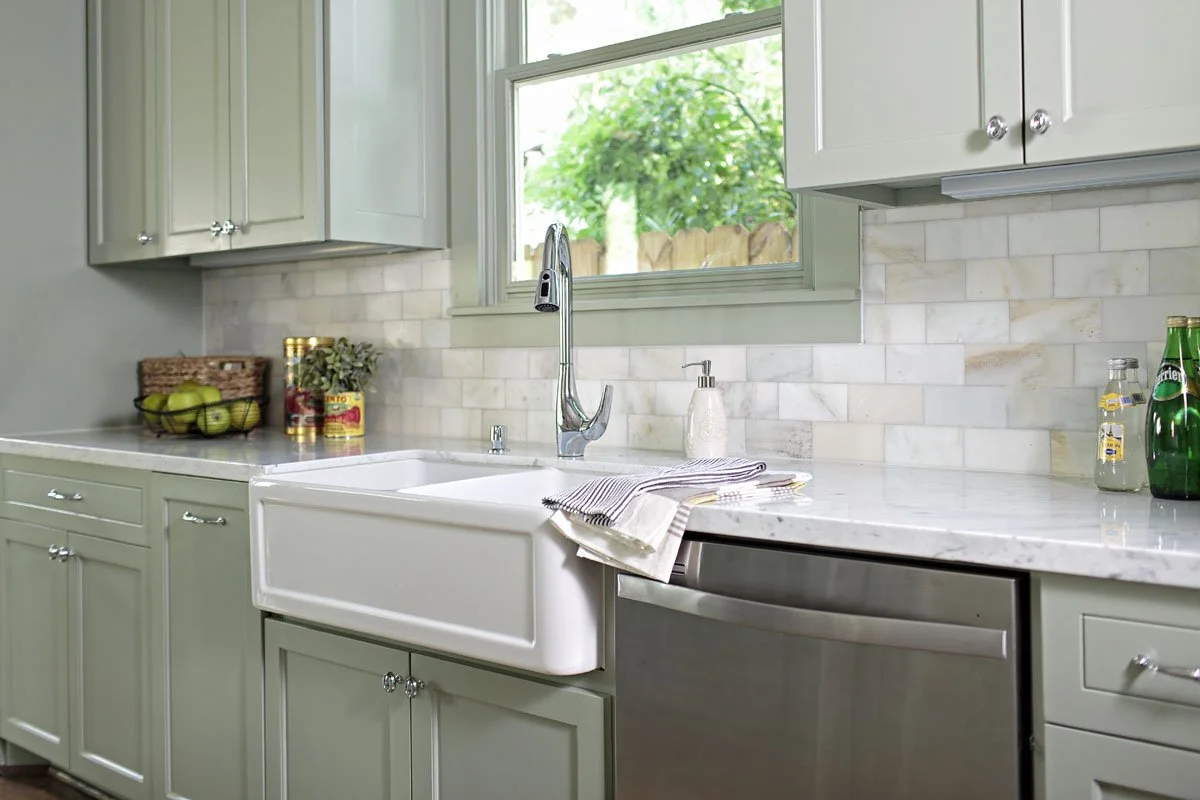
What tends to work: Shaker cabinetry in painted colors; navy, sage, black, forest green, honors the craftsman tradition without trying to replicate it exactly. Unlacquered brass hardware that will patina over time reads as original equipment in a way that polished chrome never does. Tile is where a bungalow kitchen can go from correct to genuinely beautiful. Handmade or hand-glazed subway tiles in soft colors and finishes, the kind with slight variations in surface and tone that come from being made by hand, read as original equipment in a way that mass-produced tile never does. The imperfection is the point. A machine-perfect tile in a bungalow kitchen always looks like it arrived from a different era.
Counter height open shelving in place of upper cabinets can open up a small kitchen visually without touching a wall. A farmhouse sink is almost always right in these kitchens. And if there's an original pantry or butler's pantry, the answer is almost always to restore it rather than convert it.
What tends to go wrong: If you're drawn to a neutral kitchen, and there's nothing wrong with that, a bungalow rewards the warmer end of the spectrum. Soft oak, creamy whites, warm tans, and aged linens work with the inherent warmth of these homes in a way that a stark, cool white resists. The bones of a 1920s bungalow have a particular character, and the neutrals that honor it are the ones that look like they've always been there. The other common mistake is oversizing the renovation, bringing in a large island, commercial-grade appliances, and an open-concept layout that reads as a different house grafted onto the original. The bungalow always wins. It's better to design with it.
The Mid-Century Modern Ranch
Littleton has some great mid-century modern homes; clean lines, flat or low-pitched rooflines, floor-to-ceiling windows, and an indoor-outdoor relationship that was ahead of its time. These kitchens are often galley-style or separated from the main living areas by a partial wall, and the temptation is immediately to open them up and modernize.
Sometimes opening up is right. But the homes that hold their value and their character are the ones where the renovation understood what it was working with. A mid-century modern kitchen that becomes a standard shaker-cabinet open-concept renovation has lost what made the house interesting.
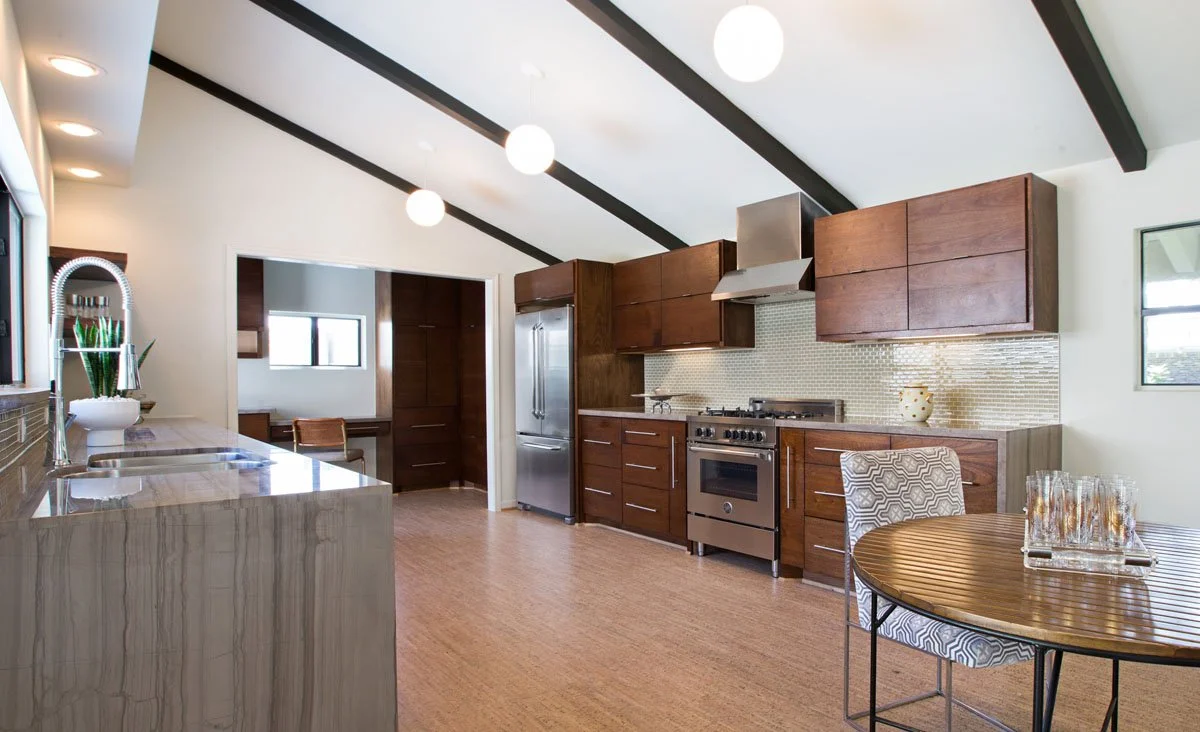
What tends to work: Flat-front or very simple shaker cabinetry in warm walnut tones or matte painted finishes, olive, terracotta, warm white, is period-appropriate without being costumey. Quartz or concrete countertops in warm tones. Integrated appliances where the budget allows, because the clean unbroken line is part of what mid-century kitchens do well. Under-cabinet lighting rather than pendant lighting over an island, these kitchens often don't have islands and don't need them. Original terrazzo or vintage-style tile on the floor (in the image above I did cork planks throughout the home, replacing a mishmash of flooring types) if the original flooring is gone.
Hardware is where mid-century kitchens can go either very right or very wrong. Simple bar pulls in matte black or warm bronze. Not the ornate cup pulls that belong in a Victorian, and not the oversized statement hardware that belongs in a mountain modern home.
What tends to go wrong: Mixing mid-century bones with farmhouse finishes. These aesthetics do not live together well. Shiplap, apron sinks, and open wood shelving in a mid-century modern kitchen create a visual argument the house can't resolve. The other mistake is removing original features, the partial wall between kitchen and living, the clerestory windows, the built-in cabinetry, because they seem dated. They're usually the most valuable things in the house.
The Victorian Farmhouse Kitchen
Littleton's Victorian farmhouses are relatively rare and worth treating with care. These homes were built before the automobile, which means they were designed around a different relationship to land and interior space than anything built after 1950. The kitchens are often in the back of the house, sometimes with original butler's pantry space attached, and they have ceiling heights and window proportions that most newer homes would pay significant money to replicate.
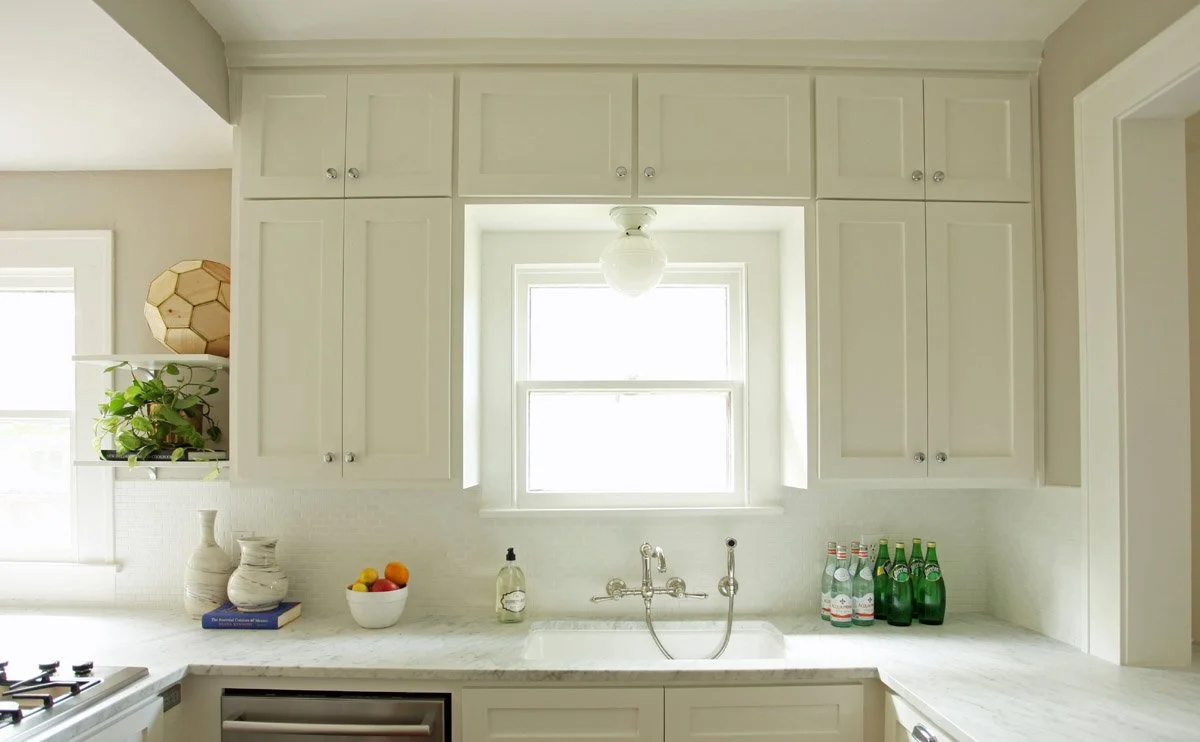
What tends to work: Inset cabinetry, where the door sits flush with the frame rather than overlaying it, is the historically correct detail and it reads correctly in these homes. Painted finishes in off-whites, creams, and soft colors rather than the stark bright white that reads as contemporary. Marble or soapstone counters. Unlacquered brass or oil-rubbed bronze fixtures. A true farmhouse sink, not the apron-front drop-in version, but a proper hand-hammered or fireclay farmhouse sink that looks like it belongs.
The range is where Victorian farmhouse kitchens can really land well. A range with a furniture-style leg detail, a range hood that reads as architectural rather than appliance, and a surround in tile or plaster that frames it as a focal point, the way a Victorian kitchen would have treated the hearth, is the kind of detail that makes these homes feel fully resolved.
What tends to go wrong: Updating a Victorian farmhouse kitchen with contemporary finishes because they feel cleaner or more current. Waterfall edge counters, flat-front cabinetry, minimal hardware, and stainless appliances look wrong in these homes in a way that's hard to articulate but immediately obvious. The house resists it. The other mistake is under-investing in the pantry, in a Victorian home the pantry is part of the kitchen's function and its charm, and treating it as overflow storage rather than a designed space is a missed opportunity.
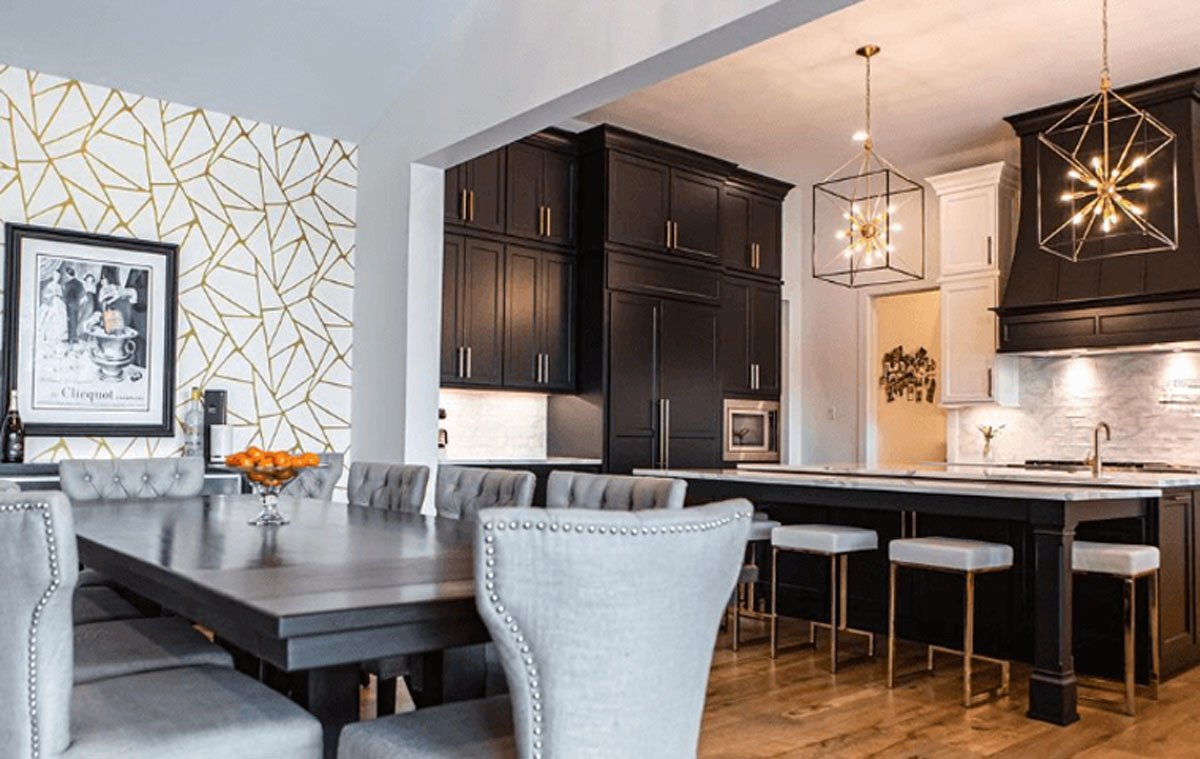
The Sprawling Ranch and Contemporary New Construction
A significant portion of Littleton's housing stock, particularly as you move toward Ken Caryl and the foothills, consists of larger contemporary ranches and semi-new construction builder homes built between 2000 and 2015. These are good homes with solid bones and layouts that actually work for modern family life. The kitchens are almost always the room that shows their age first.
Builder-grade cabinets in honey oak or espresso, granite in a color that was chosen because it was available rather than because it was right, and a layout that prioritized square footage over function, these are the kitchens that are ready for a proper renovation and that respond beautifully to one.
What tends to work: These homes have the square footage to support a real kitchen; a large island, a proper pantry, a layout that separates prep from cooking from cleanup. The renovation budget can go toward the right cabinetry in the right finish, a countertop that was chosen for the specific kitchen rather than the builder's allowance, and a backsplash that does something interesting rather than just covering the wall.
Mountain modern works genuinely well in these homes, particularly the ones with views. Warm wood tones, stone or quartz that reads as geological rather than decorative, mixed metals that skew toward unlacquered brass and matte black, and lighting that layers rather than relying on a single overhead fixture. The key is restraint: mountain modern at its best is calm and warm, not rustic or lodge-like.
What tends to go wrong: All-white everything, which shows its age faster than almost any other choice. The other common mistake in these homes is spending renovation budget on a layout that doesn't actually address the functional problems, a new backsplash on a kitchen that still doesn't work isn't an improvement, it's decoration.
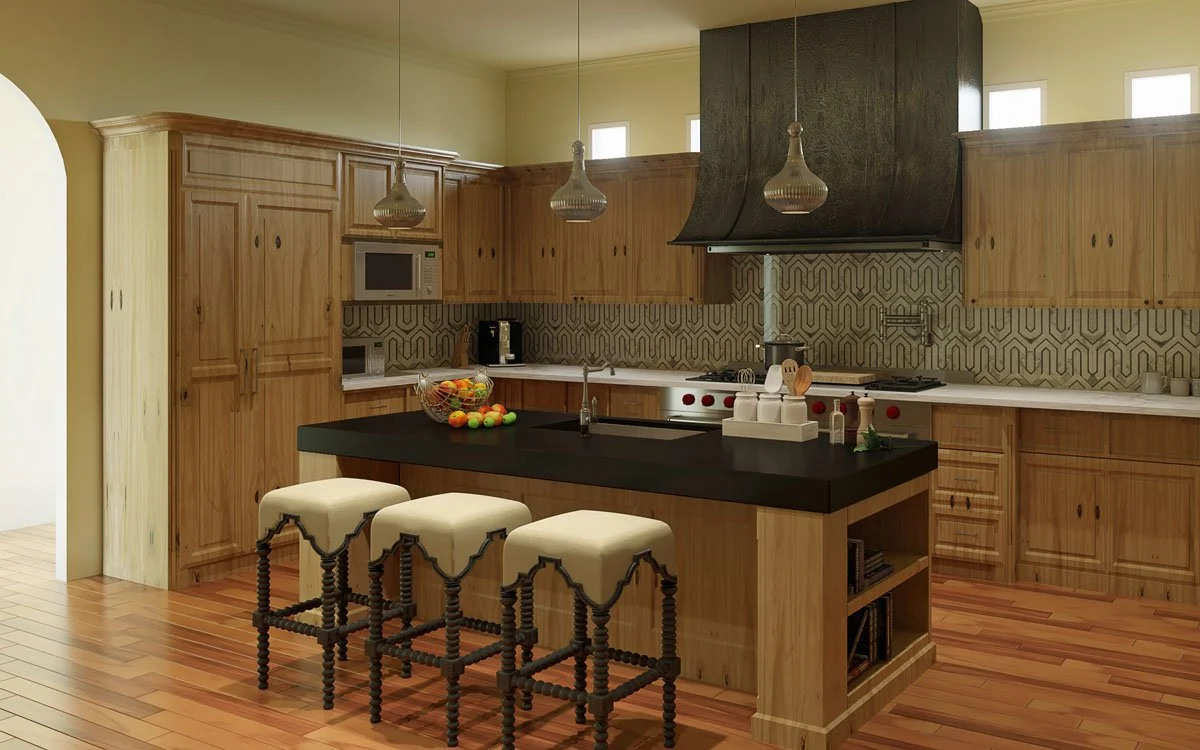
Mountain Modern in Littleton: When It Works and When It Doesn't
Mountain modern is everywhere in Littleton right now, and for good reason, it's an appropriate aesthetic for the foothills-adjacent setting, the natural materials feel right with Colorado's landscape, and it ages well when it's done correctly.
The problem is when it gets applied to homes where it doesn't belong. A 1920s bungalow is not a mountain modern house and shouldn't try to be. A Victorian farmhouse with mountain modern finishes is a confusion of aesthetics that neither the house nor the homeowner will be happy with in five years. Mountain modern is not a universal solution, it's the right solution for certain homes in certain settings.
In Littleton specifically, it tends to work best in: the larger contemporary ranches with open sight lines and mountain views, new construction where the architecture was designed to receive it, and mid-century modern homes where the material palette overlaps meaningfully. Warm wood, stone, matte black accents, layered lighting, and clean uncluttered surfaces, when those choices are made for the right house, the result is genuinely beautiful and lasting.
When mountain modern gets grafted onto a home where it doesn't belong, the result is a kitchen that looks like a showroom rather than a house; polished but impersonal, and disconnected from the architectural character that made the home interesting in the first place.
The Question That Applies to Every Littleton Kitchen
Regardless of the home style, the most useful question to ask before a kitchen renovation is: what does this house want to be?
Not what's popular right now. Not what the flipped house down the street looks like. Not what photographs well on Instagram. What does this specific house; its proportions, its materials, its architectural period, its relationship to the landscape, what does it want to be?
Answering that question correctly is what produces a kitchen that feels right immediately and still feels right in twenty years. It's also the question that requires someone who knows these homes and neighborhoods specifically, not just kitchen design in general, but what works in Littleton's actual housing stock, in Littleton's light, for Littleton's homeowners.
That's the work I do here. If you're planning a kitchen renovation in Littleton and want to talk through what's right for your specific home, a consultation is the right place to start.
If this was useful, these might be too: