

How to Incorporate Art and Collectibles Into Your Home Design
There is an undeniable magic in a home that feels deeply personal—a space curated with intention, where every object has a story to tell. At Jamie House Design, we believe that luxury isn't just about opulence; it’s about meaning, connection, and the joy of living with pieces that truly resonate. If you’re a discerning homeowner in Denver, Littleton, or beyond, incorporating art and collectibles into your residential interior design is the key to achieving a home that feels as distinctive as you are.
There is an undeniable magic in a home that feels deeply personal—a space curated with intention, where every object has a story to tell. At Jamie House Design, we believe that luxury isn't just about opulence; it’s about meaning, connection, and the joy of living with pieces that truly resonate. If you’re a discerning homeowner in Denver, Littleton, or beyond, incorporating art and collectibles into your residential interior design is the key to achieving a home that feels as distinctive as you are.
“Before you leave the house, look in the mirror and take one thing off.”
The Art of Thoughtful Selection
Curating your home is a journey, not a race. The best interiors are assembled over time, with each piece thoughtfully chosen rather than hastily acquired to match a trend. Whether you’re browsing your favorite retailers or sifting through antique stores, patience is your greatest ally. The right piece will speak to you—wait for it.
A well-collected home isn’t about accumulating objects to fill shelves; it’s about surrounding yourself with meaningful items. That antique mirror that once graced your grandmother’s hallway or the ceramic pitcher that now holds fresh flowers on your dining table—these are the details that make a house feel like home. Choose items that resonate with your soul, not just your color scheme.
There is also an undeniable environmental responsibility in this approach. Buying pieces with longevity—those you truly love and will treasure for years—reduces waste and promotes sustainability. "Buy better, buy less" is not just a mantra; it’s a commitment to craftsmanship, history, and thoughtful living.

Consider views into nearby rooms
At Jamie House Design our intention in hanging art, and paint color selection, is to guide your eye through the space. In this instance the Navy bedroom walls with grasscloth ceiling are accented by the antique botanicals, then immediately your eye moves to the bathroom beyond with the complimentary lighter paint color and bold artwork.
Five Ways to Achieve a Curated, Personal Home
1. Consider Placement with Intention
A single, large statement piece often speaks louder than a collection of small ones. Thoughtfully displayed art and collectibles bring warmth, individuality, and a sense of narrative to a space. By avoiding clutter and allowing cherished objects to breathe, you create an environment where every item commands appreciation.
2. Create a Gallery Wall
A curated gallery wall is an elegant way to showcase your collection while telling a story. Instead of relying solely on framed prints, mix mediums—combine vintage plates, sculptural elements, and decorative tiles for an engaging and dynamic display. Choose a harmonious color palette and vary spacing to achieve an effortless yet intentional arrangement.
3. Arrange by Color for Cohesion
An effective way to bring order to an eclectic collection is to group items by color. Limiting your palette to two or three complementary tones ensures visual harmony. Contrast textures—pair a smooth glass vase with a woven raffia bottle or a distressed wooden bowl—for a layered, sophisticated aesthetic. Recessed or concealed lighting within shelving can add depth and illuminate your curated treasures.
4. Give Pieces the Space They Deserve
The best collections don’t feel crowded. Start with a blank canvas—decluttering is essential before arranging your displays. Thoughtful storage solutions, such as built-in cabinetry, ensure that only your most cherished pieces remain visible, allowing your home to feel both curated and serene.
5. Invest in Timeless, Quality Pieces
Selecting the right art and collectibles is an art form in itself. Here are some essential considerations:
Authenticity & Provenance: When investing in art or antiques, seek well-documented pieces with historical significance. They not only enhance your interior’s prestige but also carry lasting value.
Aesthetic Harmony: The right collectible should complement your home’s design, whether it’s a striking contemporary sculpture in a traditional setting or a classic antique within a modern space.
Quality & Craftsmanship: True luxury lies in impeccable craftsmanship. Handmade, bespoke, or artisanal pieces bring a level of sophistication that mass-produced decor cannot replicate.
Sculptural & Focal Pieces: Invest in a few bold, statement pieces that serve as visual anchors within a room—ones that invite conversation and admiration.

Everyday items as accessories
Jamie House Design features the client’s jewelry as decoration in this bungalow bedroom. The jewelry provides beauty while also being a useful storage place for everyday living. No space can go unused in a historic bungalow. The mercury glass lamp echoes the sparkle of the jewelry.
Elevate Your Home with a Personal Touch
Your home should be a reflection of your journey, passions, and unique eye for beauty. At Jamie House Design, we specialize in crafting luxurious, deeply personal interiors that honor your story while elevating your living experience. Whether you’re in Littleton or Denver, our expertise in high-end residential interior design ensures a home that is artfully curated and unequivocally yours.
Let’s create a home that not only looks exquisite but feels like home. Contact us today to begin your journey toward a beautifully curated interior.
The Art of Choosing: Trade, Retail, and Custom Furnishings
At Jamie House Design, we curate interiors using a mix of trade, retail, and custom pieces to create a home that is as unique as you are. Our expertise ensures that each selection aligns with your aesthetic, lifestyle, and budget while elevating the overall design.
Navigating the furniture selection process can feel overwhelming, but with the right interior design team, it becomes an exciting journey toward a curated and luxurious home. Whether integrating exclusive trade pieces, sourcing from reputable retail brands, or designing fully custom furniture, our goal is to craft a space that reflects your personality and enhances your daily living experience.
After sourcing furniture for homes across three continents, I've learned this: the best interiors mix trade, retail, and custom pieces strategically. The question isn't which category is "better", it's which approach serves your specific project.
Your 1980s Centennial kitchen renovation has different furniture needs than furnishing new construction in Castle Pines. A historic Littleton dining room requires different solutions than a Highlands Ranch family room. Understanding when to use trade-only sources, retail options, or custom fabrication makes the difference between a home that works and one that doesn't.
Here's what actually matters when you're making these decisions.
Trade Furniture: What "To the Trade" Actually Means
Trade-exclusive furniture isn't available to the general public. You access it through an interior designer who has established accounts with manufacturers and showrooms. This isn't gatekeeping—it's how the industry has structured wholesale purchasing and designer services.
Why I use trade sources for most projects:
The customization options solve real problems. When you're furnishing a room with specific dimensions—say, a narrow living room in a 1970s Centennial split-level, you need a sofa that's exactly 78 inches, not 82 or 86. Trade sources let me specify exact measurements, fabric grade, cushion density, leg finish.
The quality construction justifies the investment. I've specified pieces from Hickory Chair, Lee Industries, and Century Furniture that clients still use 15 years later. Frame construction, joinery methods, spring systems; these details determine whether furniture lasts decades or needs replacing in five years.
The designer relationship streamlines everything. When I order through my accounts, I'm responsible for accuracy. Measurements are confirmed, specifications are documented, delivery is coordinated. If something arrives damaged, I handle it. This accountability costs money (it's built into design fees), but it removes the homeowner from managing vendor relationships.
What you're trading for this:
Longer lead times. Most trade furniture is made to order, which means 8-16 weeks from order to delivery. Some custom upholstery takes longer. If you need a sofa in three weeks, trade isn't the solution.
Higher minimum investment. A quality trade sofa typically starts around $4,000-$6,000 before fabric. Add performance fabric or leather, and you're looking at $6,000-$10,000+. This isn't arbitrary pricing, it reflects construction quality and customization options.
Final sale commitments. Custom orders can't be returned. This is why the design process matters. We confirm every detail before ordering because changes after production starts are usually impossible.

The Accessibility of Retail Furnishings
Retail furniture offers immediacy and convenience, catering to those who seek a quick yet stylish solution. Brands such as Crate & Barrel and Restoration Hardware provide readily available options that can beautifully complement a well-designed space.
When Retail Makes Sense:
Shorter lead times and readily available stock.
An approachable price point for select pieces.
Convenience of online browsing and easy returns.
Drawbacks to Consider:
Limited customization—dimensions, materials, and finishes are often pre-determined.
Designs that follow trends, which may feel outdated over time.
Standardized sizing, which may not seamlessly fit unique spaces.
The risk of a showroom aesthetic rather than a deeply personal, curated environment.

The Soul of Custom Craftsmanship
Custom furnishings are the pinnacle of luxury; each piece conceived and crafted as an extension of the homeowner’s story. This is where artistry meets intention, and where form and function are in perfect harmony. For those who revere originality, craftsmanship, and a truly tailored home, custom is the ultimate expression of refinement.
Why Invest in Custom Design?
Furniture that is designed exclusively for you, ensuring a flawless fit for your space and lifestyle.
A vast selection of premium materials, sourced and selected with care.
The opportunity to collaborate with master artisans, supporting craftsmanship and sustainability.
Freedom from supply chain delays and excess packaging waste associated with mass production.
The ability to test comfort, refine proportions, and perfect every design detail before completion.
Things to Keep in Mind:
A higher investment that reflects the quality and exclusivity of the piece.
Longer lead times as each item is handcrafted to order.
Custom pieces are non-refundable, reinforcing the need for thoughtful design guidance.
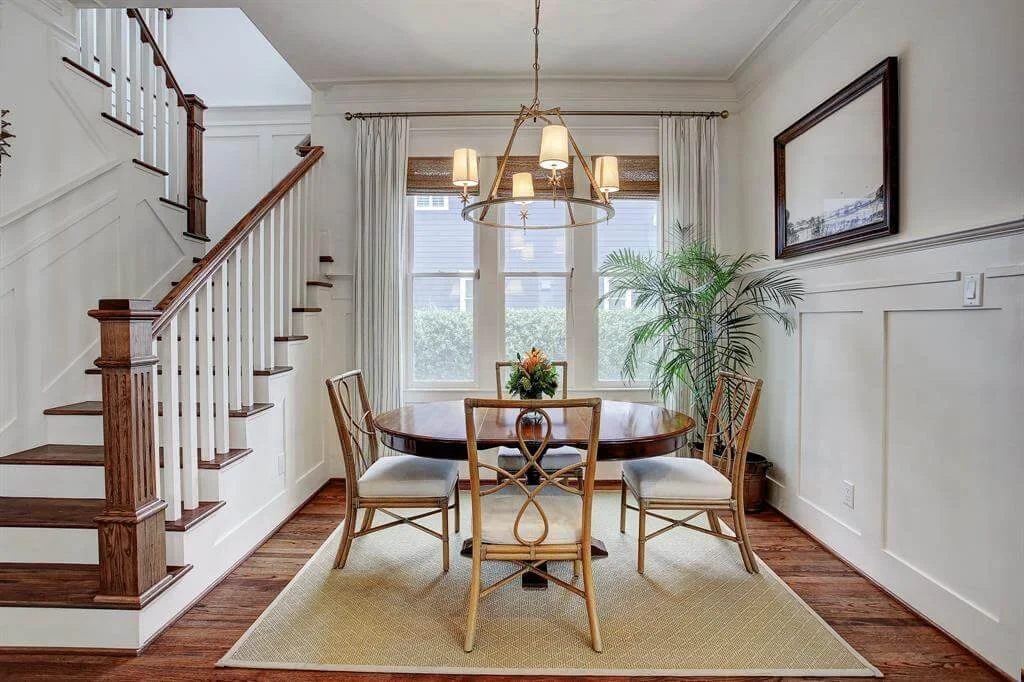
This living room provides the best of what interior design can offer. Jamie House Design used the client’s existing sectional, reupholstering it. Then designing custom pillows and a custom marble and iron cocktail table. The pendant in the breakfast room is retail while the breakfast table and chairs are trade furniture pieces. I believe strongly that the most beautiful spaces are a curated mix of trade, retail, and custom furniture pieces.
How I Actually Work With Trade, Retail, and Custom Sources
I don't approach furniture selection ideologically. The living room photo above shows exactly how I work: the client's existing sectional (reupholstered), custom pillows I designed, a custom marble and iron cocktail table I had fabricated locally, retail pendant lights in the breakfast room, and trade furniture for the dining pieces.
Mixed sourcing isn't a compromise, it's strategic. Each source type solves specific problems.
For a Centennial kitchen renovation, I might specify custom cabinetry (because nothing stock fits that 1985 layout), trade counter stools (because you need exact seat height and durable upholstery), and retail pendant lights (because the lead time works and the style is right). For Castle Pines new construction, I might design a custom media console (because builder-grade proportions are wrong for the space), order a trade sectional (because you need performance fabric that actually performs), and source retail accent chairs (because the style you want is available now at the right price point).
The mix changes with every project because every home is different.
What matters more than the source:
Does the piece solve your actual problem? A custom dining table makes sense when your room dimensions are unusual or you have a specific vision. It doesn't make sense just because "custom sounds better."
Does the quality match your investment? I've specified $2,000 retail sofas for partial design clients managing their own budgets, and $15,000 custom sofas for full-service clients building heirloom furniture. Both were the right choice for those specific projects.
Does the timeline work? If you're moving in 10 weeks, custom furniture with a 16-week lead time isn't the solution, regardless of how perfect it would be.
Working Together on Furniture Decisions
If you're working with me on a full-service project in Centennial, Castle Pines, Highlands Ranch, or Littleton, furniture sourcing is part of the process. I present options across different sources based on your budget, timeline, and how the piece needs to function. We discuss trade-offs honestly: this custom option costs more but fits your space exactly; this retail piece is available faster but won't be quite as durable; this trade source gives you the fabric performance you need for kids and dogs.
For consultation and partial design clients, I provide furniture specifications and source recommendations. You handle the actual purchasing, which means you'll need to navigate trade access (some sources sell to the public at different pricing, some don't sell to the public at all), lead times, and delivery logistics yourself.
The service structure you choose determines how much of this I manage versus how much you manage. Both approaches work, they just require different levels of involvement from you.
If you're renovating a South Denver home and trying to figure out whether that sofa should be custom, trade, or retail, let's talk about your specific project. The answer depends on your space, your timeline, your budget, and how you actually live.
Jamie House Design provides interior design services for residential clients in Centennial, Castle Pines, Highlands Ranch, Littleton, and surrounding South Denver suburbs. Services include design consultations, partial design services, and full-service interior design from architectural planning through final installation.
Denver’s Luxury Interior Design Trends for 2025
As a professional interior designer, I always encourage my clients to focus less on trends and more on what they truly love. Your home should be a reflection of your personality and lifestyle, not just a snapshot of the latest fads. That said, staying informed about emerging design movements can be inspiring and offer fresh ideas for creating a timeless, beautiful space. To paraphrase Gertrude Stein, a trend is a trend is a trend — it’s not a final farewell to beloved styles, but rather a cycle of reinvention. With that in mind, here are the luxury interior design trends we see defining 2025.
As a professional interior designer based in Centennial CO, I always encourage my clients to focus less on trends and more on what they truly love. Your home should be a reflection of your personality and lifestyle, not just a snapshot of the latest fads. That said, staying informed about emerging design movements can be inspiring and offer fresh ideas for creating a timeless, beautiful space. To paraphrase Gertrude Stein, a trend is a trend is a trend; it’s not a final farewell to beloved styles, but rather a cycle of reinvention. With that in mind, here are the luxury interior design trends we see defining 2025.

Maximalism is Here
Maximalism is taking center stage, but there’s a fine line between a curated wonderland and a cluttered space. True maximalism is intentional, balancing bold colors, layered textures, and diverse silhouettes in a way that feels cohesive rather than chaotic. The key is thoughtful curation; displaying collections, mixing vintage with contemporary, and embracing unique statement pieces without overwhelming the eye. This trend allows homeowners to express individuality while keeping their spaces elevated and refined.

The Return of Art Deco
The Jazz Age is making a grand comeback. Art Deco, born in France and popularized in the U.S. during the 1920s and 30s, is being reinterpreted with a contemporary twist. Think geometric patterns, luxurious materials, and metallic accents, but with a more subdued and livable edge. Instead of over-the-top glam, today’s Art Deco embraces bold yet refined details; rich velvet furnishings, inlaid woodwork, and sculptural lighting that evoke the opulence of the era while remaining sophisticated and timeless.
Earth-Toned 1970s Revival
The 1970s influence continues to shape high-end interiors, particularly through earthy color palettes, biophilic design elements, and handcrafted details. Expect to see deep greens, mustard yellows, burnt oranges, and rich browns paired with natural wood finishes and organic shapes. Low-slung furniture, plush textures, and sunken living spaces are making a strong return, creating warm and inviting environments that feel grounded in nature.
Chocolate Brown: The New Neutral
Brown is stepping into the spotlight as the new go-to neutral, replacing the dominance of grays. This warm, grounding color is incredibly versatile, working as a rich statement shade or a soft backdrop. From deep cocoa to creamy mocha, brown adds sophistication and coziness to any space. Expect to see leather sofas, natural wood cabinetry, and textured fabrics in earthy hues making a strong impact in luxury homes.

A Return to Classic Furniture
2025 will see a move away from overly curved furniture and trendy boucle fabrics in favor of structured silhouettes and timeless patterns. Classic designs, whether Art Deco, Colonial American, or French formal, will be reinterpreted with a modern, minimal approach. Quality, heirloom-worthy furniture will take precedence over disposable trends, encouraging investment in craftsmanship and enduring style. Less but better will define furniture choices, prioritizing depth, authenticity, and lasting beauty.
Elevate Your Home with Jamie House Design
Trends may come and go, but true luxury interior design is about crafting a home that reflects your unique taste and lifestyle. At Jamie House Design, we specialize in creating bespoke interiors that blend timeless elegance with modern sophistication. Whether you're looking to embrace these 2025 design trends or carve out your own signature style, we’re here to bring your vision to life.
Ready to transform your home? Contact Jamie House Design, your premier Centennial CO interior designer, to begin your high-end interior design journey today.
Designing a Stylish, Family-Friendly Home: Debunking Common Myths
As a seasoned interior designer with nearly 20 years of experience, I’ve worked with families across Denver, Littleton, and beyond to create homes that are both stunning and functional. At Jamie House Design, we believe that having children doesn’t mean sacrificing luxury or style. Your home should serve your family beautifully, providing comfort, practicality, and a refined aesthetic that enhances daily life. Let’s debunk some of the most common myths about designing with kids in mind.
As a seasoned interior designer with nearly 20 years of experience, I’ve worked with families across Denver, Littleton, and beyond to create homes that are both stunning and functional. At Jamie House Design, we believe that having children doesn’t mean sacrificing luxury or style. Your home should serve your family beautifully, providing comfort, practicality, and a refined aesthetic that enhances daily life. Let’s debunk some of the most common myths about designing with kids in mind.
Myth 1: We Can’t Have Nice Things Until Our Kids Move Out
Absolutely not! Having children is not a reason to put your dream home on hold. Your environment influences how you live and how your children learn to care for their surroundings. Instead of opting for temporary, low-quality furnishings, invest in high-end, durable pieces that can withstand family life.
Choose Performance Fabrics: Crypton, indoor/outdoor fabrics, and stain-resistant treatments make sofas and chairs both stylish and practical.
Invest in Quality: Well-made furniture lasts. A $200 sofa won’t survive kids jumping on it, but a well-crafted one will.
Teach Kids to Respect Their Home: When children grow up in a beautifully designed space, they learn the value of taking care of their environment.

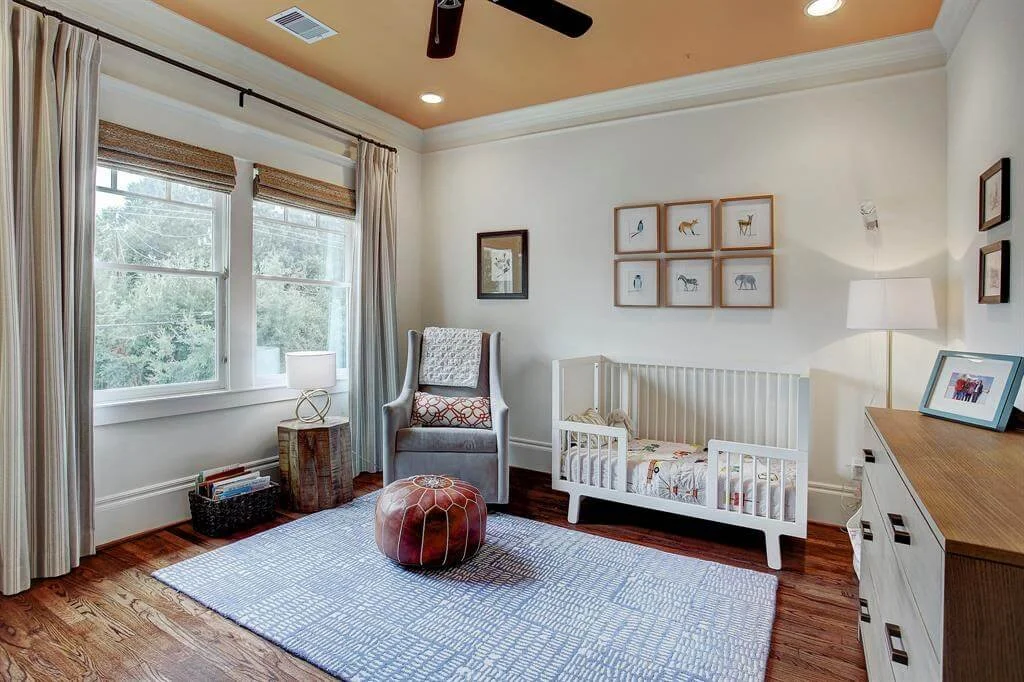
Myth 2: Kids’ Rooms Should Be Theme-Based
Your child may love cars, princesses, or dinosaurs now, but their tastes will evolve. Rather than designing a space that feels like a theme park, opt for a timeless approach with meaningful decor:
Quality Art Over Cartoon Characters: Invest in student art, antique pieces, or original works that can grow with them.
Classic Furniture with Personality: Mix and match furniture rather than buying matching sets, helping kids develop their own aesthetic preferences over time.
Layered Textures and Colors: Instead of a Frozen-themed room, incorporate subtle nods to their interests with accessories that can be easily updated.

Myth 3: We Can’t Have Nice Rugs Because Kids Spill
A well-chosen rug is not only stylish but also practical:
Wool is Naturally Stain-Resistant: Thanks to its lanolin coating, wool repels stains and is incredibly durable.
Antique Rugs Hide Wear and Tear: Their intricate patterns naturally camouflage spills and daily life.
Avoid Cheap, Synthetic Rugs: Low-quality rugs off-gas harmful chemicals, which isn’t ideal for kids who spend time playing on the floor.
Designing a Home That Grows with Your Family
At Jamie House Design, we believe in creating homes that evolve with your family while maintaining a sophisticated, livable aesthetic. The details matter—collected antiques, layered textures, and original art make a home deeply personal. We design with intention, ensuring that your space not only looks beautiful but also enhances your everyday life.
Ready to elevate your home without sacrificing function? Contact Jamie House Design for full-service interior design in Denver, Littleton, and beyond. Let’s create a space where luxury meets livability for your family.