How an Interior Designer and General Contractor Work Together
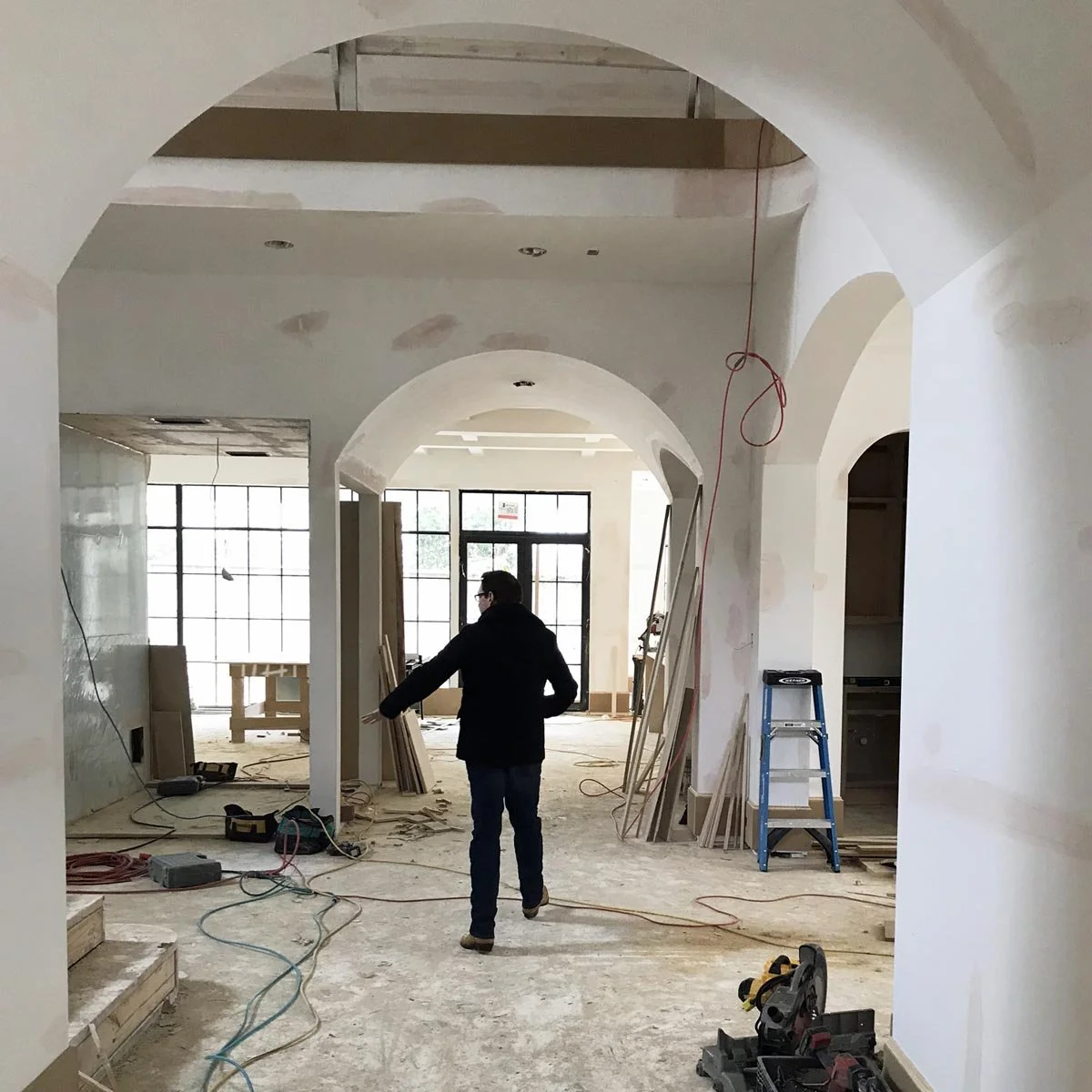
One of the most common assumptions about hiring an interior designer is that it means replacing your general contractor, or that the two will inevitably conflict. The opposite is true. A well-run renovation has a designer and a contractor who work together from the beginning, each doing what they do best, with clear roles that don't overlap and don't leave gaps.
When that relationship works the way it should, the homeowner experiences something that's surprisingly rare in renovation: a project that stays on vision, finishes on schedule, and produces exactly what was intended. Here's how it works.
Two Different Expertise Sets, One Project
The simplest way to understand the designer-contractor relationship is this: the contractor builds what the designer specifies, and the designer specifies what the homeowner wants.
A general contractor's expertise is construction; managing subcontractors, reading structural drawings, pulling permits, sequencing trades, solving field problems within the parameters of what's been designed. A good GC is invaluable. They know things about how buildings go together that take years to learn, and on a complex renovation, that knowledge is what keeps the project from going sideways.
What a GC is not, as a rule, is a designer. When a homeowner asks a contractor to make design decisions; which tile, what size island, how to configure the primary bath, the contractor will make a choice. It will be a reasonable choice, maybe one he’s seen on another project. It will not necessarily be the right choice for this specific home and this specific client. That's not a criticism of contractors. It's simply not their expertise or job. And I’ve heard for years, from them, how much they dislike being the “designer” on the job.
A designer brings the other half of what a renovation requires: the spatial thinking, the material knowledge, the understanding of how decisions relate to each other, and the ability to hold the full vision through every decision point. Together, the two cover everything a project needs.
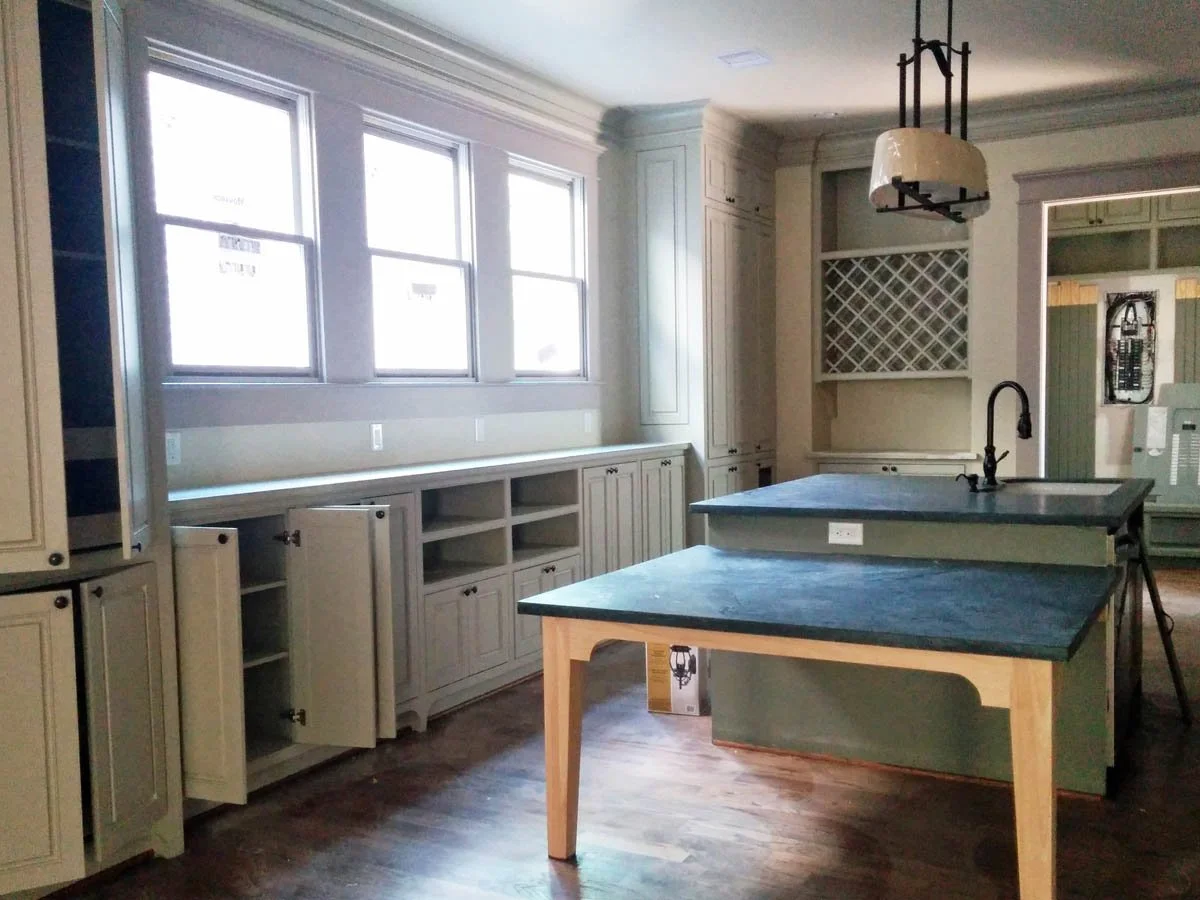
Where the Designer's Work Ends and the Contractor's Begins
On a well-structured project, the designer completes the design before construction starts. That means:
Every finish is specified. Flooring, tile, countertops, cabinetry, hardware, plumbing fixtures, paint colors, all documented in a finish schedule that tells the contractor exactly what to order and install.
Every layout decision is made. The floor plan is resolved. The kitchen island dimensions are set. The primary bath layout is confirmed. The contractor isn't making spatial decisions in the field, they're building what's been designed. When questions come up they’ll have the designer on speed dial. And designers expect and love that.
Every millwork and built-in detail is drawn. Custom cabinetry, built-in shelving, fireplace surrounds, these are drawn by the designer to establish the intent: dimensions, profiles, materials, and how everything relates to the surrounding architecture. From those drawings, the cabinet shop produces their own shop drawings; the fabrication-level documents they'll actually build from. Those shop drawings come back to the designer for review and approval before anything is built. It's a back-and-forth that ensures what gets fabricated matches what was designed, not just what the cabinet maker interpreted from a sketch. Skipping that approval step is how custom millwork arrives looking almost right.
When the designer hands off a complete set of specifications to a contractor, the contractor can build with confidence. They know what they're building. They can bid it accurately. They can order materials in sequence. They can manage their subcontractors toward a clear outcome.
This is the difference between a renovation that runs smoothly and one that produces constant decisions, change orders, and moments where the homeowner is asked to choose something under pressure they weren't prepared to choose.
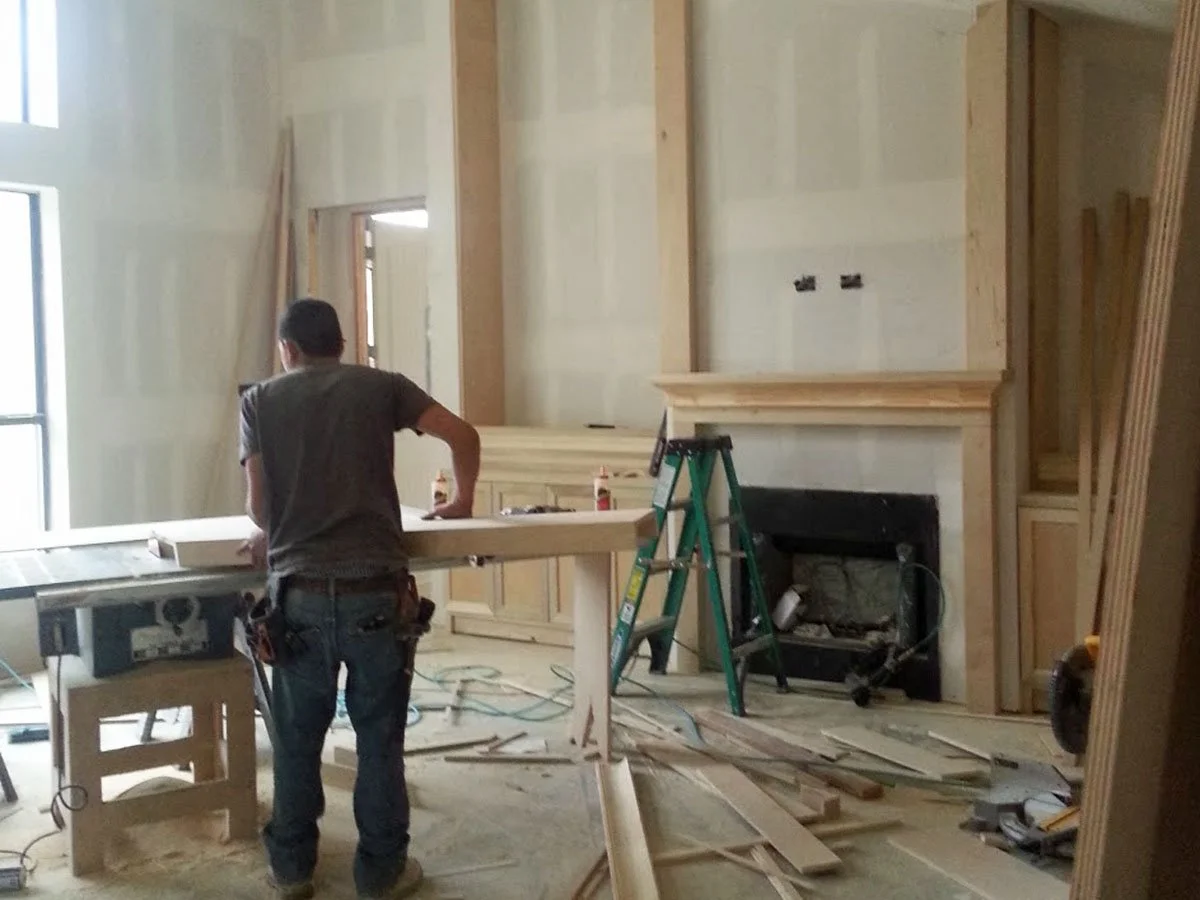
What Happens During Construction
A complete design package handed to a contractor at the start of a project doesn't mean the designer disappears. Construction produces questions, substitutions, and situations that weren't anticipated, and those moments need a designer who's still engaged.
Site visits. I'm on site regularly throughout a project, not to supervise the contractor's work, but to verify that design intent is being executed correctly. A tile pattern that reads one way on a drawing can read differently in a room with specific dimensions and light. A cabinet profile can look right on paper and slightly wrong installed. Catching these things early, when they're still correctable, is part of what site visits are for.
Substitution review. Materials go out of stock. Lead times change. A specified fixture has a production delay that conflicts with the installation schedule. Each substitution is a design decision, the replacement needs to be evaluated against the whole before it's approved. A contractor managing substitutions without a designer in the loop will choose something that works structurally. It may or may not work visually.
Change order evaluation. When a contractor discovers something during demolition; a pipe in an unexpected location, a structural element that affects the layout, a floor that's not level, it generates a decision. That decision affects the design. Having a designer available to evaluate it quickly keeps the project moving rather than stalling while the homeowner tries to figure out what to do.
Communication. On a well-run project, the homeowner isn't the relay point between the designer and the contractor. The two communicate directly about technical questions, which means the homeowner is informed rather than managing. This is one of the underrated benefits of having a designer on a project, it removes a significant administrative burden from the client.
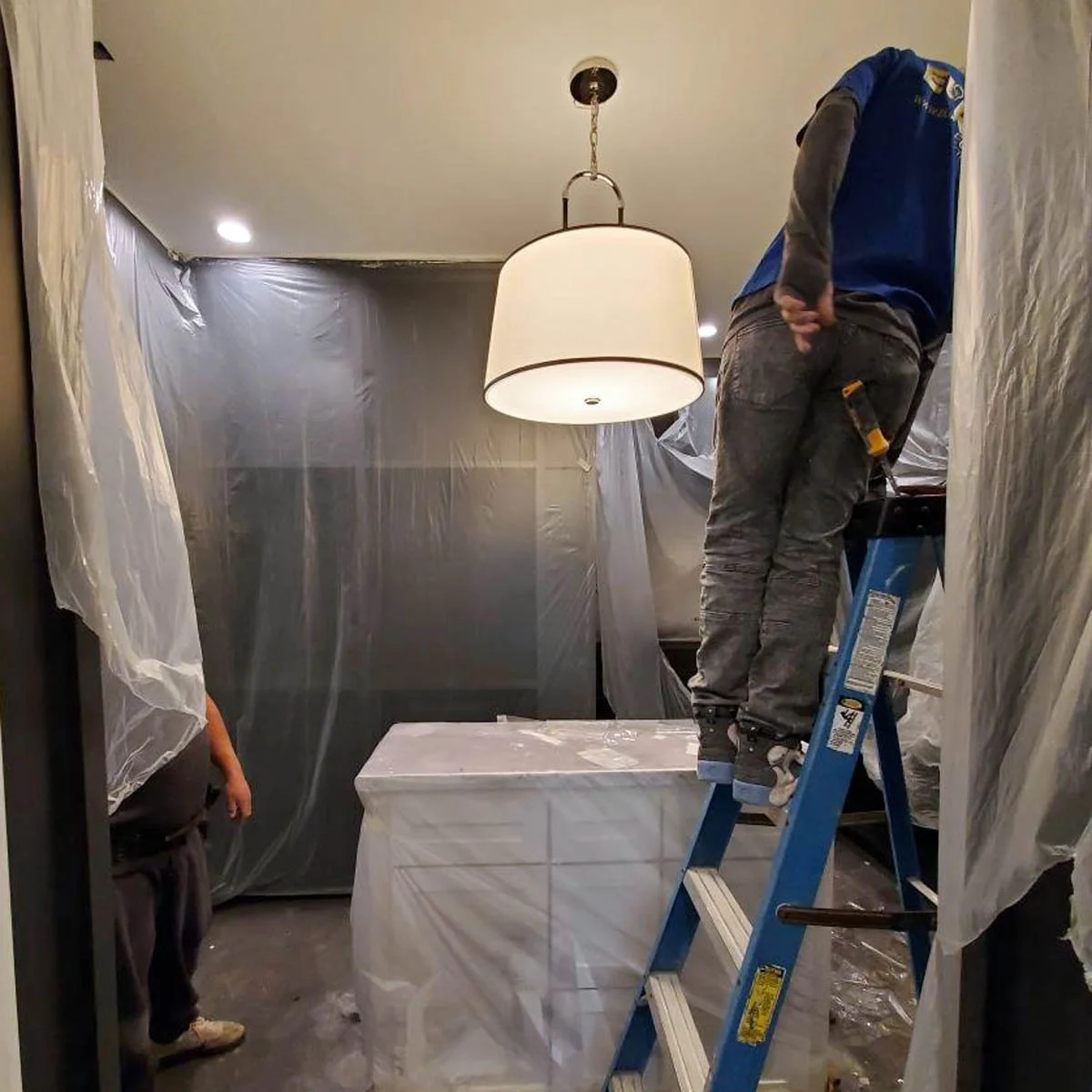
How to Find a Good Contractor for a Design-Led Project
Not every contractor is comfortable working with a designer, and it's worth understanding why. A contractor accustomed to making design decisions in the field, because no one else is, can find a detailed design package and an engaged designer to be an adjustment. The best contractors for design-led projects are the ones who appreciate having clear specifications because it makes their job easier, not harder.
In South Denver; Centennial, Littleton, Highlands Ranch, Castle Pines, there are contractors who understand this dynamic and work well within it. I've built relationships with contractors in these neighborhoods over years of local work, and I'm happy to make introductions when a client is starting a project without a contractor in place.
The contractor relationship matters as much as the design. A good contractor executing a strong design produces an exceptional result. A difficult contractor relationship, regardless of design quality, produces a stressful renovation. Part of what I do is help clients find the right contractor for their specific project, and then maintain a productive working relationship throughout construction.
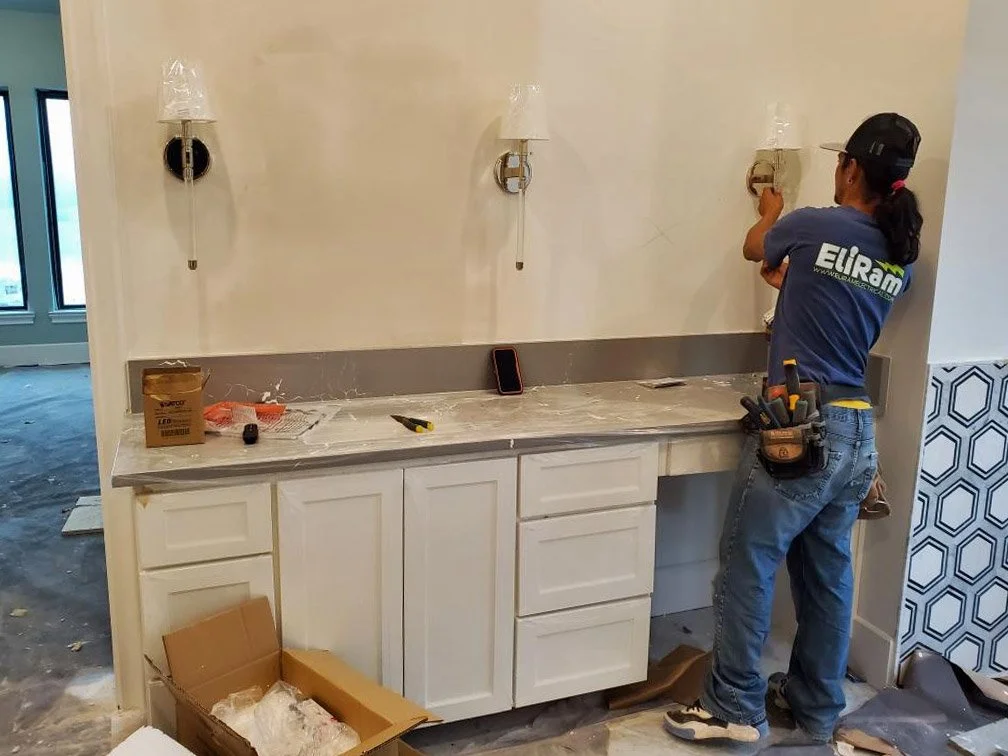
What This Looks Like for the Homeowner
From the homeowner's perspective, a well-structured designer-contractor relationship produces a renovation that feels different from what most people expect.
The decisions happen before construction, not during it. By the time the contractor starts work, the design is resolved, which means you're not being called with questions while you're at work, not being asked to choose grout color on a Tuesday morning when you haven't had coffee, and not discovering mid-project that something wasn't figured out when it should have been.
The vision holds through the whole project. When a substitution comes up or a problem is discovered, someone evaluates it against what the home is supposed to become. The project doesn't drift.
You know what's happening. The designer keeps you informed. The contractor builds. You make the decisions that are yours to make; and only those decisions, because everything else has already been thought through.
The result, when the relationship works the way it should, is a home that looks like the project was easy. It wasn't. That's the point.
If you're planning a renovation in Centennial, Littleton, Highlands Ranch, or Castle Pines and want to understand how a design-led project would work for your specific situation, a consultation is the right place to start.
If this was useful, these might be too: