How Hiring a Designer Gets You More for Your Money
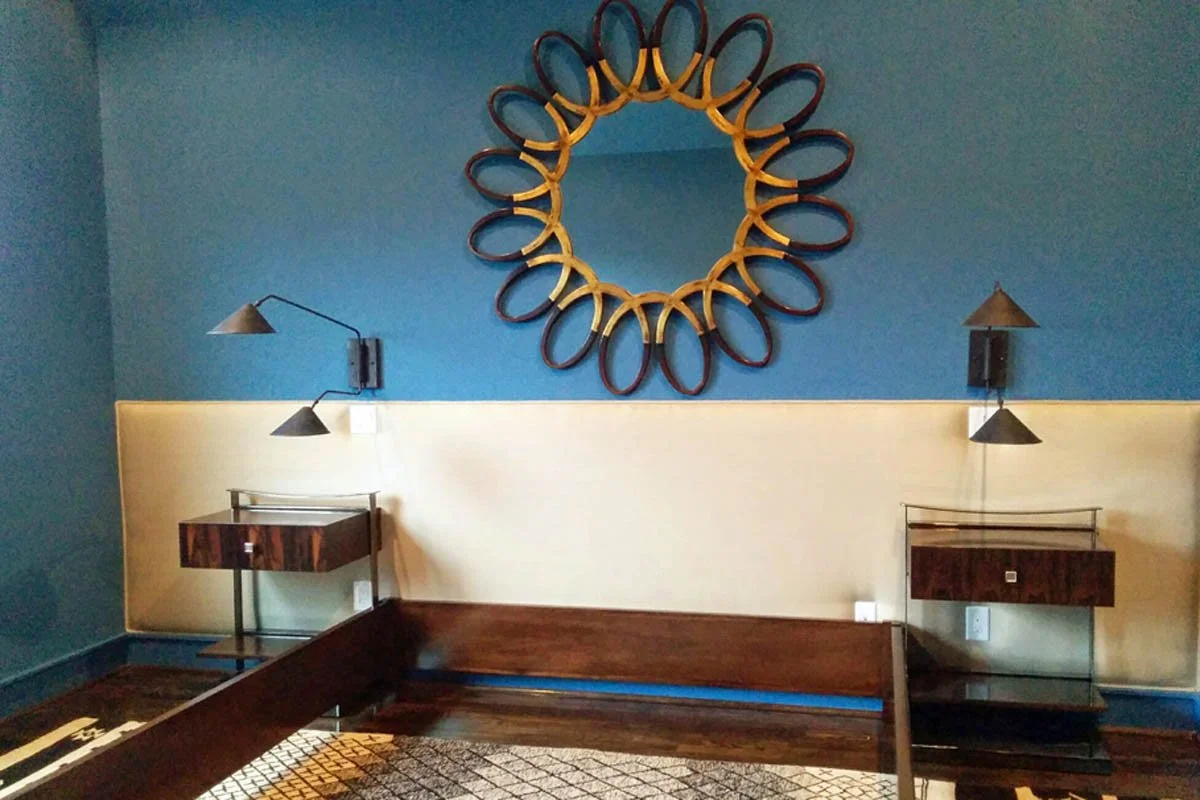
The question most people have before hiring a designer isn't whether the work will be good. It's whether the design fee, on top of everything else a renovation costs, is money well spent. It's a fair question, and it deserves a direct answer.
The honest answer is this: a designer doesn't add to what a renovation costs. A designer changes what you get for what you were already going to spend.
That's not a marketing line. It's how the math works on most projects, and it's worth understanding before you decide whether to hire someone or go it alone.
The Real Cost of Decisions Made Without a Designer
Most renovation budgets don't fail because someone chose the wrong designer. They fail, or quietly underperform, because of a series of individually reasonable decisions that, in aggregate, produce a result nobody quite planned for or wants.
The tile that looked right on a sample board and reads wrong installed. The countertop chosen separately from the cabinetry that almost works. The sofa ordered online that fits the room but kills the scale. The lighting that was specified by the electrician because no one else made a decision, and now the room feels like a waiting room regardless of what else is in it.
None of these are catastrophic mistakes. Each one seemed fine when it was made. But every one of them costs money to fix, or doesn't get fixed, and you live with it.
Here's what's different when a designer is involved: I can see the finished home before the first wall opens up. Not a mood board, the actual rooms, complete. How the kitchen reads from the family room. What the floor does when it meets the tile at the mudroom. Where your eye lands when you come down the stairs. Every decision made after that, every slab, every fixture, every fabric, gets measured against that finished picture, not against the sample sitting next to it on the counter. The tile isn't just a good tile; it's the right tile for a room that has to live beside three other rooms.
That's the difference between a house that matches and a house that flows. Matching is easy; pick a color, repeat it everywhere, done, and the whole house feels like it was bought in one afternoon. Flow is harder and it's the entire job: rooms that belong to each other without repeating each other, so that walking from the kitchen to the living room feels like a continuation instead of a change of subject. You can't get there decision by decision, no matter how good each individual decision is. You get there by holding the complete picture from the beginning, and evaluating hundreds of choices over many months against what the home is supposed to become, not just whether each one is fine on its own.
What You're Actually Paying For
Design fees are the most visible cost of working with a designer. They're also the easiest one to evaluate incorrectly, because most people compare the fee to nothing rather than to the cost of the alternative.
The alternative isn't "no design cost." The alternative is making design decisions yourself, under construction pressure, without the expertise or trade relationships that a designer brings. That process has its own costs; they're just distributed across change orders, reselections, material waste, and finishes that were chosen for the wrong reasons.
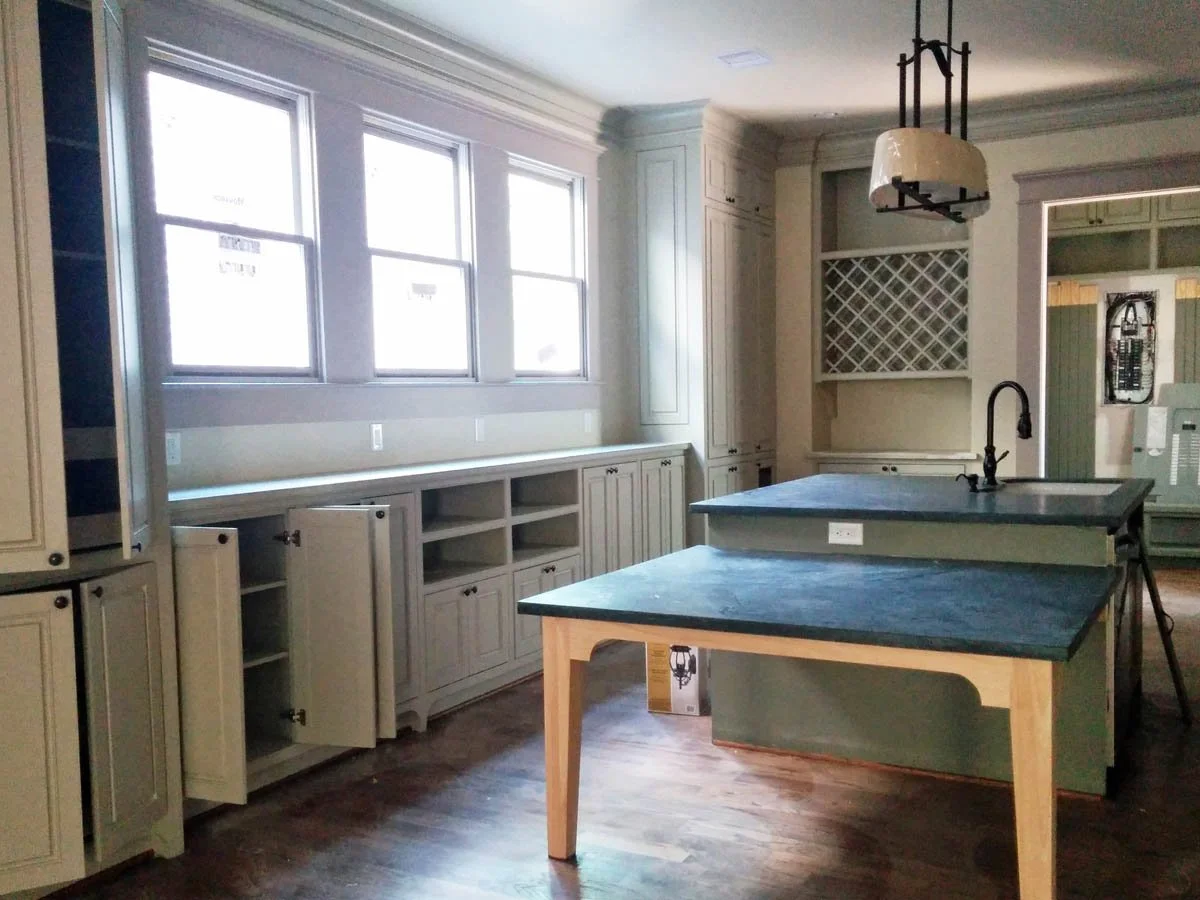
A home that's considered all the way down. Before any of the math, this is the actual product: a home where everything was decided on purpose. The sheetrock texture was chosen, not defaulted. The door hardware relates to the cabinet hardware, which relates to the lighting, which relates to the faucets, without repeating each other. The trim on the pillows picks up something the drapery started. None of it announces itself, and that's the point: you can't put your finger on why the house feels finished, calm, and completely yours; it just does. That feeling is not an accident and it isn't luck. It's hundreds of small decisions, each made in service of the same picture, from the first construction drawing down to the last throw pillow. When people describe walking into their finished home as "it's the house I always imagined but could never explain," this is what they're describing. It's also the part you cannot buy piecemeal, no individual purchase produces it, at any price.
Better contractor bids. A contractor bidding from a complete set of specifications; floor plans, finish schedules, millwork drawings, can price a project accurately. A contractor bidding from a vague scope with an "allowance" for tile and cabinetry is guessing, and allowances are almost always wrong in the same direction: too low. The gap between a detailed specification and a vague allowance is often where renovation budgets fall apart.
Avoided mistakes. Tile that has to come out costs twice; once to install, once to remove and replace. A kitchen layout that doesn't work costs the renovation, plus years of frustration, plus the renovation again when it becomes unbearable. Design expertise applied early prevents the most expensive kind of renovation mistake: the one that gets built.
Someone in your corner who speaks contractor. I've built relationships with contractors across Centennial, Littleton, Highlands Ranch, and Castle Pines over years of local work; I know who delivers, who communicates, and who to avoid. And because I read construction drawings, when something needs to change mid-project, the conversation happens in the contractor's language, with your interests represented.
What Doesn't Get Spent
One of the least-discussed benefits of working with a designer is what you don't buy.
Most homeowners who renovate without design direction spend money on things that turn out to be wrong, and then spend more money fixing them, or more time living with them. A designer working from a clear plan helps you spend on what will actually work and hold back on what won't.
This looks different on every project. Sometimes it's identifying that an island won't fit the way the client imagined and saving them the cost of building and then removing it. Sometimes it's pointing out that the countertop upgrade they were considering isn't worth the cost in that specific kitchen, and the budget would do more work elsewhere. Sometimes it's simply having someone in the room at the design center appointment who knows which upgrades are genuinely valuable and which ones are margin for the builder.
The upgrade conversation is one of the most concrete places this plays out in new construction. Builder design centers are structured to move clients through selections quickly, with upgrade pricing that isn't always transparent about value. A designer at that appointment knows which structural and mechanical upgrades; electrical panel capacity, blocking for future built-ins, plumbing rough-in, are genuinely worth doing during construction because they're expensive or impossible after the fact. And which finish upgrades are things you can source better, cheaper, and more specifically from trade vendors after closing. That knowledge saves money in a way that's direct and immediate.
The Return on Investment
Good design increases property value. This is well-documented in real estate, though the numbers vary by market and project. What's consistent is that buyers notice the difference between a home that was updated and a home that was designed, and appraisers and agents notice too.
In South Denver specifically, Centennial, Littleton, Highlands Ranch, Castle Pines, a kitchen renovation that was designed with attention to the specific home, the specific housing stock, and the specific buyer in these neighborhoods produces a different return than a generic update. The Centennial buyer who has looked at fifteen houses in Smoky Hill or Foxridge knows what a flip looks like and what a designed home looks like. The designed home sells faster, at a better price, with less negotiation.
For homeowners not planning to sell, the return is different but equally real. A home that functions beautifully for the way your family actually lives, where the kitchen works for how you cook, the primary suite works for both people's routines, the living room is actually lived in rather than preserved, produces returns in daily quality of life that compound for as long as you're in the house. That's harder to put a number on than property value, but it's the reason most clients say the project was worth it.
The Conversation Nobody Wants to Have
Design fees are a real cost and they're not trivial. A full-service engagement is an investment on top of a renovation investment, and it's worth being honest about that.
What's also worth being honest about is what projects cost without design direction, not just in dollars but in outcomes. The renovation that took twice as long because decisions weren't made before construction started. The kitchen that cost $90,000 and looks exactly like everybody elses. The house that was sold five years after the renovation for less than expected because the finishes dated poorly or the layout didn't suit the neighborhood.
The design fee is the cost of expertise applied at the moment decisions are being made. The alternative isn't free; it's just paid differently, distributed across the project in ways that are harder to see until the project is done.
If you're planning a renovation in Centennial, Littleton, Highlands Ranch, or Castle Pines and want to understand what design services would look like for your specific project, a consultation is the right place to start. Two hours, your home, your questions.
If this was useful, these might be too: