Natural Materials I'm Using Right Now (And Why They Hold Up)
There's a practical reason I reach for natural materials on most projects, and it has nothing to do with trend cycles. Natural materials age well. Synthetic ones don't.
A linen sofa that's been lived in for ten years looks considered. The same sofa in a performance microfiber looks worn. Honed limestone that's absorbed a decade of light has a quality that new limestone doesn't yet have. Reclaimed wood already has what new wood is working toward. The materials that improve with time are almost always the ones that came from somewhere; from the earth, from a forest, from a quarry, rather than from a factory trying to approximate those things.
That's the real argument for natural materials. Not that they're fashionable right now, but that they're a better long-term investment in a room.
Here's what I'm specifying most often at the moment and why.
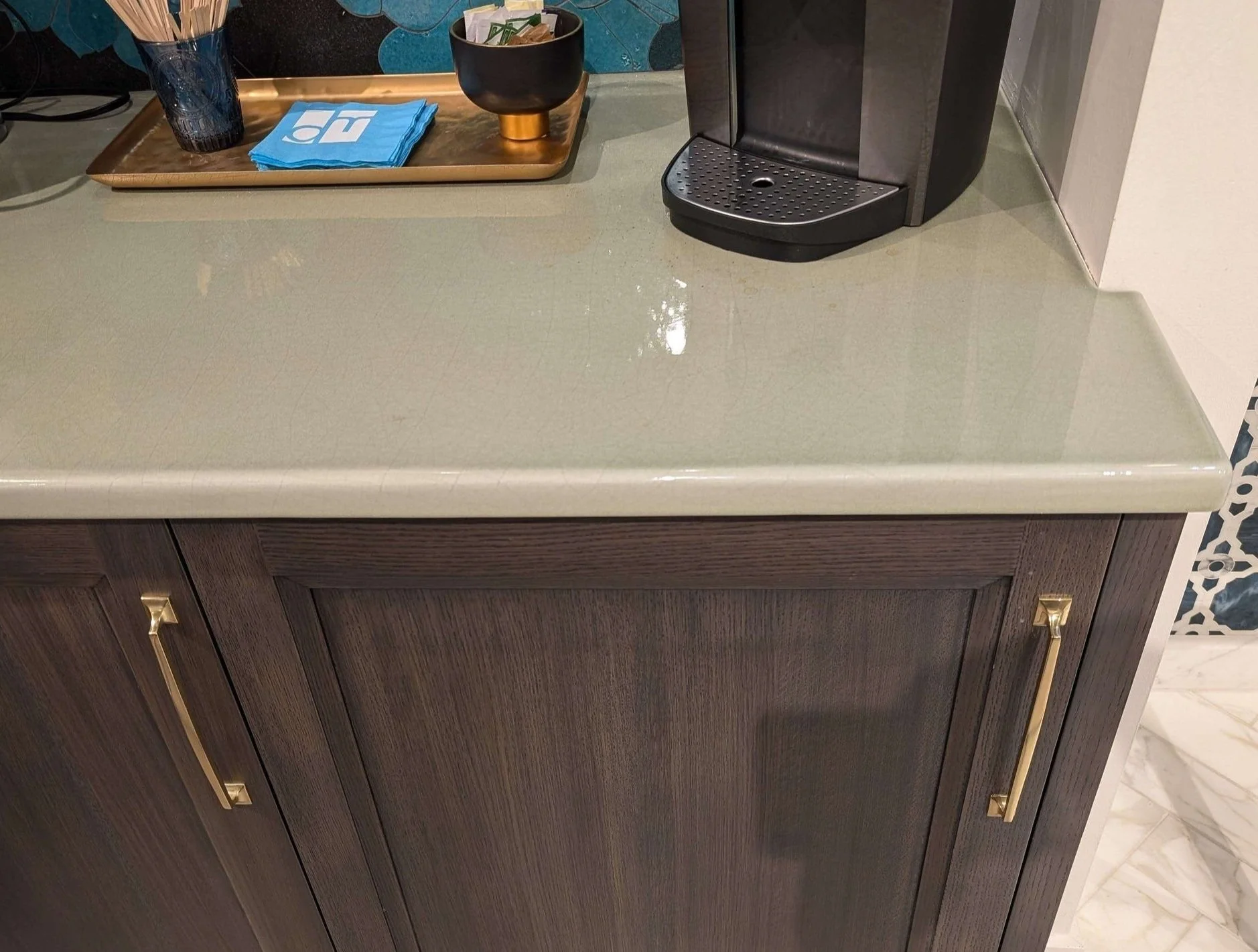

Lava stone
Every time I'm at Decorative Materials Denver, the lava stone countertop stops me. It's formed from volcanic flow, cooled slowly, with a surface that's dense and slightly porous, finished with a glaze that gives it an almost ceramic quality. It displays like fine china in some lights, with a subtle crackle in the finish, and like raw earth in others.
What I find interesting about lava stone is that it reads simultaneously refined and elemental. It works on kitchen islands, bathroom vanities, and outdoor applications; the density makes it genuinely durable, but it doesn't look like a utilitarian choice. It looks like someone found something unusual and knew what to do with it.
It's not everywhere yet, which is part of why I'm drawn to it now.
Limestone
Limestone is one of those materials that works in almost any context and somehow never looks generic. The color range, creams, sands, bone, soft warm grays, is inherently calm, and the surface variation keeps it from feeling flat.
I use it on floors, on fireplace surrounds, on bathroom walls. In Colorado homes with strong light, limestone handles that brightness well, it doesn't reflect harshly the way polished stone can, and it warms in afternoon light in a way that feels right for this climate. It also pairs well with nearly everything: reclaimed wood, unlacquered brass, plaster, dark painted cabinetry.
The practical consideration worth knowing: limestone is softer than granite or quartzite and will etch if exposed to acid. That matters in kitchens where it needs sealing and maintenance. In bathrooms and on floors it's more forgiving. Worth having the conversation before specifying it rather than after.

Fireplace makeover using limestone tiles and reclaimed wood mantel
In this living room remodel by Jamie House Design, a hand-hewn reclaimed wood beam brings timeworn character to the fireplace—a grounding contrast to the soft, honed limestone tile that surrounds it. Together, they create a balance of warmth and refinement, anchoring the room in natural beauty and quiet strength.
Reclaimed wood — floors and beams
There's a quality in old wood that no new product replicates: the grain is tighter, the knots are more characterful, the surface has a patina that took decades to develop. When you put reclaimed beams overhead or reclaimed floors underfoot, the room immediately reads as if it's been there for a while — even in new construction. That's exactly the effect I'm often after.
I used a hand-hewn reclaimed beam on a fireplace surround in a Littleton remodel alongside honed limestone tile. The contrast between the roughness of the wood and the softer, smoother stone created something that felt grounded and considered without being rustic. The two materials were doing different things and working together because of it — not despite it.
For floors specifically: wide-plank reclaimed white oak is my most-specified option right now. It holds up well in Colorado's dry climate, doesn't show wear the way thinner planks do, and has enough variation in the grain that scratches and dents read as character rather than damage.Cork: Soft, Sustainable, and Surprisingly Elegant

Cork Floors
In this mid-century modern remodel, Jamie House Design chose cork flooring—an ode to the era’s warmth and innovation. Soft underfoot and rich with organic texture, it offers a budget-conscious solution without compromising soul. A material that honors the past while inviting comfort into the present.
Cork
Cork flooring had a moment in the mid-century era for good reason; it's warm underfoot, naturally insulating, quiet to walk on, and has a texture that reads as organic without being rustic. It fell out of fashion and is having a genuine comeback, partly because it performs well and partly because the aesthetic has aged back into relevance.
I used it in a mid-century modern remodel in Littleton and it was exactly right; appropriate to the era, comfortable underfoot, and at a price point that freed budget for other things. It's also a practical choice for anyone who stands a lot in the kitchen or wants something softer than tile or hardwood in a room where people are barefoot.
The honest caveat: cork dents under heavy furniture and can be damaged by prolonged moisture. It's not the right choice for every situation, but in the right application it's one of the best values in natural flooring.
Limewash
Limewash is made from burned and slaked limestone mixed with water; it's been used on walls for centuries, which is part of why it has the quality it does. The finish is matte, slightly chalky, and absorbs light rather than reflecting it. It has depth that flat paint doesn't: the surface varies slightly in tone and texture depending on how the light hits it and how it was applied, which means the walls do something interesting throughout the day.
What I use it for most: bedrooms where I want the room to feel calm and enveloping, entries where I want texture without pattern, and any space where the goal is warmth without heaviness. It's not a flashy finish, it's a quiet one. But rooms with limewash walls feel noticeably different from rooms with painted drywall, in a way that's hard to explain until you're standing in one.
One thing worth knowing: limewash is a breathable finish, which makes it particularly good for older homes with plaster walls. It's also repairable; touch-ups blend in rather than standing out, which is a practical advantage over most other finishes.
Why natural materials matter in Colorado specifically
Colorado's UV intensity and dry climate put real stress on synthetic materials. Fading, cracking, and degradation happen faster here than in more temperate climates. Natural materials don't have the same vulnerability; stone, wood, linen, and cork all handle the conditions here better than their synthetic equivalents.
There's also a contextual argument. Colorado homes, especially the ones I work on in Centennial, Littleton, Castle Pines, and Highlands Ranch, sit in a landscape that's genuinely beautiful. Natural materials connect to that context. They belong here in a way that manufactured surfaces often don't.
If you're working through material decisions for a renovation or new build and want a professional eye on what will actually hold up and look right for the long term, that's a good conversation to have early.