Should You Hire a Designer Before Buying? (The Answer Might Surprise You)
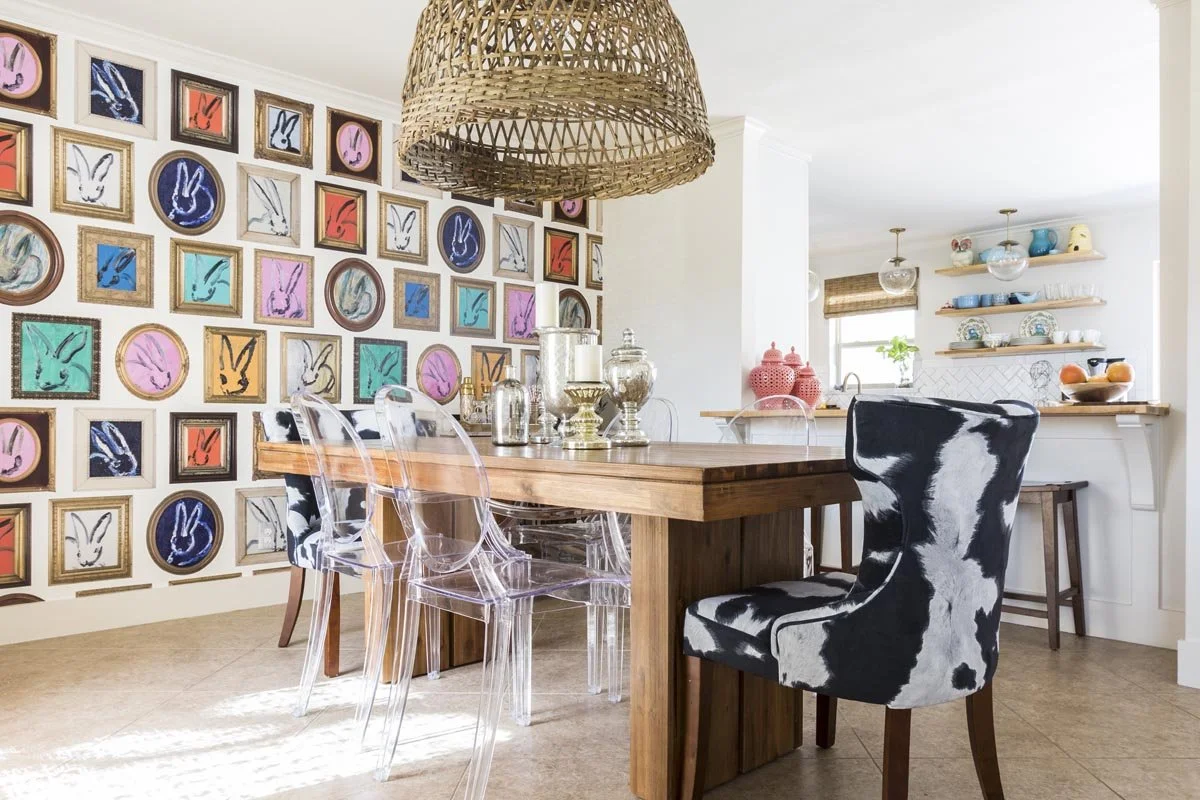
Most people think about hiring a designer after they've moved in. The house is theirs, the boxes are unpacked, and now they're ready to figure out what to do with it.
That's the normal sequence. It's also, in many cases, the wrong one.
I've done pre-purchase walk-throughs with clients on houses they were considering in Centennial, Castle Pines, and Littleton; and what I can tell them in that hour is worth more than what I can tell them in the first three months after they've already bought it. Not because the design advice changes, but because the advice is still actionable. Before you buy, information changes decisions. After you buy, information just changes how you feel about the decisions you already made.
Here's how I think about the timing question; and the specific situations where getting a designer involved early makes the most material difference.
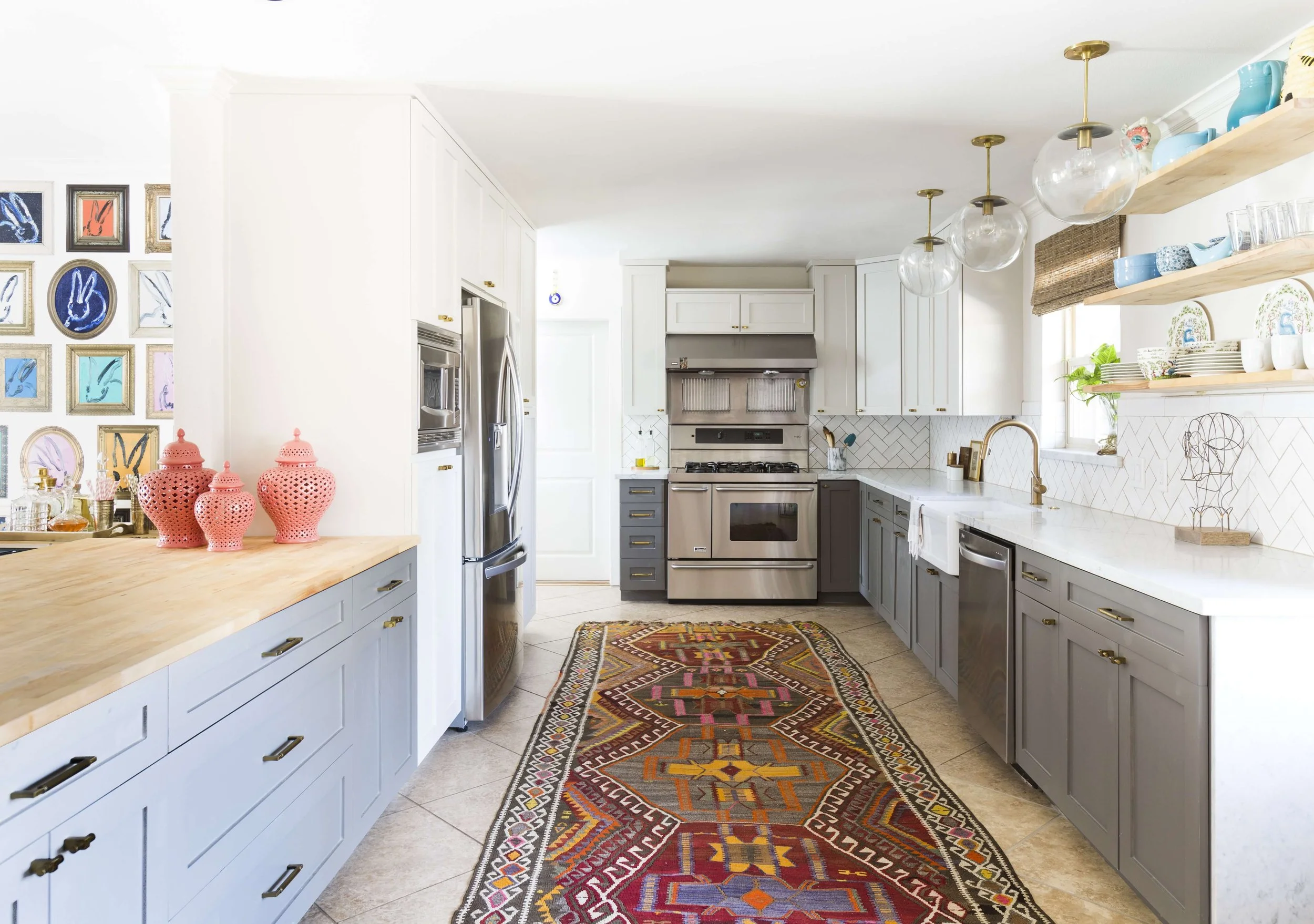
AFTER
Jamie House Design kitchen remodel opening the kitchen to the dining room, modernizing finishes, and adding fun touches including an antique rug.
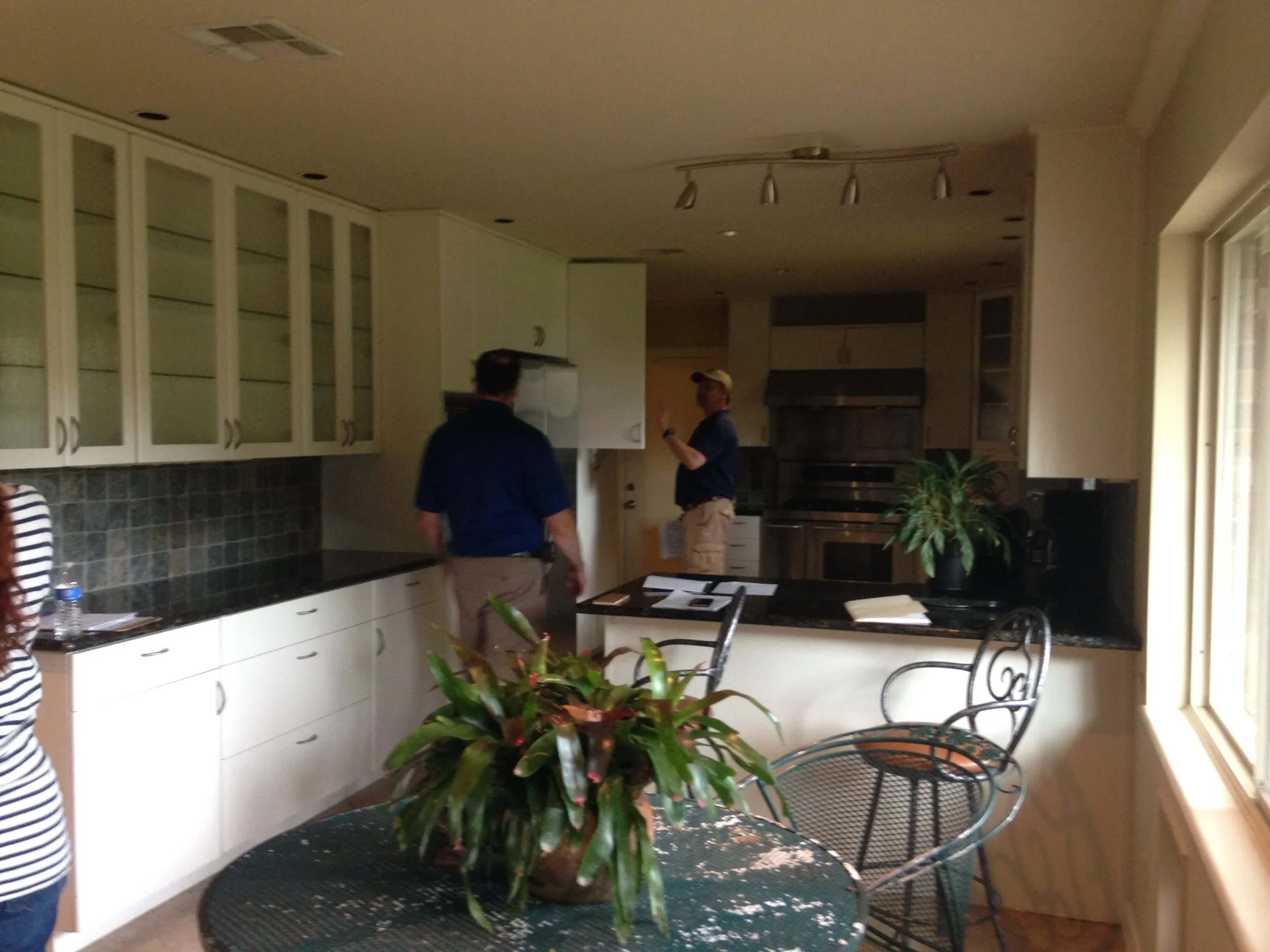
BEFORE
Jamie House Design and GC’s measuring the space before our client’s closed on the house. We were able to start demo as soon as they closed on the house.
What a designer sees that you don't during a walk-through
You're looking at a house and trying to imagine living in it. That's genuinely hard to do, especially under the time pressure of a competitive market. You're evaluating the floor plan, the finishes, the light, the neighborhood; all at once, in a showing that lasts thirty minutes.
I'm looking at different things. Which walls are load-bearing and which aren't. Where the plumbing is and what moving it would cost. Whether the closed floor plan you're looking at can reasonably become an open one or whether the structural reality makes that expensive. How the light actually moves through the rooms at different times of day based on which direction the house faces. Whether the primary suite can expand into adjacent space or whether the footprint makes that impossible.
None of this requires a full renovation assessment. It's pattern recognition from having worked through these problems on dozens of similar houses. And it changes the conversation significantly, from "I wonder if we could open this up" to "yes, you can, here's roughly what it costs and what it involves" or "no, that wall is structural and moving it adds $40,000 to the project."
That's useful information to have before you're under contract, not after.
The real cost calculation most buyers miss
When you're comparing two houses; one renovated and listed at a premium, one with potential at a lower price, you're essentially making a bet on what that potential costs to realize. Most buyers make that bet without enough information.
I can help close that gap. Not with a precise bid (that comes from contractors), but with an honest range based on what I know renovation actually costs in this market right now. A kitchen opening in a 1990s Centennial house is a different project than the same work in a Castle Pines new build. Materials have lead times. Contractors in this area book months out. The $80,000 renovation you're imagining can quietly become $130,000 once the scope is fully understood; and that's better to know before you negotiate a purchase price, not after you've already committed.
This kind of pre-purchase clarity is one of the most useful things I can offer, and it doesn't require a full design engagement. A consultation before or during escrow is enough to getthe relevant information.
New construction is the most time-sensitive situation
If you're building new or buying new construction in Castle Pines or Highlands Ranch, the window for meaningful design input is narrow and it closes faster than most buyers realize.
Builder selections; finishes, fixtures, cabinetry, lighting rough-in locations, happen on the builder's schedule, not yours. Once those decisions are made and construction proceeds, changing them ranges from expensive to impossible. The outlet that should have been placed differently for your furniture layout. The lighting rough-in that's two feet from where you'd actually want a pendant. The cabinet configuration that seemed fine in the selection center and doesn't work in the actual space.
A designer involved before builder selections are finalized can redirect budget toward the things that actually matter, catch placement decisions that are nearly impossible to fix later, and ensure that what gets built aligns with what you actually plan to do with the space. I've written more about this specifically in the new construction post — the short version is that early is almost always better, and "during builder selections" is often already late.
The timeline argument for any renovation purchase
Here's a practical reality of the Denver market that most buyers don't fully account for: renovation takes longer than you expect, and the clock doesn't start when you move in. It starts when you hire a contractor, which you can't do until you have a design, which you can't finalize until you own the house; unless you start the process earlier.
Contractors in Centennial, Highlands Ranch, and the surrounding areas book months out. Good ones, longer. Custom furniture runs twelve to sixteen weeks. Imported tile and stone can be eight weeks or more. If you close on a house in March and start the design process then, you're doing construction through summer and furnishing in fall at the earliest — and that's if everything goes smoothly.
If you engage a designer during escrow, even just beginning the conceptual work, you can have contractor conversations started, initial designs underway, and long-lead items identified before you even get keys. I've done this on multiple projects and the difference in timeline is significant. Clients who start early move into finished rooms. Clients who wait move into a construction zone and live there longer than anyone planned.
When waiting is the right call
There are cases where post-purchase is the appropriate time to start. If you've bought a house that's already renovated and you're happy with the bones; you just need help with furnishings, lighting, and finishing, there's no urgency to pre-purchase involvement. The decisions that benefit most from early input are structural and renovation-related ones.
If you're planning to live in a space for a year before making changes, that's also a reasonable choice. Lived experience of a house tells you things a walk-through doesn't. You learn which rooms you actually use, where the light bothers you, what the traffic patterns are. Some clients make better design decisions for having lived in a space first.
But even in those cases, a single early conversation is usually worth it. Not to design anything, just to understand what you're working with, what your options are, and what to avoid doing in the interim that you'll just have to undo later.
If you're in the middle of house hunting in Centennial, Castle Pines, Highlands Ranch, or Littleton and want a designer's eye on a property you're considering, that's exactly what a consultation is for.